Cyberpunk exhibition: “Lu Yang: Electromagnetic Brainology”
Lu Yang: Electromagnetic Brainology
Science fiction cyberpunk meets a multisensory explosion of color for neurosynapses
by Sandra Braun
Lu Yang (born 1984, pronouns: he/him) is a critically acclaimed international new media artist and a rising star of the contemporary Asian cyberpunk art scene, based in Shanghai, China. Lu Yang works in the fields of 3D animation, motion capture, artificial intelligence, virtual reality, film, live performance, video game installation, and holograms, exploring the tension between real, analog space and the virtual, digital world, and thus also at the intersection of cyberpunk and AI in the internet age.
Lu Yang thus represents a young generation in the Asian art scene that explores the ethical, social, and existential implications of our digital existence, examining the potential of advanced technologies from the life sciences and neuroscience, particularly in relation to dystopian future scenarios and social decay. Through the integration of Hindu-Buddhist philosophies and ancient myths, Lu Yang's artworks also offer an opportunity to question the limitations of human existence through self-optimization and new forms of subjectivation.
In his works, he creates new digital worlds and exhibition settings, drawing on the gaming scene, manga culture, J- and K-Pop, in which, for example, medical self-optimization procedures such as body enhancement, cybernetics (cf. Ghost in the Shell ) and cyboresque interventions in the human body are visualized, whereby the limits of human physicality and earthly existence are overcome through advanced machine cybernetics and cognitive extensions in the spirit of transhumanism.
Besides his 3D avatars of himself ( Avatar DOKU ), manga and American superheroes, and virtually dancing deities, Lu Yang's works always contain biographical elements: During his childhood, Lu Yang suffered from asthma and underwent various treatments in hospitals and emergency rooms. Lu Yang's fictional heroes thus often demonstrate an engagement with medical technology and neuroscience, referencing his own experiences and, above all, his own fascination with neuroscientific methods and posthuman existences.
“I don't know if it's because I spent a large part of my childhood in hospitals, that I really like hospital environments and feel quite at home there. When I was a child, I was afflicted with asthma and other illnesses for a long time. “When I was taken to hospital after an attack in the middle of the night, the smell of antiseptics there immediately made me feel well again ” (Lu Yang 2013).
A characteristic feature of Lu Yang's works is that the artist combines high-brow and low-brow cultural elements without a hierarchy between high culture and pop culture – alongside icons from Japanese subculture and pop culture, Otaka culture (dystopian science fiction, anime manga, cosplay, etc.), there are also Hindu-Buddhist religious symbols and motifs from traditional myths.
Human beings always serve as the starting material for his digital stagings, to which he himself refers in his works in the form of a digital representative, in order to project his own, mostly self-referential, reflections on neuroscientific methods and levels of human consciousness onto a digital body.
The Asian cultural scene has celebrated Lu Yang's work at numerous exhibitions in China and worldwide, as well as at many biennials, including the 59th Venice Biennale in 2022. He has been featured in major solo and group exhibitions at venues such as the Centre Pompidou, the France Art Center in Shanghai, the Monumentum Berlin, and the Tampa Museum of Art. Among his most prominent projects are " Kimu Kawa Cancer Baby , " " Uterus Man, " and " War of King Kong Core " Lu Yang is also the recipient of prestigious awards, including the BMW Art Culture Award 2019.
In 2022 he received the Artist of the Year Award from Deutsche Bank.
Lu Yang is thus one of the most sought-after and influential international artists and representatives of contemporary Chinese media art of recent years.
In 2020, Lu Yang created his digital non-binary 3D avatar DOKU as a clone with his facial features, a shapeshifter – a digital reincarnation of Lu Yang himself and thus a self-optimized version of himself, which addresses questions of physicality, gender, mind and consciousness beyond identity attributions – inspired by the Japanese Buddhist term “Dokusho Dokushi ” (roughly: We are born alone and we die alone ).
„Religion came first because my grandmother was a Buddhist.”
"I think religion is something that can easily plant a seed in someone's heart if the person is young. Once you learn too much and become suspicious, it'll be difficult to get into any belief systems. So, my family provided me with this background, which left an influence on me very early on, but during those early years I always thought of it as a mere superstition. I did read a lot of books about Buddhism, but only the extremely accessible ones. Then in high school I started reading more intermediate level scriptures, and that's when I became genuinely interested in Buddhist ideas. ” (Lu Yang 2018)

(Image: Detail from the video installation in the glass extension of the Kiel Art Gallery : # Pop-up Kunsthalle Kiel – Lu Yang: Electromagnetic Brainology , Photo: Copyright: Jens Rönnau Kiel, cf. SHZ of 09.02.2026)
Futuristic cyberpunk meets arcade games
" Electromagnetic Brainology" is a large-scale, immersive, five-channel video installation in which neon-lit, synthetic cyberpunk avatars from the video game universe dance as Buddhist "deities" to electronic music created in collaboration with the J-Pop music production team Invisible Manners . The four "deities" in the video installation correspond to the four major and most widespread diseases of the human nervous system, such as Parkinson's disease, which, according to Hindu and Buddhist interpretations, are associated with the four elements of the universe: earth, air, water, and fire ( Vimalakirti Sutra ) . These four main elements of the universe or cosmos also correspond to the four elements of the body, each considered anubhava (the concept of anubhava), representing physical manifestations and perceptions of emotions and bodily reactions.
The earth deity in Lu Yang's video work symbolizes human pain and suffering. The brain regions in the cerebral cortex responsible for pain perception receive and process pain signals (including phantom pain) via neuronal pain receptors. The water god, in turn, controls blood circulation and the circulation of bodily fluids, the wind god represents the human respiratory system, while the fire god regulates the complex interplay of warmth perception and temperature.
Each virtual avatar of a Buddhist deity wears a stereotactic head-frame crown or head mask with DBS ( Deep Brain Stimulation Mukut ) and carries a TMS rod or TMS magnetic coil ( Transcranial Magnetic Stimulation rod ) . These attributes are to be interpreted as the superpowers of the four deities—abilities with which the four central diseases of the human nervous system, and especially human pain, can be overcome. Human consciousness would thus be freed from its physical materiality, its embodiment, and its limitations. In this way, the four fictional deities would also help regulate and treat neurological conditions such as depression, anxiety, and insomnia, and their symptoms.
In Lu Yang's immersive, futuristic, and colorful video work, the neuroscientific methods of TMS and DBS technology function as self-enhancing super or master combinations of fictional humanoid non-binary martial arts fighters. TMS technology is used in neuroscience to stimulate or inhibit areas of the brain using electromagnetic fields, while DBS technology involves electromagnetic stimulation to activate the neurological and, above all, spiritual potential of the brain (neurostimulation therapy).
Thus, the four deities probably also symbolize four levels of a spiritual journey of consciousness and spiritual reincarnation.
Martial arts fighters and K-pop choreography
A central and recurring element in Lu Yang's work is the dance performance of his fictional heroes, as in * Welcome to LuYang Hell* (2017) or *Encephalon Heaven* (2017). The motif of dance itself is an archaic and universal, but above all human, symbol imbued with a profoundly ritualistic character. The virtually dancing "deities"—humanoid deities and personifications of the four elements in *Electromagnetic Brainology*—are only reminiscent of martial arts fighters from arcade fighting games like *Street Fighter* or other fighting games in their appearance.
Furthermore, the choreography references traditional temple dances of Vietnam and Cambodia from the 12th century, thus alluding to Buddhist and Hindu rituals. The cosmic and divine dance Tandava, a pictorial manifestation of the Hindu god Shiva, should be mentioned here; it also represents a manifestation of the process and cycle of creation, destruction, and re-creation of the universe.
The synchronous dance performances, in turn, find their models in boy and girl bands, especially in the K-Pop sector, such as performances by Miku Hatsune, which underlines the fusion of Hindu, Buddhist high culture with Asian pop culture.
In his immersive video work “E electromagnetic Brainology ”, the artist achieves a digitization of the human body and new forms of subjectivity through the installation of non-binary avatars in a posthumanist futuristic cyberpunk aesthetic based on color-intensive arcade games.
The fundamental considerations and research by Lu Yang on Hindu and Buddhist philosophy concerning the cycle of death and rebirth (reincarnation), his thoughts on gender identity, the liberation of human physicality through cyboreks technologies, and spiritual categories of thought, visualized here, have strong self-referential elements. Visually, the virtual avatars reference pop culture, particularly American action figures from the 1980s ( " Masters of the Universe " ).
Thus, Lu Yang's hypnotically colorful animated figures, far removed from dystopian worlds of destruction and rebirth, pain and disease, stage a digital and intensely vibrant sensory experience as a comforting and reconciling glimpse into a future here and now, in which the fear of the posthuman self regarding what remains after physicality has vanished gives way to euphoria and ecstasy. The dematerializing self ultimately accepts the process of dissolving all biological remnants, until only the nervous system and spiritual forms of consciousness exist as posthuman forms of future existence.
Rosi Braidotti, philosopher and feminist theorist, positions Lu Yang's artworks artistically between Post-Internet Art and Post-digital Art and thematically between Cyberfeminism and Posthumanism with a clear focus on Sinofuturism and Transhumanism.
color-intensive video exhibition " Electromagnetic Brainology" is designed for the exterior view at the Kiel Art Gallery due to the renovation of the museum building and will be shown in the glass extension at Düsternbrooker Weg 1, 24105 Kiel until March 15, 2026.
It can be visited daily from 6 a.m. to midnight. Free guided tours take place every Sunday at 11 a.m. No registration is necessary.
Sources:
https://www.kunsthalle-kiel.de/de/lu-yang
https://www.amant.org/exhibitions/195-lu-yang-doku-doku-doku-samsara-exe
https://art.db.com/artmag/lu-yang-is-the-artist-of-the-year-2022?language_id=3
https://palaispopulaire.db.com/news/detail/20220904-luyang?language_id=3
https://www.monopol-magazin.de/lu-yang-ist-artist-year-2022-der-deutschen-bank
https://www.gallerytalk.net/luyang-kunsthalle-basel
Amely Deiss, Nora Gantert, among others (editors): Lu Yang. Digital Descending, Leipzig 2022.

Sandra Braun (also a qualified financial administrator) studied art history, classical archaeology, and Protestant theology at Kiel University (2002–2010). After graduating with a Master of Arts degree, she worked at the university's Institute of Art History (2010–2012), including on the DFG-funded research project "Corpus of Medieval Wooden Sculpture and Panel Painting in Schleswig-Holstein" led by Prof. Dr. Uwe Albrecht. Following this, she received various research grants (including a DAAD doctoral scholarship, a Hildebrandsfonden grant, and a Böckler-Mare-Balticum Foundation grant) and a three-year doctoral scholarship at the ZKFL Lübeck (Center for Cultural Studies Research Lübeck). Afterwards, she worked as a freelance art historian and for several years was responsible for the cashiers and security staff at Gottorf Castle, the Viking Museum Haithabu, and the Iron Art Foundry Museum in Büdelsdorf.
You might also be interested in:


Featured Art


Design and Decor Highlights
-
 "Lazy" recliner armchair, single-seater sofa made of recycled teak wood (natural white)
The original price was: €1,249.00949,00 €The current price is: €949.00.
"Lazy" recliner armchair, single-seater sofa made of recycled teak wood (natural white)
The original price was: €1,249.00949,00 €The current price is: €949.00.
VAT included.
Delivery time: 2-4 working days
-
J-Line metal wall decoration "Lion" as line art, black
129,00 €
VAT included.
Delivery time: 2-4 working days
-
J-Line "Ethnia" plastic flower pot, brown (Ø 20 cm)
21,00 €
VAT included.
Delivery time: 2-4 working days
-
J-Line bulbous terracotta table lamp
295,00 €
VAT included.
Delivery time: 3-7 working days
-
Metal wall relief "Vine" with leaf motif and black frame
125,00 €
VAT included.
Delivery time: 3-5 working days
-
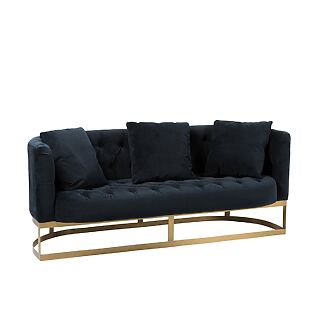
J-Line Luxury 2-seater sofa with button tufting, black velour velvet cover and gold-colored metal frame (incl. cushions)
2.395,00 €
VAT included.
Delivery time: 2-4 working days
-
Large-format acrylic painting "Savoir Vivre", hand-painted on metal panel
The original price was: €385.00295,00 €The current price is: €295.00.
VAT included.
Delivery time: 5-7 working days