Art events exert a strong attraction on diverse audiences and bring people together in unique spaces. At the same time, they present planners with the challenge of creating an environment that is both artistically appealing and safe. Safety planning should not be seen as a mere formality, but rather as a central component of professional event design.
Anyone "securely cordon off art exhibitions and events" must consider numerous aspects: structural conditions, visitor flows, escape routes, and legal requirements. Effective barriers not only protect exhibits from damage or theft but also ensure a pleasant and smooth experience for everyone involved.
Comprehensive preparation begins well before the actual event date. This involves clarifying responsibilities and developing a security concept that can flexibly adapt to different scenarios. The demands on the organization increase, especially for large exhibitions, opening receptions, or interactive art events where visitors are actively involved.
Only when security planning and artistic conception go hand in hand can a truly positive event experience be achieved. This article therefore presents strategies, tools, and best practices for effectively, professionally, and simultaneously visitor-friendly securing art events.
Risk analysis is the first and most important step in ensuring the safety of an event. It forms the basis for all further planning and must be detailed and realistic. This process identifies potential hazards that may arise from the venue itself, the planned activities, or the expected number of visitors. Depending on the size and nature of the event, different scenarios must be considered – from small gallery openings with select guests to large-scale art exhibitions with several hundred or even thousands of visitors. The crucial factor is to systematically identify and assess the relevant hazards.
Developing such a concept requires close collaboration among all parties involved, from curatorial teams and security experts to authorities. This involves considering legal requirements such as fire safety regulations and assembly venue regulations, as well as individual requirements arising from the artwork itself or the type of exhibition.
Art installations are often large-scale, heavy, or fragile – and therefore require special security measures. Escape routes, emergency exits, and accessibility for emergency services are essential components of this planning phase. A thorough risk analysis lays the foundation for a barrier system that is not only effective but also meets the aesthetic and functional requirements of an art exhibition.
Detailed planning is the basis for cordoning off art events in such a way as to guarantee both visitor friendliness and the highest level of security.”
The option purchasing crowd control barriers helps ensure the safe closure of art exhibitions and events. This allows for customized solutions precisely tailored to the venue and the required security zones. Suppliers now offer bespoke concepts ranging from simple mobile barriers to modular systems. Investing in these barriers saves time and effort on-site improvisation and ensures that the barriers don't detract from the art experience.
Select suitable barrier systems
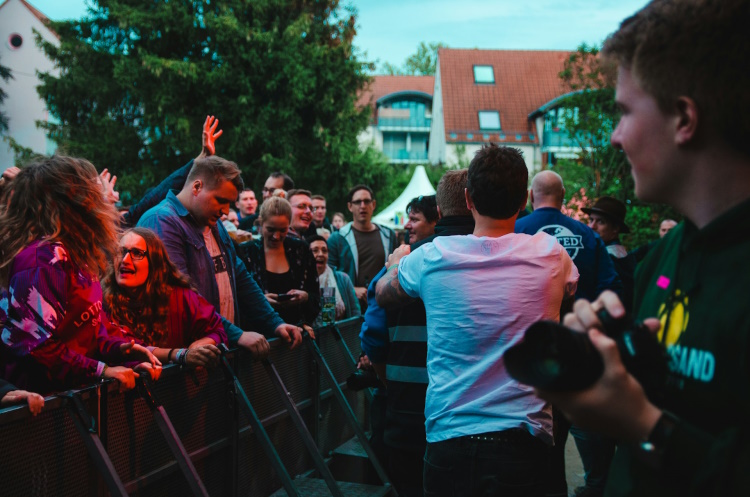
Selecting the right barrier systems is a crucial factor in the successful implementation of a security concept at art exhibitions and events. Photo by Kilian Seiler @kilianfoto, via Unsplash
Not every barrier system is suitable for every type of event or location. Mobile barriers, for example, are ideal when it comes to creating flexible solutions for changing floor plans. They are easy to transport, quick to assemble and disassemble, and allow for variable design of walkways and safety zones. Permanently installed barrier systems, on the other hand, are more robust and often offer greater protection against unauthorized access, but are only suitable where structural conditions and long-term planning permit.
Besides basic functionality, design also plays a crucial role. Art exhibitions thrive on an atmosphere that invites visitors to linger and explore. A barrier must not disrupt this impression but rather blend into the overall picture as unobtrusively as possible. Materials, colors, and shapes should therefore be carefully selected.
Modern systems make it possible to combine security and aesthetics, for example through elegant designer barriers or the use of branding surfaces that simultaneously serve as visitor information. Privacy screens can also be used to protect sensitive areas or to guide visitor flow without disrupting the visual experience.
Furthermore, combining different systems is often the key to success. Different zones within the event may have specific requirements: While robust police barriers ensure clear demarcation in the entrance area, discreet partitions or rope barriers may suffice inside. This modular approach allows for a flexible and efficient implementation of the security concept.
At the same time, this reduces staffing requirements, as well-designed physical barriers decrease the need for constant monitoring. For event organizers, it is therefore advisable to examine all options during the planning phase and, if necessary, seek expert advice to develop a tailored solution.
Visitor guidance and access management
Managing visitor flow is one of the most important tasks in security planning for art exhibitions and events. Well-planned access management prevents bottlenecks, reduces waiting times, and increases the sense of security for everyone present. The challenge lies in finding a balance between open, inviting spaces and clearly defined pathways.
Visitors should be able to move freely, while sensitive areas such as structures, installations, and emergency exits must remain reliably protected. The challenge lies in placing barriers in a way that is intuitively understandable and supports the natural flow of movement. Well-placed signs, floor markings, or strategically implemented wayfinding systems help provide orientation without detracting from the enjoyment of the art.
Another key aspect is the planning of entrances and exits. Often, the decision as soon as people enter the premises determines whether the security measures will be accepted or met with resistance. Wide, clearly marked entrances prevent crowding, while separate exits facilitate the process at the end of the event.
Ticket checks and security screenings must be organized to be efficient and friendly. Additional security personnel may be required, especially for high-profile exhibitions or particularly valuable exhibits. Communication with visitors should be professional and de-escalating to ensure a pleasant atmosphere.
In addition to traditional measures, a variety of technical tools are now available to access management . Turnstiles, electronic ticketing systems, and visitor counters enable precise control and provide organizers with essential data for post-event analysis. Nevertheless, the human factor should not be underestimated: Friendly staff at the entrances and within the exhibition ensure a relaxed atmosphere and can respond flexibly to unforeseen situations.
A list of helpful elements for access management might include the following points:
Clear marking of entrances and exits
Planning barrier-free access
Efficient ticket checks and security gates
Staffing for security and guest services
Use of signage and floor markings
Communication and coordination within the team
A security concept stands or falls on the quality of communication within the organizing team. Only when all involved are informed about the procedures and know who is responsible for which task and when can the barriers function smoothly. Especially at art exhibitions with complex spaces or fluctuating visitor numbers, short communication channels and clear agreements are essential.
It's worthwhile to create a detailed operational plan , defining all roles and responsibilities. This includes not only classic security tasks such as access control and emergency management, but also services like visitor information and cloakroom. All interfaces must be clearly defined to ensure a swift response in case of an emergency.
A proven tool in the planning phase is the so-called operational briefing. It serves to bring all participants up to speed and clarify any open questions. Not only management but also the operational personnel who will later be deployed on-site should be involved.
Role-playing and trial runs can help internalize procedures and identify weaknesses. Furthermore, the communication plan should also include contact with external partners such as the police, fire department, or ambulance services. Clear agreements regarding responsibilities and reporting channels ensure that no time is lost in an emergency.
To clearly present the diverse tasks, a table can be helpful beforehand:
Task
Details
Responsible
Staff briefing
Escape routes, division of tasks
Safety line
Visitor information
Signage, digital displays
Communications team
Access controls
Ticket verification, security checks
Entrance staff
Emergency management
First aid, evacuation plans
Safety Officer
Coordination with authorities
Police, fire department, public order office
Command staff
Such a plan allows responsibilities to be clearly defined and friction avoided. At the same time, it creates transparency and trust within the team, which is an invaluable advantage in the often hectic day-to-day operations of an event.
Safety as part of the event experience
Security is not merely a byproduct of event planning, but a central element that significantly determines the success of an art exhibition or cultural event. Well-designed barriers not only protect valuable exhibits and visitors, but also contribute significantly to the overall experience.
When security measures are professionally planned and implemented, they don't appear as disruptive barriers, but rather as natural components of the event architecture. The goal must be to create an environment in which guests feel comfortable and can move around safely at the same time. This includes flexible, aesthetically pleasing barrier systems as well as clear visitor guidance and a well-trained, communicative team.
Furthermore, security also sends a signal to the public: it demonstrates that organizers take their responsibility seriously and value quality. Especially at art exhibitions, which are often attended by a culturally interested and discerning audience, well-thought-out organization is perceived particularly positively. Those who cut corners or plan inadequately risk not only organizational chaos but also damage their reputation. It is therefore worthwhile to invest in consulting, planning, and high-quality equipment – be it in risk analysis, the selection of suitable barriers, or staff training.
Ultimately, security planning for art exhibitions and events always involves the interplay of many factors: structural conditions, technical solutions, and human expertise. An integrated approach that considers all these dimensions not only minimizes risks but also creates lasting positive impressions. In this way, security transforms from a burdensome obligation into an opportunity to elevate the event to a new professional level and to permanently gain the trust of guests.
Owner and Managing Director of Kunstplaza . Publicist, editor, and passionate blogger in the fields of art, design, and creativity since 2011. Graduated with a degree in web design from university (2008). Further developed creative techniques through courses in freehand drawing, expressive painting, and theatre/acting. Profound knowledge of the art market gained through years of journalistic research and numerous collaborations with key players and institutions in the arts and culture sector.
We use technologies such as cookies to store and/or access device information. We do this to improve your browsing experience and to display (non-)personalized advertising. If you consent to these technologies, we can process data such as browsing behavior or unique IDs on this website. Refusal or withdrawal of consent may adversely affect certain features and functions.
Functional
Always Active
Technical storage or access is strictly necessary for the legitimate purpose of enabling the use of a specific service expressly requested by the subscriber or user, or for the sole purpose of carrying out the transmission of a message over an electronic communications network.
Preferences
The technical storage or access is necessary for the legitimate purpose of storing preferences that were not requested by the subscriber or user.
statistics
Technical storage or access that is solely for statistical purposes.Technical storage or access that is used solely for anonymous statistical purposes. Without a subpoena, the voluntary consent of your internet service provider, or additional recording by third parties, the information stored or retrieved for this purpose cannot generally be used to identify you.
marketing
Technical storage or access is required to create user profiles, to send advertising, or to track the user on one or more websites for similar marketing purposes.



 Modern table "Puntual" in black grid design with aluminum tabletop
398,00 €
Modern table "Puntual" in black grid design with aluminum tabletop
398,00 €