In times when stress, anxiety and depression are on the rise worldwide, more and more people are looking for alternative approaches to promote and maintain their mental health.
Art therapy is a particularly effective method .
Creative work promotes emotional well-being and helps to gently process inner conflicts. Learn here under what circumstances art therapy is appropriate and how it works.
A common misconception in art therapy is that one must possess artistic talent to benefit from a therapist. This assumption, however, is fundamentally misleading. In fact, anyone who desires it can benefit from this form of therapy – regardless of their artistic ability.
Contrary to popular belief, art therapy does not focus on the creation of artworks, but rather on the opportunity to access one's own inner world and to engage intensively with one's own feelings.
Therefore, it is often referred to as a "mirror of the soul ." This underscores the therapeutic value that creative processes can have within the context of self-reflection and personal development.
What actually happens in art therapy?
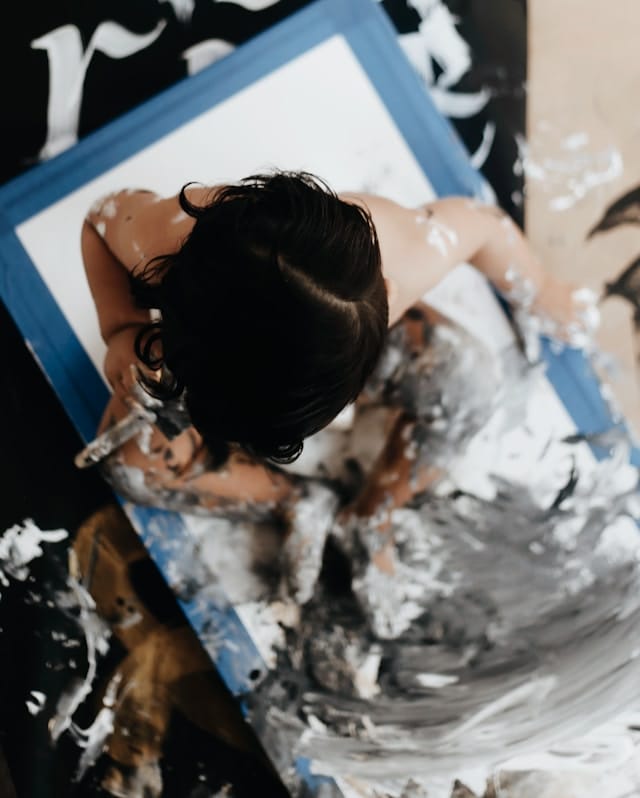
Art and creative therapy is a particularly effective method for promoting and maintaining your mental health. Photo by Jonathan Sanchez @jonathansancheziam, via Unsplash
Art therapy is a psychotherapeutic method primarily used in psychosomatic and psychiatric settings in conjunction with other therapeutic approaches. It is beneficial for individuals with physical ailments as well as for patients with psychological difficulties.
Art therapy is a relatively young discipline used in many psychosomatic and psychiatric clinics. It is also used in some nursing homes and special needs schools, for example. It is usually offered as group therapy, but can also be conducted as individual therapy.
In such a protected environment, you can simply let your feelings out – without words, without pressure, without perfection.
Under the guidance of a therapist, you can unleash your creativity and put everything on paper that often remains hidden. Painting, drawing, sculpting with clay – anything is allowed.
Art becomes a mirror to your thoughts and gives you the opportunity to understand on a new level what moves you internally.
Different foundations and approaches
Art therapy integrates a variety of disciplines and is characterized by its interdisciplinary approach. Depending on the training focus, it may include, for example, psychodynamic, anthropological, cognitive-behavioral, and systemic methods. In psychodynamic practice, it is sometimes also referred to as creative or painting therapy .
It thus offers a valuable opportunity to foster individual forms of expression and support therapeutic processes, making it a significant component of the psychotherapeutic landscape. Itis not a one-dimensional approach, but rather integrates avariety of different methods, strategies, and techniquesthat can be applied in diverse ways.
For example, the work is not limited to pen and paper or paints, but also incorporates three-dimensional and sculptural techniques and materials such as clay or photography. Furthermore, other art forms such as music , drama , dance , and poetry their rightful place in this therapeutic field.
What all these different techniques and methods have in common is that they aim to evoke inner images that are communicated to the outside world through the respective art form.
Many people find art therapy a particularly enriching form of therapy because of its nonverbal expression of personal feelings. They are not forced to put their concerns or problems into words from the outset, which often makes the process easier and more comfortable. For these reasons, this treatment approach is considered patient-centered and offers a unique path to self-development and healing .
Objective
Art therapy allows patients to express their memories and feelings nonverbally, enabling them to perceive their environment and themselves from a new perspective. It not only provides a welcome respite from everyday life but also offers a safe space for personal reflection .
By engaging with one's inner self, this form of therapy fosters self-confidence and trust in one's own abilities. This, in turn, supports a deeper understanding of one's own needs and talents and has an activating effect on the individual development process.
The central goal of art therapy is to help patients get to know and understand themselves better – to answer the essential question "Who am I?" . This makes it possible to shape one's own life in accordance with individual values, goals, and desires.
How it works – Why it's so good for the soul
The theoretical foundations of art therapy state that creating images and working with various artistic media can have a profound healing effect on people.
The effects are manifold: It makes a crucial contribution to strengthening resilience , both personally, socially, and economically. Furthermore, it promotes personal responsibility and initiative , which helps participants to sustainably improve their quality of life.
Clearly, creative activities can reduce stress, alleviate anxiety, and boost self-confidence.”
Regular creative activity helps you gain a better understanding of yourself and your feelings. Art therapy helps to release blockages and reorganize your inner world.
Whether you are currently going through a difficult life situation or are simply looking for more balance – through art you can rediscover yourself.
Areas of application – For whom is art therapy suitable?
Art therapy is truly for everyone – regardless of age or background.”
That sums it up perfectly.
Support, relief and healing for numerous ailments
Art therapy offers a remarkable variety of applications that can be of great benefit to both children and adults . Even at a very young age, music therapy , for example, can have positive effects on infants and premature babies.
For sick or injured children and adolescents, a hospital stay is a formative, often painful experience. Art therapy offers them the opportunity to express their feelings and suffering through creativity and imagination. This fosters communication with the treatment team and family members. Art, music, and dance therapy are modern, gentle, and non-invasive therapeutic approaches.
The Swiss foundation Fondation ART-THERAPIEenables hospitalized children and adolescents to have this valuable access to art therapy:
Adults facing personal difficulties have the opportunity to work on their individual development and overcome their challenges in clinical, educational or social settings together with a professional art therapist.
Art therapy programs are highly beneficial for both children and adults. Photo by Jonathan Sanchez @jonathansancheziam, via Unsplash
Even in old age, especially when working with senior citizens or residents of nursing homes, professional art therapy can have supportive and healing effects.
Another significant application of art therapy is the treatment of mental illnesses and somatic complaints . Numerous studies demonstrate that patients with dementia or Parkinson's disease can experience relaxation and improve their cognitive function through movement-based music therapy. It proves to be a particularly valuable tool in the treatment of post-traumatic stress disorder , for example, in refugees or other traumatized individuals, helping them to process traumatic experiences.
Furthermore, patients with depression improved self-awareness and sensitivity through art therapy interventions. After therapy, they are able to define their boundaries more clearly and recognize and transform negative thought patterns more easily. For many people with mental disorders, art therapy also has a calming and balancing effect. Other conditions such as eating disorders , schizophrenia , as well as exhaustion depression and burnout, can also be successfully treated with creative or painting therapy.
Furthermore, art therapy is also used in the treatment of somatic illnesses . Many oncology patients in rehabilitation centers benefit from art therapy interventions, which improve their confidence and optimism regarding their illness. These therapies encourage patients to speak more openly about their limitations and symptoms and to reduce their anxieties.
So whether you are processing trauma, struggling with depression, or simply want to do something for your well-being – art therapy adapts flexibly to what you need.
Many people also combine it with other forms of therapy, such as talk therapy, and experience even more intensive results as a result. It's essentially all-around care for the soul.
Creativity as a break from everyday stress
Being creative can be truly liberating – like a mini-vacation for the mind. Studies show that art therapycan noticeably lower stress levelsbecause it reduces the hormone cortisol.
At the same time, the brain is activated to better process and organize emotions. People who are regularly creative often feel more balanced and find it easier to calmly handle stressful situations.
Creativity as a release valve in difficult times
For people who are processing particularly difficult experiences or are in an emotional crisis, art therapy can act as a release valve.
When words fail and emotions seem overwhelming, art creates a space where feelings can express themselves in their own unique way – gently and without pressure.It helps process pain, anger, or confusion in a way that allows one to regain control rather than feel lost.
The resulting works serve as a reminder that even in dark moments there is always a way to give space to one's own feelings and to find support again.
Insights into practical application in different institutions
Simone Wolf, art therapist at DIAKOVERE gGmbH , will present art therapy at the Clinic for Psychosomatic Medicine at the Henriettenstift in Hanover. The presentation will focus particularly on the personalized support offered by this form of therapy.
Art therapist Mandy Laicht explains art therapy at the LWL Clinic Dortmund :
And this is how art therapy works at the Bayreuth District Hospital :
Art therapy goes digital
For those who prefer to be creative within their own four walls or who do not have therapists nearby, there are now online options .
This allows you to participate in a session flexibly andsecurely via VPN, no matter where you are. The digital world makes it possible for you to embark on this creative path without any geographical limitations.More informationhere.
Finding yourself through creativity
In summary, art therapy is a great way to get to know yourself better and to let go of the emotional burden of everyday life.
Whether in difficult times or simply as a counterbalance to the stressful everyday life – the power of art can help us to overcome inner blockages and find a bit more serenity.
And the best part is: art therapy is accessible to everyone, regardless of age or experience level. So why not pick up a brush or some clay and give yourself a little creative freedom?
Sources, expert support and further information:
Therapist search by Pro Psychotherapie eV:Art therapy – exploring non-communicable life worlds , https://www.therapie.de/psyche/info/therapie/kunsttherapie/
Owner and Managing Director of Kunstplaza . Publicist, editor, and passionate blogger in the fields of art, design, and creativity since 2011. Graduated with a degree in web design from university (2008). Further developed creative techniques through courses in freehand drawing, expressive painting, and theatre/acting. Profound knowledge of the art market gained through years of journalistic research and numerous collaborations with key players and institutions in the arts and culture sector.
We use technologies such as cookies to store and/or access device information. We do this to improve your browsing experience and to display (non-)personalized advertising. If you consent to these technologies, we can process data such as browsing behavior or unique IDs on this website. Refusal or withdrawal of consent may adversely affect certain features and functions.
Functional
Always Active
Technical storage or access is strictly necessary for the legitimate purpose of enabling the use of a specific service expressly requested by the subscriber or user, or for the sole purpose of carrying out the transmission of a message over an electronic communications network.
Preferences
The technical storage or access is necessary for the legitimate purpose of storing preferences that were not requested by the subscriber or user.
statistics
Technical storage or access that is solely for statistical purposes.Technical storage or access that is used solely for anonymous statistical purposes. Without a subpoena, the voluntary consent of your internet service provider, or additional recording by third parties, the information stored or retrieved for this purpose cannot generally be used to identify you.
marketing
Technical storage or access is required to create user profiles, to send advertising, or to track the user on one or more websites for similar marketing purposes.



 J-Line Christmas tree "PAMPA" with white artificial snow look and 400 LED lights
685,00 €
J-Line Christmas tree "PAMPA" with white artificial snow look and 400 LED lights
685,00 €


