The kitchen is far more than just a place for preparing food. It can become a stage for culinary works of art, where the aesthetics of the dishes are just as important as their taste.
This art form, known as food art, is enjoying growing popularity and offers countless opportunities to combine creativity and culinary skills. In this article, we explore the various facets of food art and provide practical tips on how to transform everyday dishes into visual masterpieces.
Food art is the art of arranging and decorating food in a way that is visually appealing and artistic. Colors, shapes, and textures play a crucial role. A simple example is arranging fruits and vegetables on a plate in the shape of flowers or other patterns.
More complex techniques include carving vegetables – here you will find unique kitchen knives from Tsume – or fruit, and using sauces and spices to create works of art on the plate.
From cave paintings to Eat-Art to Food Art
Even in prehistoric times, food was used to create artistic works: cave paintings were created using natural pigments from plants and animals.
Artistic representations in ancient Egypt featured numerous depictions of bread, grain, and other foodstuffs. Roman art also includes many frescoes, mosaics, and sculptures depicting fruits, offerings, and feasts. Medieval manuscripts contain detailed illustrations of meals in various social contexts. The Last Supper was a particularly popular motif and was frequently interpreted artistically.
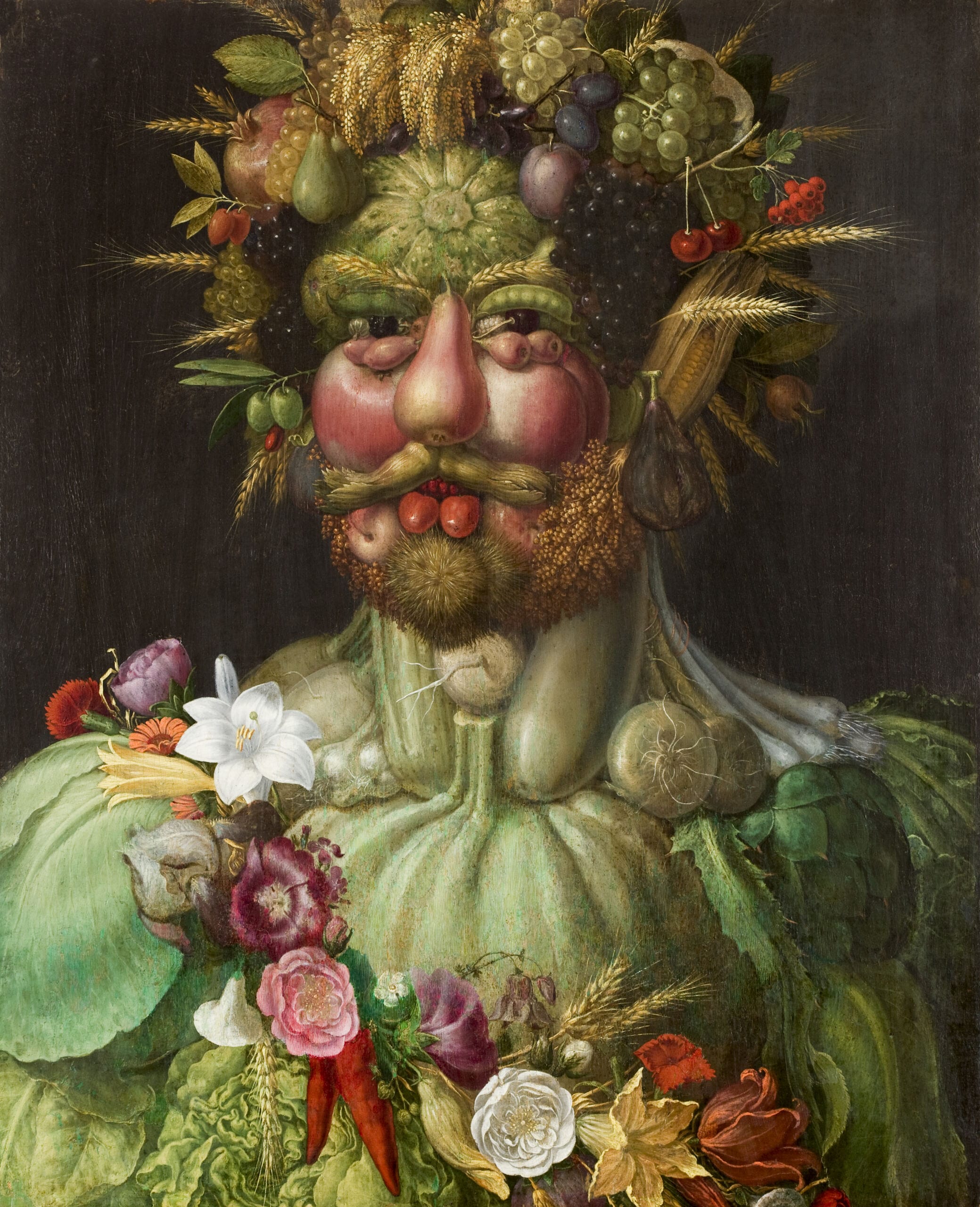
During the Renaissance, Giuseppe Arcimboldo created fascinating portraits from fruits and vegetables. Detailed still lifes from the Dutch Golden Age depict breakfast tables, seafood, and exotic delicacies. Fruits and vegetables were also portrayed as erotic symbols .
Rudolf II som Vertumnus (1590) by Guiseppe Arcimboldo
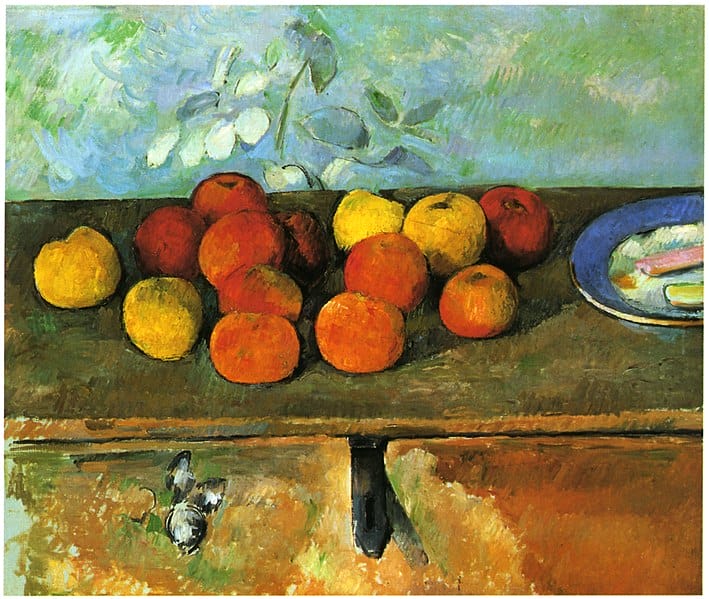
Even in later Art Periods And Movements still lifes with fruit enjoyed great popularity. One of the masters of this art was Paul Cézanne, whose works impressively captured the beauty and diversity of nature.
Paul Cézanne: Fruits and Biscuits
Filippo Tommaso Marinetti was a pioneer of a new art movement within modernismthat viewed the preparation and consumption of food as an artistic expression. In 1909, he and other artists founded the avant-garde Futurist movement in Milan, which drew inspiration from the industrial age and incorporated mechanical elements such as cars, airplanes, production processes, and urban planning into its art.
The Futurists viewed cooking and eating as essential parts of everyday life and sought to place them at the center of their visionary ideals. In 1932, Marinetti published "The Futurist Kitchen," which contained far more than just recipes; it functioned more as a kind of manifesto.
He viewed the preparation and enjoyment of food as part of a new worldview, in which hospitality became an avant-garde performance. The book described the essential elements of a perfect meal: originality, harmony, sculptural forms, aroma, music between courses, and a combination of different dishes and canapés with diverse flavors.
The chef was to use high-tech equipment and avoid controversial political topics during the meal, which was to be arranged in such a way that no cutlery was needed. Marinetti's ideas could not have foreseen the significant role food would play in art almost a century later.
Contemporary artists are now using food to convey political (especially feminist), economic, and social messages. They are opening restaurants as art projects and staging performances in which food is prepared and served in galleries. They are also creating elaborate sculptures from edible materials such as chocolate and cheese. While Marinetti might have been surprised by this development, some artists today even view food as a radical departure from a future filled with obsessions.
During the Pop Art , food became a symbol of society. Wayne Thiebaud painted rows of cakes and pastries in bright pastel colors reminiscent of advertisements and children's toys. His arrangements, which resembled diner displays rather than cozy elements of private life, reflected a society in which lavish desserts represented American abundance.
At the same time, artists like Daniel Spoerri using real food as art material, creating Eat-Art.
He is one of the most prominent artists of object art, was instrumental in the founding of the Nouveau Réalisme and is considered the creator of Eat-Art.
In 1970, the sardonic Swiss-German artist Dieter Roth a piece entitled "Staple Cheese (A Race)"which consisted of 37 suitcases filled with cheese and other pressed cheeses and hung on the walls with the intention that they would drip or "race" onto the floor.
Shortly after the exhibition opened in Los Angeles, an unbearable stench spread. The gallery was infested with maggots and flies, and health inspectors threatened to close it. The artist explained that the insects were, in fact, his intended audience.
Feminist artists of the late 1960s and early 1970s examined the American relationship with food in terms of the constraints it imposed on women. Feminists argued that the personal—including the most mundane aspects of daily life—is political.
In 1972, Miriam Schapiro and Judy Chicago rented a vacant 17-room house in Los Angeles, slated for demolition, and transformed it into a vast art installation. Schapiro and other female artists created an immersive installation in the dining room that mimicked the process girls follow when decorating dollhouses.
Her project, both a performance and an installation, condemned society's double standards—the inequality in expectations and opportunities for men and women. Later, feminist artists like Elizabeth Murray, in works such as "Kitchen Painting" (1985), suggested that women were strong enough to cope with both the secular and the domestic, by having a lumpy spoon, tied to a figure running a kitchen, appear to leap out of the picture plane and confront the viewer.
Inspirations from famous artists and original creations
A great starting point for food art is inspiration from famous works of art. Imagine designing a breakfast to Van Gogh's"Starry Night," or a dessert that reflects the colors and shapes of Mondrian's geometric paintings.
Such interpretations require a good eye for detail and a sense of aesthetics. Start with simple patterns and work your way up to more complex designs as you improve your skills.
You can find inspiration and recommendations for your personal food art creations in our Pinterest collection
(You must have accepted cookies to view the Pinterest board)
Practical tips for aesthetic presentation
The aesthetic presentation of food is an art that can transform any dish into a visual experience. With a few simple yet effective techniques, you can enhance your dishes not only in terms of taste but also visually.
Here are some practical tips on how to use colors, textures and shapes to transform your culinary creations into true works of art.
Play with color: Take advantage of the natural variety of colors in food. Combine contrasting colors like red tomatoes with green basil or yellow bell peppers with purple carrots. Colors should not only be aesthetically pleasing but also appetizing.
Textures and shapes: Experiment with different textures and shapes. Cut vegetables into various shapes or use cookie cutters to create interesting designs. Combine crunchy and soft elements to enhance the visual and gustatory experience.
Plate presentation: The way a dish is arranged on the plate can make a big difference. Use the plate as a canvas and place the elements so that they appear harmonious. Leave enough space so that the eye can perceive each element without it seeming cluttered.
Edible decorations: Flower petals, edible gold flakes, or microgreens can enhance dishes and give them a special touch. Make sure that all decorations are edible and complement the flavor.
Sauces and dressings: Use sauces and dressings to create patterns and accents on the plates. A simple lattice of chocolate sauce on a dessert plate or a ring of balsamic reduction on a salad plate can be visually stunning.
Step-by-step instructions: An artistic dessert
An example of an artistic dessert could be a "Fruit Tart Mandala" :
Base: Start with a shortcrust pastry base and a layer of vanilla cream.
Design: Cut various fruits (e.g., strawberries, kiwi, blueberries, mango) into thin slices.
Arrangement: Place the fruits concentrically in patterns, starting from the center and working outwards. Ensure that the colors are alternated and arranged symmetrically.
Finish: Give the mandala a light coating of apricot jelly to keep the fruit fresh and shiny.
Concluding thoughts
The art of food presentation is a wonderful way to unleash your creativity in the kitchen and impress your guests. With a little practice and inspiration, you can transform everyday meals into true works of art. Remember that aesthetics shouldn't come at the expense of taste.
A harmonious combination of taste and appearance is what makes for the true art of cooking. Have fun experimenting and creating your own culinary masterpieces!
Owner and Managing Director of Kunstplaza . Publicist, editor, and passionate blogger in the fields of art, design, and creativity since 2011. Graduated with a degree in web design from university (2008). Further developed creative techniques through courses in freehand drawing, expressive painting, and theatre/acting. Profound knowledge of the art market gained through years of journalistic research and numerous collaborations with key players and institutions in the arts and culture sector.
We use technologies such as cookies to store and/or access device information. We do this to improve your browsing experience and to display (non-)personalized advertising. If you consent to these technologies, we can process data such as browsing behavior or unique IDs on this website. Refusal or withdrawal of consent may adversely affect certain features and functions.
Functional
Always Active
Technical storage or access is strictly necessary for the legitimate purpose of enabling the use of a specific service expressly requested by the subscriber or user, or for the sole purpose of carrying out the transmission of a message over an electronic communications network.
Preferences
The technical storage or access is necessary for the legitimate purpose of storing preferences that were not requested by the subscriber or user.
statistics
Technical storage or access that is solely for statistical purposes.Technical storage or access that is used solely for anonymous statistical purposes. Without a subpoena, the voluntary consent of your internet service provider, or additional recording by third parties, the information stored or retrieved for this purpose cannot generally be used to identify you.
marketing
Technical storage or access is required to create user profiles, to send advertising, or to track the user on one or more websites for similar marketing purposes.




 J-Line Bulldog with Cigar (Version B), Animal Bust in Antique Bronze Look
84,90 €
J-Line Bulldog with Cigar (Version B), Animal Bust in Antique Bronze Look
84,90 €