The art of tattooing is known to have a tradition spanning millennia, ranging from ritual practices and traditional craftsmanship to a modern form of body art. Throughout this long history, the creation of a design has always been a profoundly human act: initial sketches on paper, conversations between artist and client, and the final transfer of the idea onto the skin. However, this self-evident truth is increasingly being challenged today.
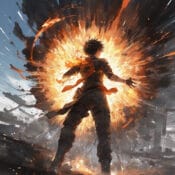
Within just a few years, generative image models have fundamentally changed the preparation process of many tattoo studios. Customers are increasingly arriving with pre-made images generated by AI in just a few seconds. This raises the question of what remains of the tattoo artist when the algorithm takes over such a crucial part of the work.
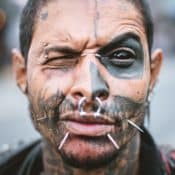
AI-generated tattoo designs: What remains of the artist when the algorithm takes over? Photo by cottonbro studio, via Unsplash
For many people, tattoos are far more than mere decoration. They mark memories, desires, identities, and much more. This is precisely where a key weakness of AI becomes apparent: While an algorithm can effectively translate words into images, it cannot visually interpret a personal story. It doesn't understand the context of grief, a birth, or an event that has fundamentally changed one's life.
The path from a generic prompt to an individual tattoo concept almost always leads through a personal consultation. Tattoo artists repeatedly report that by far the most important decisions often only emerge during this dialogue – when it becomes clear what the person actually wants to express, and when expertise and life experience come together.
AI-generated tattoo designs primarily serve as visual guides and can support the creative design process. They help, for example, to refine initial ideas, try out different compositions, or compare various styles. While some tattoo artists therefore see AI as a practical tool for design, others reject its use outright. They fear that automated image generation will increasingly push individual creativity and traditional artistic craftsmanship into the background.
Is an AI-generated tattoo even art?
This question leads directly into a fundamental aesthetic debate, because tattooing as an art form doesn't just rely on the motif, but above all on the connection between idea, execution, and personal style. And this is precisely where it gets complicated. A prompt can formulate an idea. But the true artistic achievement often only begins where a person makes the decisions: which lines remain, which details disappear, and how should the motif interact with the individual body shape.
Creativity without human experience, without personal memories, without a sense of transience , and without knowledge of how skin ages is understandably difficult to guide. Artificial intelligence, therefore, remains primarily a tool whose usefulness continues to be debated: it produces output, but not responsibility.
What remains of the tattoo artist when AI designs the motif?
Experience shows that tattoo artists remain independent creatives even in the age of AI. However, their artistic role changes when AI-generated images serve as a starting point for new designs. An AI-generated design is ultimately just a digital image – without any knowledge of skin texture, muscle structure, or healing processes. The selection, interpretation, and further development of such a design are and will remain independent artistic achievements. Many tattoo artists use AI images merely as a starting point, then rework them by hand, correcting proportions, reducing details, and adapting the design to the individual's anatomy.
The reason why a digital image is far from being a functional tattoo becomes clear at the latest when looking at the skin. What looks impressive on the screen can quickly become blurry, faded, or simply fail to achieve the desired effect when actually tattooed. The artistic signature, therefore, only emerges where the person retains control over the crucial steps.
Style at the touch of a button: Can AI copy the handwriting of other tattoo artists?
Anyone who feeds a prompt with the name of a well-known tattoo artist can receive an image that imitates certain characteristics of that artistic style. The line between inspiration, stylistic adoption, and direct copying is fluid and difficult to define legally. An artistic signature is almost impossible to protect legally because styles as such are not protected by copyright, only specific works.
For individual tattoo styles, this presents a rather paradoxical situation: the more recognizable a style, the easier it is to imitate. At the same time, many tattoo artists remain unperturbed. They trust that the subtle differences—such as the type of stitch, the handling of ink, and the personal touch—cannot be easily reproduced. Different tattoo styles may look quite similar on screen, but on the skin, the artist's experience is what truly sets them apart.
Who owns an AI-generated tattoo?
As previously discussed, the legal situation is currently rather inconsistent and constantly evolving. Under German copyright law, images generated entirely by AI generally lack the necessary personal intellectual creation of a human being. However, this does not automatically mean that the image can be copied at will – while a purely AI-generated image itself generally does not enjoy copyright protection, its use may infringe upon the rights of third parties.
The situation is different if a person independently designs or revises the AI concept to such an extent that it becomes a personal intellectual creation. In a ruling in February 2026, the Munich District Court determined that even gradual human interventions during prompting can qualify for copyright protection, provided they sufficiently shape the result creatively. In the specific case at hand, however, the court denied such protection.
If already protected artworks are used as templates and significant protected design elements are incorporated as a result, third-party copyrights may also be infringed. Furthermore, the applicable usage rights between the client, tattoo artist, and AI provider depend on the specific case and the terms of service of the respective provider.
Where AI reaches its limits in tattoo designs
The errors of the image generators are still relatively obvious, especially to trained eyes: anatomical and geometric inconsistencies, hands with too many fingers, illegible writing, and invented symbols. The sheer amount of detail is particularly problematic: AI images often tend to be overloaded with fine structures that do not remain permanently legible on skin.
The crucial point, however, is fundamental: While AI can generate beautiful images, it doesn't understand how human skin behaves during tattooing. It knows nothing about scarring, pigmentation, stretching, or that a tattoo on a finger heals differently than one on the back. This knowledge remains the domain of those who work with needles every day – and that won't change in the future.
Tattoo designs from the internet: Inspiration even without your own AI?
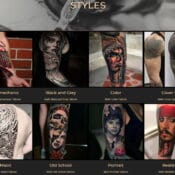
Those wanting to get a tattoo don't necessarily need to resort to artificial intelligence to find a suitable design. The internet offers a virtually inexhaustible selection of tattoo designs. Specialized tattoo websites, extensive image galleries, and platforms like Pinterest provide inspiration for almost every taste.
However, even before the advent of generative AI, not all tattoo designs were original, individual creations. Many designs were based on recurring symbols, pre-made patterns, or combinations of already known design elements. Therefore, not every design published online was entirely new or created specifically for a particular person.
With the increasing use of AI, these boundaries are becoming even more blurred. AI-generated designs are appearing more and more frequently among classic tattoo templates, and these are not necessarily labeled as such. Whether a motif was drawn by hand, assembled from existing elements, or entirely generated by an algorithm is often difficult to discern at first glance. Those seeking inspiration online should therefore take a closer look and, ideally, develop the template into a unique design together with a tattoo artist.
How much potential is still there in AI-generated tattoo designs?
As simple as AI-powered image creation may seem at first glance, developing a truly compelling tattoo design can be quite challenging. Especially when specific ideas about style, composition, or individual details are involved, several attempts and precisely formulated prompts for ChatGPT or other AI image generators are often necessary. Furthermore, the various AI models sometimes deliver very different results in terms of quality, and more powerful models or certain functions may require payment. Therefore, even with AI, a unique tattoo design isn't necessarily created at the push of a button.
Nevertheless, the technological possibilities are far from reaching their full potential. Individual designs in real time, AI-generated designs tailored to body shape, and virtual tattoo previews using 3D scans and augmented reality are all conceivable and, in some cases, already exist in rudimentary form. The more sophisticated these technologies become, the more they could fundamentally change tattoo design.
The crucial question, however, remains whether the industry will succeed in integrating AI as a creative tool without losing what tattoos have always been about: the connection between a person, their personal story, and the artistic signature of a tattoo artist.
Owner and Managing Director of Kunstplaza . Publicist, editor, and passionate blogger in the fields of art, design, and creativity since 2011. Graduated with a degree in web design from university (2008). Further developed creative techniques through courses in freehand drawing, expressive painting, and theatre/acting. Profound knowledge of the art market gained through years of journalistic research and numerous collaborations with key players and institutions in the arts and culture sector.
We use technologies such as cookies to store and/or access device information. We do this to improve your browsing experience and to display (non-)personalized advertising. If you consent to these technologies, we can process data such as browsing behavior or unique IDs on this website. Refusal or withdrawal of consent may adversely affect certain features and functions.
Functional
Always Active
Technical storage or access is strictly necessary for the legitimate purpose of enabling the use of a specific service expressly requested by the subscriber or user, or for the sole purpose of carrying out the transmission of a message over an electronic communications network.
Preferences
The technical storage or access is necessary for the legitimate purpose of storing preferences that were not requested by the subscriber or user.
statistics
Technical storage or access that is solely for statistical purposes.Technical storage or access that is used solely for anonymous statistical purposes. Without a subpoena, the voluntary consent of your internet service provider, or additional recording by third parties, the information stored or retrieved for this purpose cannot generally be used to identify you.
marketing
Technical storage or access is required to create user profiles, to send advertising, or to track the user on one or more websites for similar marketing purposes.



 J-Line Minimalist Floor Lamp "Black Strings", delicate metal with paper lampshade
215,00 €