A cultural journey through Morocco – customs, traditions & handicrafts
Morocco , a country where past and traditions are deeply intertwined, invites you on a cultural journey through time. From the historic cities of Marrakech, Fez, Rabat, and Casablanca to its breathtaking landscapes, Morocco proves itself a shining example of civilization, rich in culture and heritage.
This North African gem has been shaped by numerous influences over the centuries, from the Berbers and Arabs to the French and Spanish. The result is an extraordinary combination of architectural masterpieces, culinary delights, exquisite craftsmanship, and vibrant traditions that continue to flourish today.
Morocco is a land where ancient customs meet vibrant cultures. From the bustling souks of Marrakech to the peaceful landscapes of the Atlas Mountains, the country is steeped in traditions that reflect its diverse history and rich heritage. A deep understanding and appreciation of these traditions not only enriches the experience of visiting but also fosters mutual respect and cultural understanding across borders.
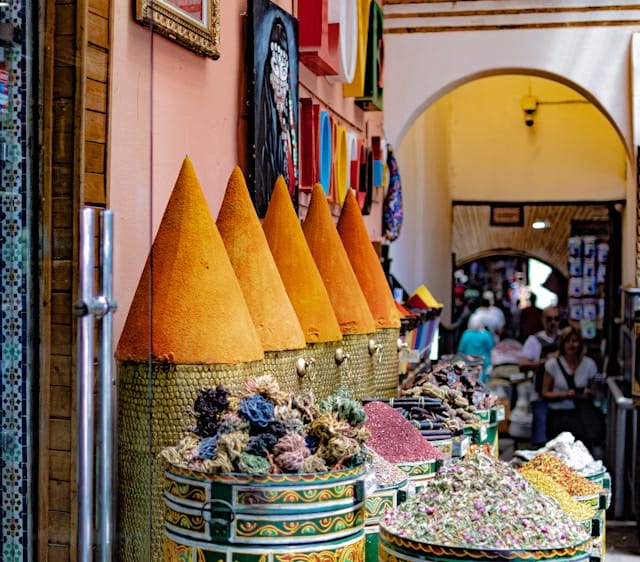
Photo by Michael Starkie @starkie_pics, via Unsplash
So treat yourself to a cup of mint tea and immerse yourself with me in the intoxicating Moroccan culture.
Show
table of contents
A brief look at the cultural history of Morocco
Morocco's cultural mix is the result of numerous conquests, trade relations, and the interplay of different peoples and religions that have shaped the country.
Even in antiquity, the region of present-day Morocco was a melting pot of cultures. The Phoenicians, a seafaring people from the eastern Mediterranean, established trading posts here that fostered cultural exchange. Later came the Romans, who left their mark in impressive ruins, such as the ancient city of Volubilis . These ruins bear witness to a flourishing urban and economic life during the Roman Empire.
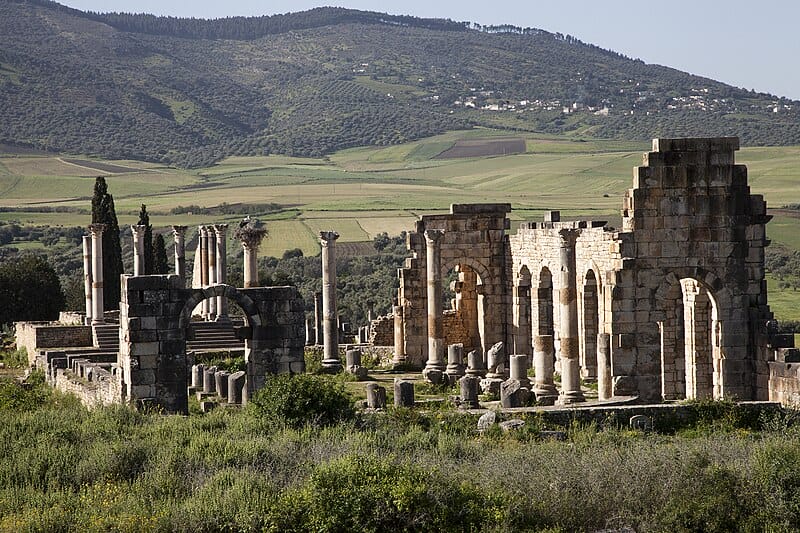
Image source: Subhros, CC BY-SA 3.0, via Wikimedia Commons
With the arrival of the Arabs in the 7th century, a new era began. Morocco was integrated into the Islamic world, leading to a profound religious and cultural transformation. The introduction of Islam brought new architectural styles, sciences, and arts. The numerous magnificent mosques and madrasas (religious schools) from this period bear witness to the flourishing of Islamic culture.
Morocco experienced its golden ages in the 11th and 12th centuries under the rule of the Almoravids and Almohads . These dynasties fostered impressive architecture and left behind monumental buildings such as the Koutoubia Mosque in Marrakech and the Hassan Tower in Rabat.
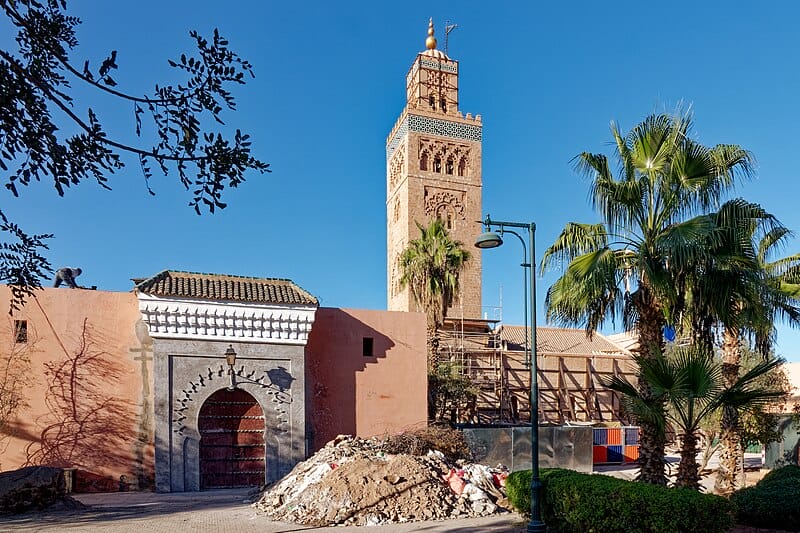
Image source: Holger Uwe Schmitt, CC BY-SA 4.0, via Wikimedia Commons
The Berbers , the original inhabitants of North Africa, played a significant role in the cultural development of the country eras
Berbers, or Imazighen or Amazigh as they are called in the national Arabic language, are the indigenous people of Morocco, whose history stretches back 20,000 years. Remarkably, they make up almost a third of Morocco's 37 million inhabitants. Yet, despite their deep historical roots and significant presence, Tamazight , the Berber language, was only recognized as an official language of Morocco in 2011.
This recognition was a pivotal moment for the Berber community, especially for several generations who grew up without formal education in their native language. Today, the younger generation is showing renewed interest in learning Tamazight, a step seen as a reclaiming and revitalization of their cultural identity.
Their traditional crafts, music and their unique Berber language (Tamazight) are still alive today and significantly enrich the country's cultural heritage.
Marinid and Saadian dynasties, which followed the Almoravids, brought a renewed cultural flourishing. Particularly noteworthy are the Ben Youssef Madrasa in Marrakech and the Mausoleum of Moulay Ismail in Meknes, examples of masterful craftsmanship and architectural innovation from this period. The cities' characteristic souks (markets) are a vibrant remnant of this era, where spices, handicrafts, and textiles are still traded.
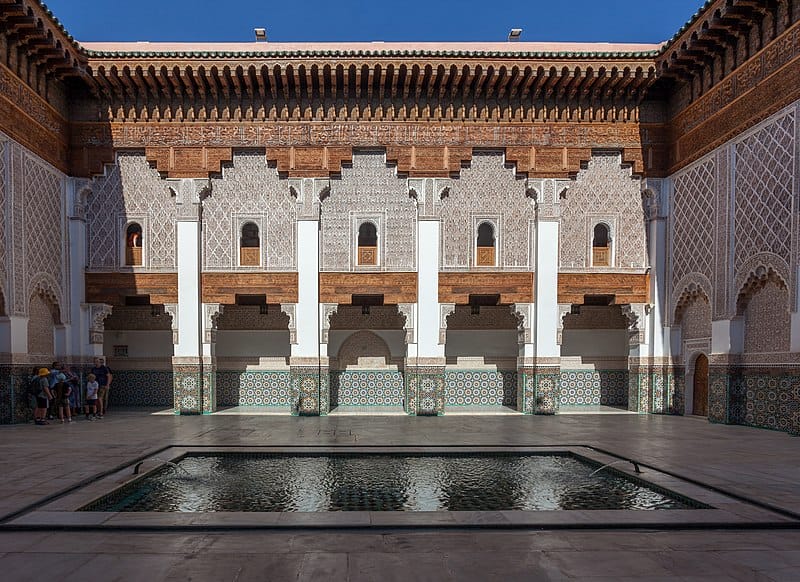
Image source: Marco Almbauer, CC BY-SA 4.0, via Wikimedia Commons
During the colonial period at the beginning of the 20th century, which culminated in Morocco's independence in 1956, the French and Spanish also left their cultural mark. This is particularly evident in the cities of Casablanca and Tangier , where modernist architecture and colonial influences remain visible to this day.
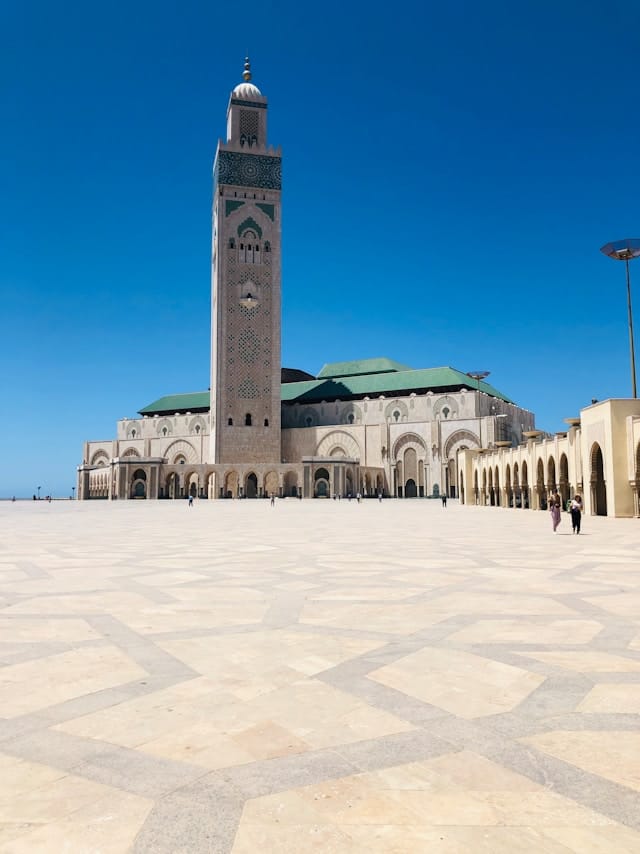
Photo by Ajmal MK @ajmk, via Unsplash
This historical overview demonstrates how deeply rooted and diverse Morocco's cultural history is – understand this introduction as an invitation to become enthusiastic about the richness and beauty of Moroccan culture.
Morocco celebrates its cultural identity with large festivals
Today, Morocco is a country that prides itself on its diverse cultural identity. Festivals like the Gnaoua Festival in Essaouira or the Fès Festival of World Sacred Music testify to its vibrant traditions and continuous cultural exchange. It is this fascinating blend of historical layers that makes Morocco a unique cultural mosaic waiting to be discovered.
The Essaouira Gnaoua and World Music Festival is a major event Gnaoua culture . Every year, thousands of visitors flock to this Moroccan coastal city to experience the region's music, dance, art, and traditions. Essaouira is considered a safe and welcoming place in North Africa.
The festival itself comprises a mix of large stage concerts with both local and international artists, as well as smaller, more intimate performances focusing on Gnaoua music. The following video highlights the special, immediate, and personal experiences that embody the spirit of Gnaoua music and documents the impressions gained during the three-day festivities.
The Gnaoua are primarily descendants of people of African origin who were brought to this region as slaves many centuries ago. They come from present-day Ghana, Senegal, Guinea, Mali, and Chad; however, some historians suggest that their roots may also lie in Sudan.
The next video shows an arrangement of "Taha" live at the 2019 FES Festival of World Sacred Music in Morocco. The lyrics are taken from a mystical Sufi poem by the Sudanese-Egyptian Shaykh Salih al-Ja'fari, who taught at Al-Azhar University. The melody is inspired by a traditional folk song that spread across India and Central Asia to the Balkans and North Africa.
In this special collaboration, Sami Yusuf was accompanied by master instrumentalists from all over the world, as well as the renowned Moroccan singer Ismail Boujiya and other background singers.
The beauty of Moroccan architecture
Morocco's rich cultural heritage is powerfully reflected in its architecture. The Bahia Palace , a remarkable 19th-century building, is among Marrakech's most impressive architectural achievements. Built for a Grand Vizier, the palace's intricate tilework, spacious courtyards, and lush gardens showcase the opulence of the era. A stroll through its rooms, adorned with delicate stucco work and colorful stained-glass windows, offers visitors a glimpse into the city's illustrious history.
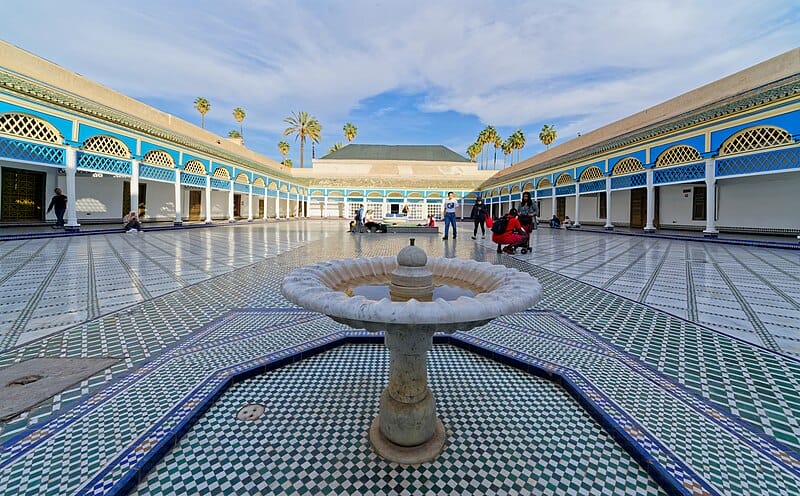
Image source: Holger Uwe Schmitt, CC BY-SA 4.0, via Wikimedia Commons
Another impressive structure is the Koutoubia Mosque , mentioned above, easily recognizable by its majestic minaret. Completed in the 12th century, this mosque remains one of the largest in Morocco and plays a central role in the city's religious life. Although non-Muslims are not permitted inside the mosque, the adjacent gardens offer a peaceful retreat and the opportunity to admire the building's architectural splendor from the outside.
The beauty of Moroccan architecture reflects the diverse cultural influences that have shaped the country. When considering the outstanding artistry expressed in Morocco's buildings, the Alhambra in Granada, Spain, is a prime example of how Moroccan influences have inspired architecture far beyond its borders.
The Alhambra's artistic designs and detailed ornaments evoke the magnificent elegance of Moroccan palaces and gardens.
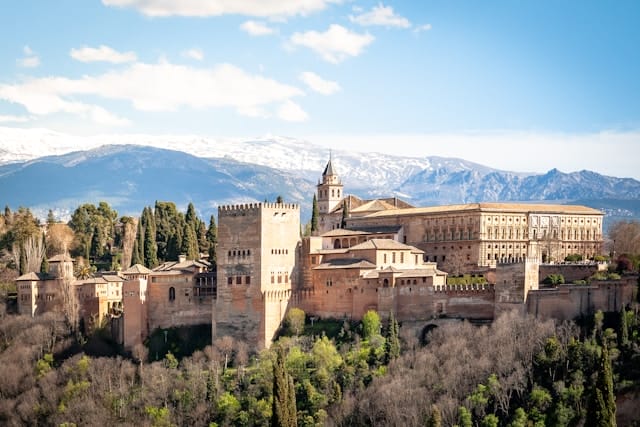
Photo by Dimitry B @dimitry_b, via Unsplash
A walk through the blue-painted streets of Chefchaouen offers an almost magical experience, where every corner and wall expressively tells of the skill and creative energy of the local builders.
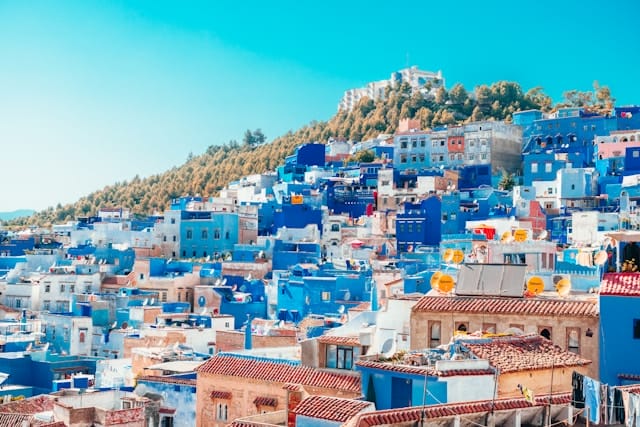
Photo by Heidi Kaden @infinitexplorer, via Unsplash
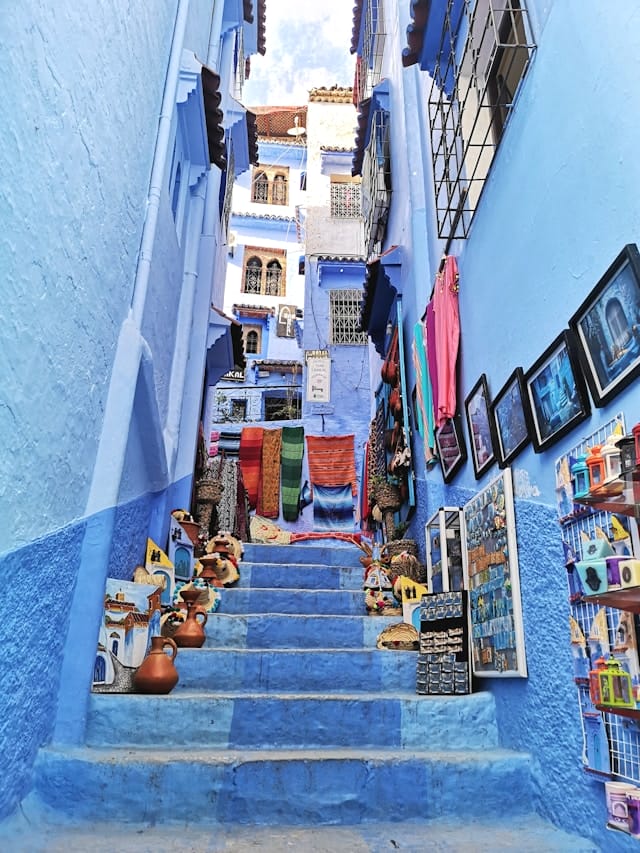
Photo by Tienko Dima @damabima, via Unsplash
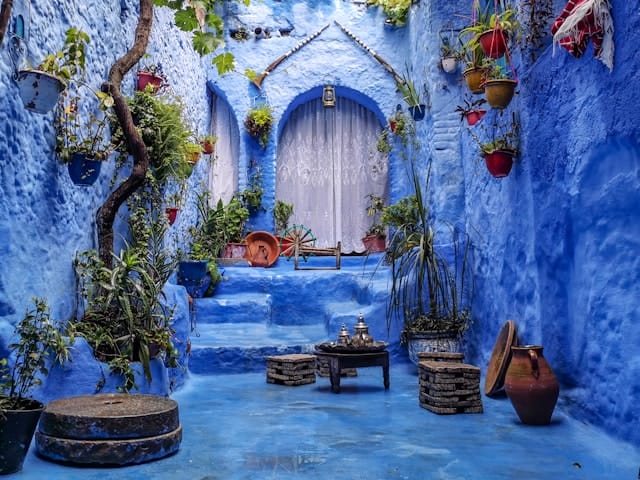
Photo by Kyriacos Georgiou @koullislp, via Unsplash
Rabat , one of Morocco's imperial cities and its capital, stretches picturesquely along the banks of the Bouregreg River and the Atlantic Ocean. This city is not only a center of culture and history, but also renowned for its architectural landmarks, which embody both its rich Islamic heritage and the influences of the French colonial era.
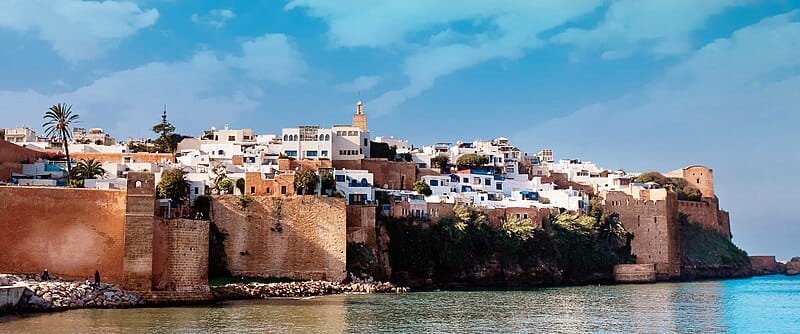
Image source: Rabat117, CC BY-SA 4.0, via Wikimedia Commons
A prime example is the Kasbah of the Udayas , a royal fortress from the Berber period, surrounded by elegantly landscaped French gardens. From here, there is a breathtaking view of the ocean.
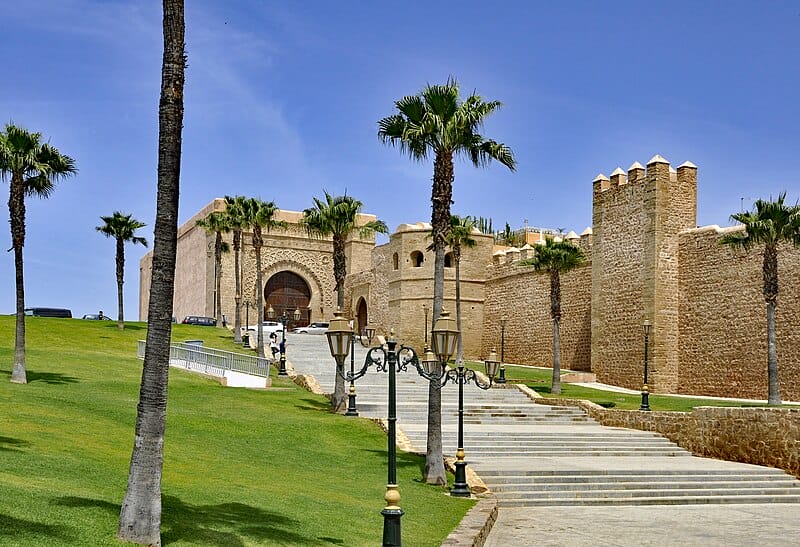
Image source: P. Hughes, CC BY 4.0, via Wikimedia Commons
Moroccan handicrafts
Moroccan craftsmanship is renowned worldwide for its exquisite and diverse pieces. The artistry of Moroccan artisans and artists is deeply rooted in traditions passed down through generations, constantly incorporating new influences.
Without being able to go into too much depth, I would like to give a brief overview here to introduce the remarkable forms of Moroccan craftsmanship.
Ceramics and pottery
Moroccan ceramics and pottery are famous for their vibrant colors and intricate patterns. Cities like Fez and Safi are renowned for their ceramic production.
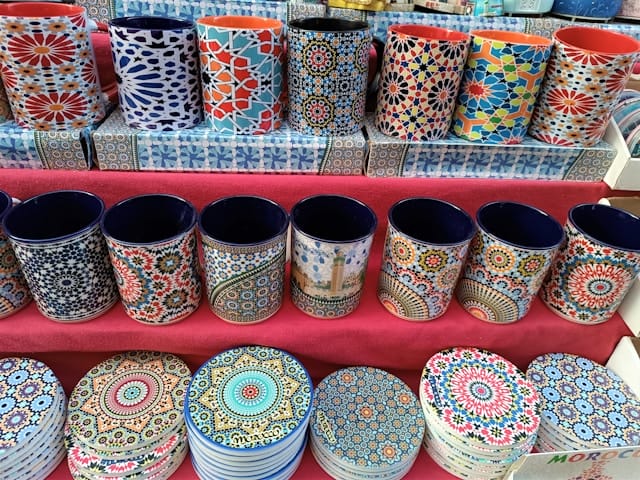
Photo by Tomasz Anusiewicz @oxganggreen, via Unsplash
Handcrafted pieces from these locations are characterized by detailed painting and glazing techniques, often incorporating geometric and floral patterns. Berber symbols and Arabic calligraphy are common motifs.
Zellij (mosaic)
The art of Zellij , the arranging of small, colored tiles into complex geometric patterns, is one of the most impressive forms of Moroccan craftsmanship.
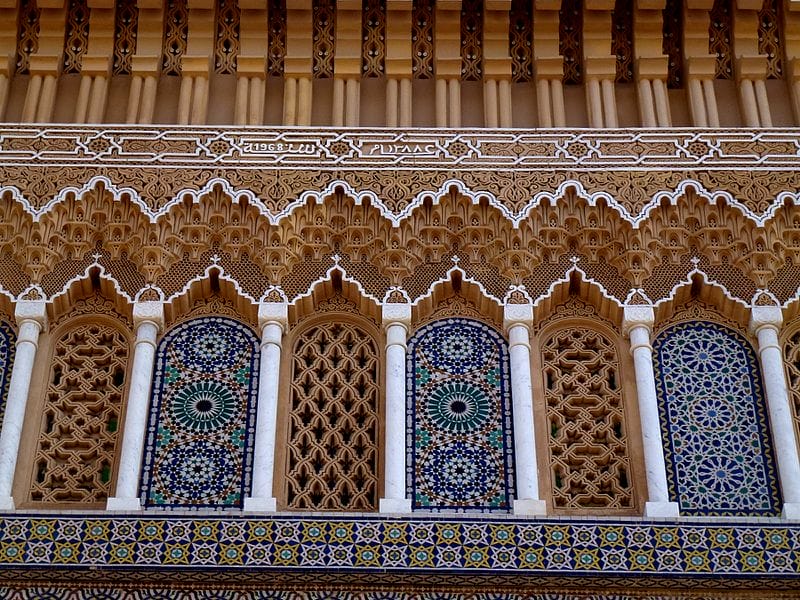
Image source: Hiroki Ogawa, CC BY 3.0, via Wikimedia Commons
These mosaics adorn walls, floors, fountains, and even pieces of furniture. They are testaments to masterful precision work, where each tile is cut and meticulously placed by hand.
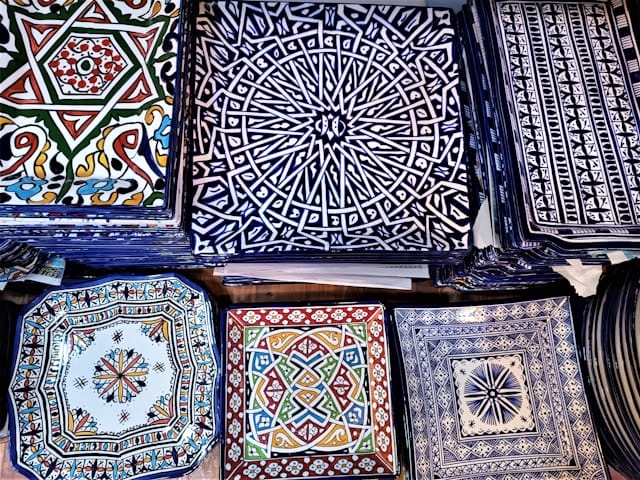
Photo by Tomasz Anusiewicz @oxganggreen, via Unsplash
Carpets and textiles
Carpet weaving is another highlight of Moroccan craftsmanship. Berber carpets are particularly well-known and prized for their dense wool weaves, vibrant colors, and symbolic patterns. Each tribe and region has its own designs and techniques, resulting in an astonishing variety of styles.
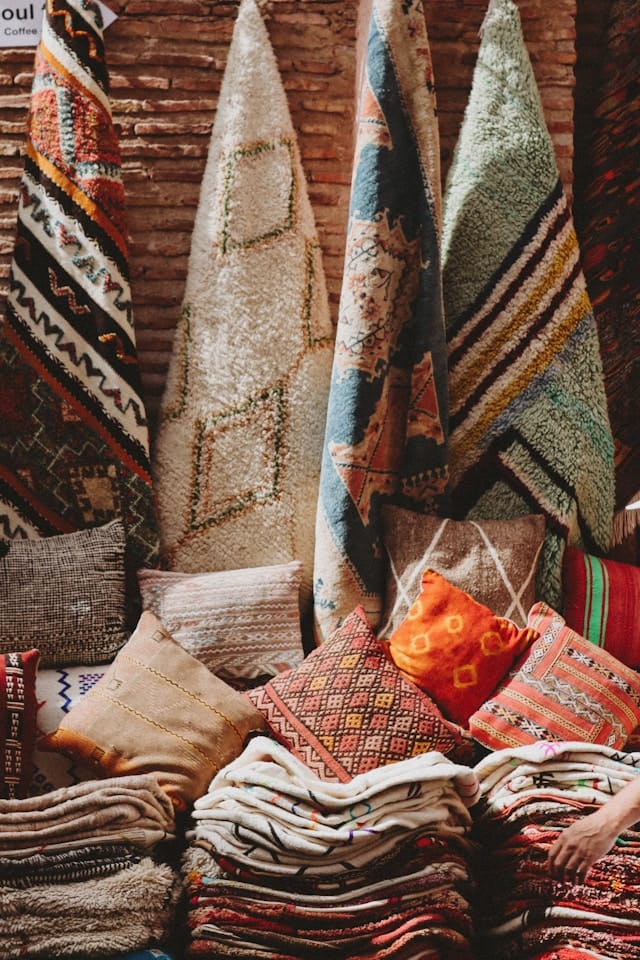
Photo by Rikke Hembre @hembris, via Unsplash
Berber carpets are often symbolic, telling stories or representing the social status of their creators.
Metalwork
Moroccan metalwork encompasses a wide variety of products, from delicate silver and gold work to artfully designed lamps and furniture made of iron and copper.
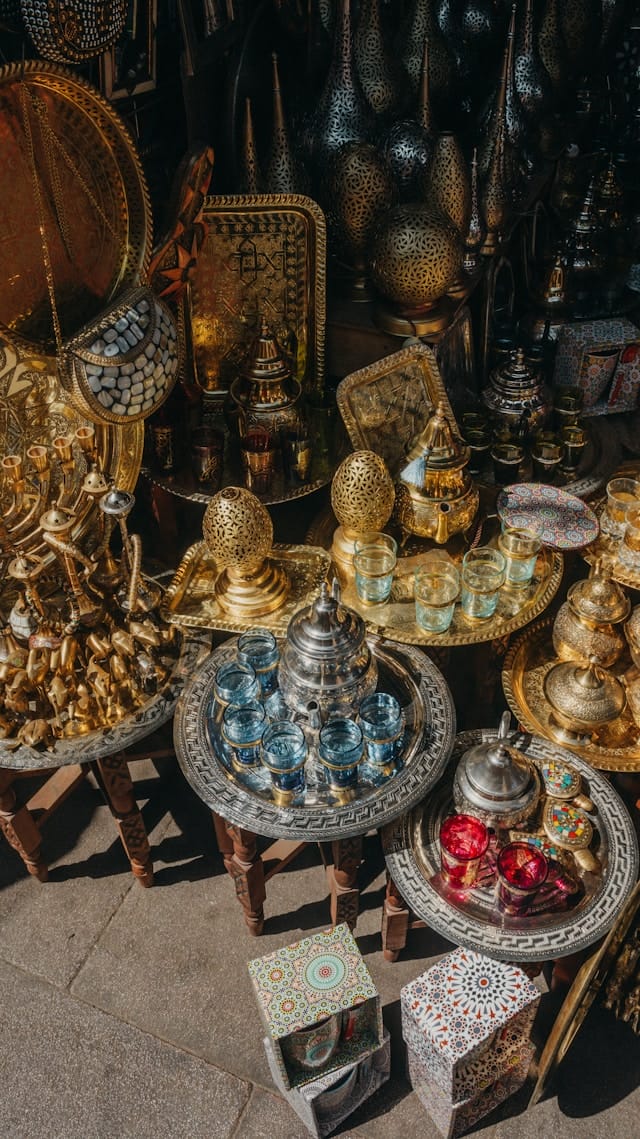
Photo by Emilia Igartua @helloemilia, via Unsplash
The Medina (old town) of Marrakech is a hotspot for such metal art , where artisans in small workshops produce impressive lanterns, trays and furniture with elaborate engravings and patterns.
Wood carving
Woodwork, especially in the form of carved doors, windows, furniture, and other decorative elements, is also widespread in Morocco. The art of woodcarving is frequently used for architectural details in traditional riads (houses with courtyards) and historical buildings.
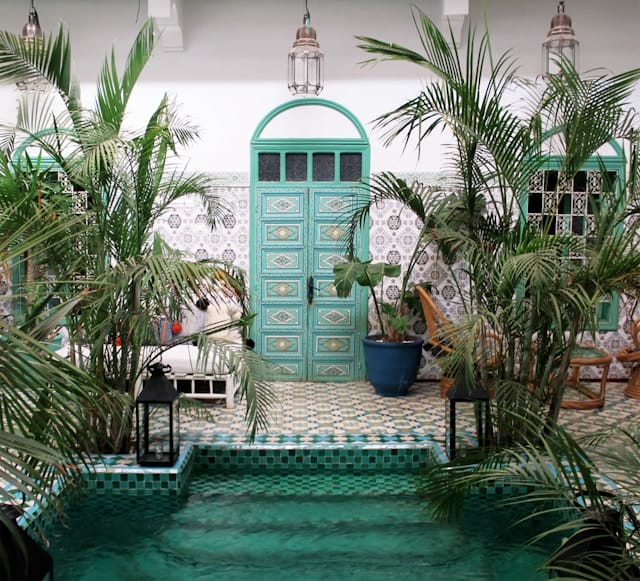
Photo by Jessica Kantak Bailey @jkkantakbailey, via Unsplash
Cedarwood is the preferred material, and the designs range from geometric patterns to complex, openwork arabesques.
Leatherwork
Leather products from Morocco enjoy a high international reputation. The city of Fez is particularly famous for its traditional tanneries and the resulting high-quality leather goods, ranging from bags and shoes to poufs and clothing.
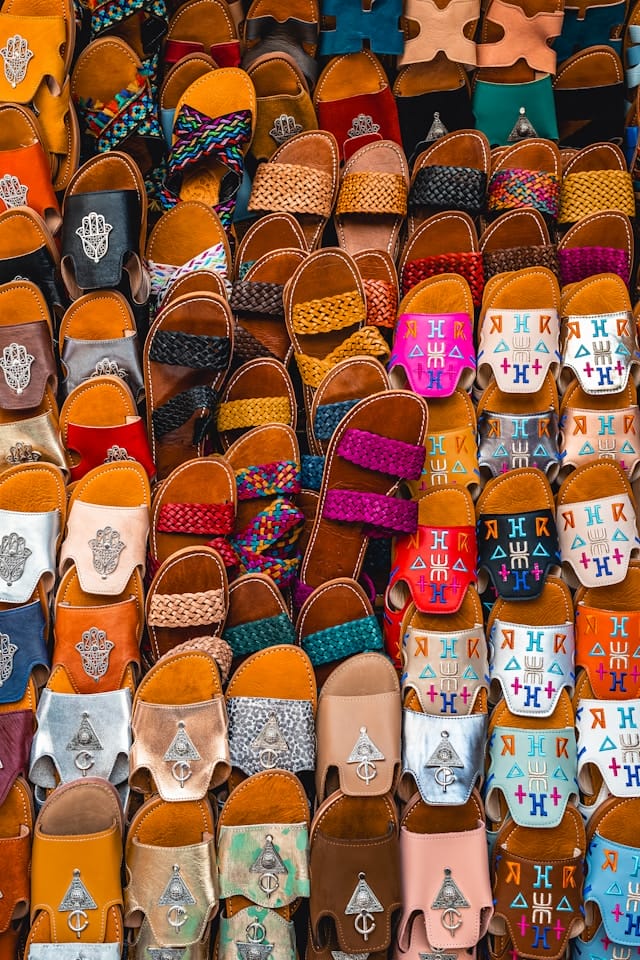
Photo by Mauro Lima @limamauro23, via Unsplash
The dyeing techniques and careful workmanship are hallmarks of this craft.
Jewelry
Traditional Moroccan jewelry is often richly decorated and symbolic. Berber jewelry includes intricately crafted silver pieces adorned with semiprecious stones, coral, and amber. These pieces frequently carry cultural and spiritual meanings.
Textile art
Aside from carpets, there are also fine silk and cotton textiles woven or embroidered in intricate patterns. Kaftans and djellabas , traditional Moroccan garments, are often adorned with elaborate embroidery and embellishments.
These diverse forms of Moroccan craftsmanship reflect the country's rich cultural heritage. They bear witness to the connection between past and present, and between art and everyday life. Visitors and art lovers can discover these masterful pieces in the souks and specialized craft markets, or in museums and galleries.
Important customs and traditions of Morocco
Greeting etiquette
In Morocco, greetings have a deeper meaning than we are used to here in Germany; they are firmly rooted in cultural traditions. A common Moroccan greeting involves a handshake with the right hand, often followed by a gentle touch of the cheek, provided the people are of the same sex.
When men greet a person of the opposite sex, they may offer a handshake, while women may prefer to respond with a nod or a verbal greeting to avoid physical contact.
Close friends and family members, on the other hand, often greet each other with a hug or a kiss on both cheeks.
Shaking hands
In Moroccan tradition, the right hand plays a central role in most social encounters, such as shaking hands. It is considered clean and respectful when it comes to greetings and the exchange of objects and money (e.g., tips), while the left hand is reserved for private matters, such as using the toilet.
It's important to be aware of this often. A handshake is usually firm, but not overly pushy. When greeting someone of the same sex, it can also be accompanied by a gentle touch of the cheek or a hug among close friends and family.
Moroccan handwashing rituals
Handwashing plays a central role in Moroccan culture , especially before and after meals. The custom transforms this everyday practice into a significant social ceremony. Water is poured over the hands from a communal jug, symbolizing not only cleanliness and respect but also emphasizing the host's hospitality.
This ritual strengthens the sense of community and shows gratitude for the food and the effort put into its preparation. Washing hands again after the meal also emphasizes the importance of hygiene and etiquette.
Dress code
Moroccan clothing reflects the country's rich cultural and religious values. Western clothing is accepted in urban areas, but modesty remains important: women should choose dresses or skirts that cover their knees, and men should avoid shorts on formal occasions.
Rural regions, on the other hand, favor traditional garments such as the djellaba and the kaftan , reflecting their rich heritage and craftsmanship. Adhering to local dress codes is particularly important in conservative areas to preserve Moroccan traditions and show respect.
By adopting these customs, guests enrich their own experience and deepen their connection to the local culture. Appropriate clothing choices are therefore a sign of appreciation for the hospitality of their Moroccan hosts.
Hospitality and community rituals
Moroccan hospitality is widely appreciated for its warmth and generosity. Guests are often welcomed with traditional Moroccan mint tea, known locally as Atay or Thé à la Menthe , which symbolizes a welcoming culture and friendship.
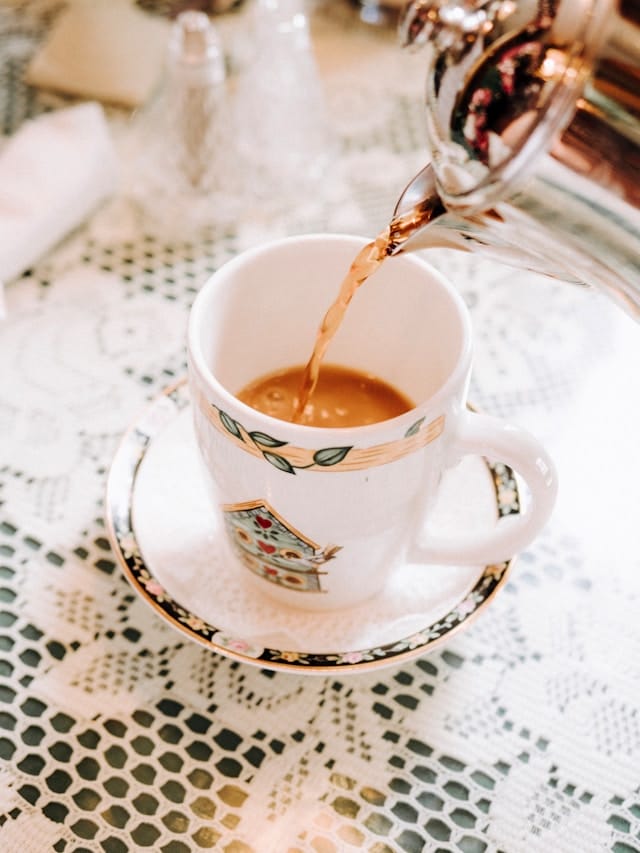
Photo by Brian Patrick Tagalog @briantagalog, via Unsplash
The tea is prepared from green tea leaves, fresh mint, and a generous amount of sugar. The ritual of serving and drinking the tea follows a specific procedure. The tea is poured from a considerable height, resulting in a frothy consistency. It is usually the host who serves the mint tea. Accepting this tea and participating in the ritual is considered an expression of respect; a refusal would often be interpreted as rudeness to the host.
Shisha culture , often referred to as “nargileh” or “hookah” also an integral part of social life in Morocco and many other parts of the Arab world. This culture has roots stretching back to the Ottoman era, or even to India and Persia, and it embodies a tradition of conviviality and relaxation.
In Morocco, shisha (also commonly "kalian" ) has become very popular and firmly integrated into the local culture as a social activity. It is usually enjoyed in a social setting, whether in traditional coffee houses known as "mezouars" or in modern lounges. These meeting places are spaces for relaxation, where people meet friends, converse, and enjoy themselves.
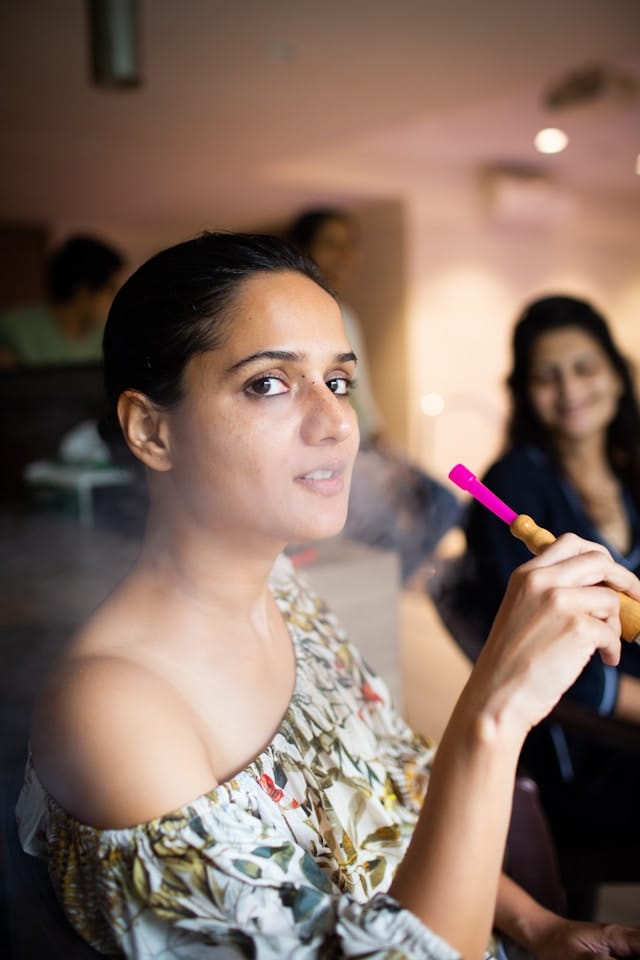
Photo by Raj Rana @theranaman, via Unsplash
Traditionally, shisha tobacco in Morocco (also known as "Mu'assel" or "Maassel" ) is made with molasses, honey, and various fruit flavorings. Popular flavors include apple, mint, grape, melon, and more. In some traditional cafes, guests can even watch as the shisha tobacco is lovingly prepared and arranged in the water pipes. More recently, technologically advanced models, such as e-shishas .
Shisha smoking in Morocco is often associated with specific rituals and a touch of spirituality. Lighting the coals, filling the water pipe, and taking the first puffs are considered a kind of meditative practice. The ritual is often performed by older members of the community who have mastered the art of shisha smoking.
World traveler Yuto Saito a typical evening with shisha and tea together with a local guide in the heart of Fes. He reported extensively on his authentic experiences during his cultural journey in a blog post on Peek: Embracing Moroccan Culture: An Evening of Shisha and Tea in Fes .
Dining etiquette
Meals in Morocco are generally communal events that strengthen the bonds and sense of community among those present. It is common to eat with the right hand and to use bread to scoop dishes from a shared platter, rather than using cutlery. These gatherings often feature staple Moroccan dishes such as tagine – a slow-cooked stew – and couscous.
Refusing food offered by your host can be a significant burden for them, with repercussions long after your departure. This is considered a lack of hospitality.
Experienced travelers advise that if you don't want to eat something, it's more diplomatic to mention an allergy or sensitivity than to express a direct refusal. Furthermore, it's customary and appreciated to compliment the food, which strengthens the bond of gratitude and respect between host and guest.
Haggling and trading in markets
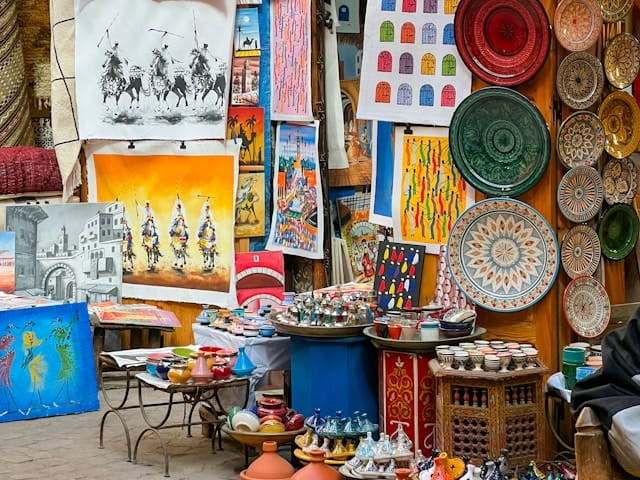
Photo by Danai Tsoutreli @danaetsoutreli, via Unsplash
Shopping in Moroccan souks (markets) is an exciting experience characterized by lively encounters and negotiations. Haggling over prices is not only expected but a central aspect of the shopping experience. However, a respectful and friendly tone should always be maintained.
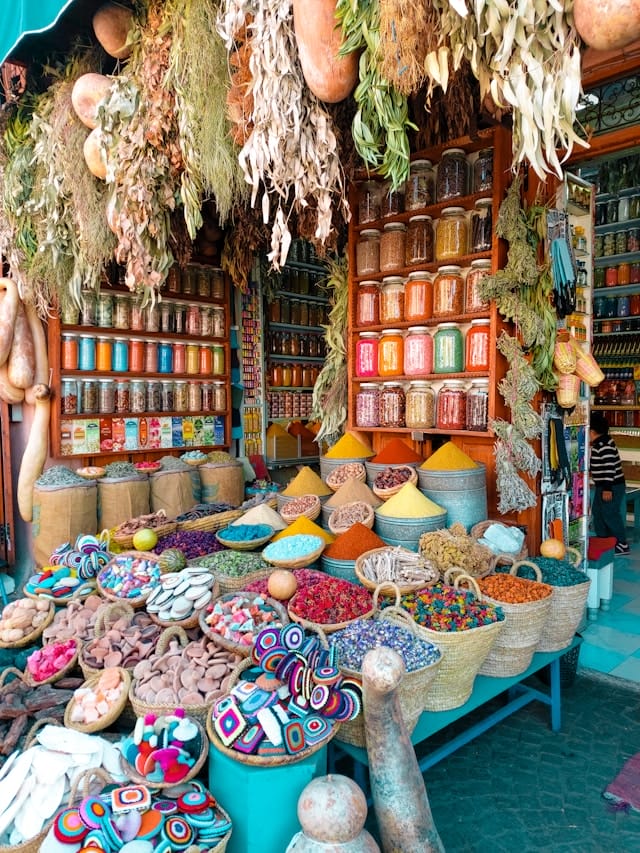
Photo by zakariae daoui @zakariaedaoui, via Unsplash
Building a positive relationship with vendors can lead to more advantageous offers and a more pleasant shopping experience. Tourism plays a vital role in Morocco's economy, and the government has implemented strict guidelines to counter the intimidation tactics some travelers have faced in the past.
Religious practices and the role of women
Morocco is predominantly inhabited by Muslims , and religious practices are deeply ingrained in daily life. When visiting mosques and other holy sites, it is important to dress appropriately. Women should generally ensure their shoulders and knees are covered, while men should refrain from wearing shorts.
Non-Muslims are generally prohibited from entering the prayer halls of mosques; however, some may offer guided tours that provide interesting insights into the architecture and significance of the site. Respecting local customs regarding prayer times and religious traditions is crucial for positive interaction with the local community.
During prayer times, many businesses typically close, so visitors should adjust their activities accordingly. Following these practices not only shows respect for Moroccan culture but also enriches your experience by fostering deeper connections and a better understanding of the country's diverse traditions.
Moroccan society traditionally exhibits patriarchal structures , and gender roles can differ significantly between urban and rural areas. Women often assume diverse roles within their families and communities, which influences their participation in public life. While women may take on more visible roles in urban areas, traditional practices remain prevalent in rural regions.
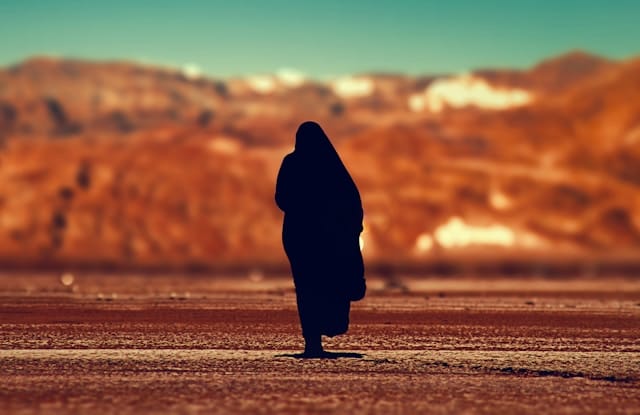
Photo by Mohamed Nohassi @coopery, via Unsplash
It is important to respect cultural norms when dealing with women and, in particular, to avoid physical contact unless initiated by them.
In Western societies, outsiders might easily perceive Moroccan culture as one where women are considered inferior. But this is a misconception. Joelle and Ryan , two globetrotters from Wanderers Compass told by a local that women are often highly valued. He illustrated this with the following example: When the Moroccan national football team performed exceptionally well at the World Cup, they were honored with an audience with the king – and who did they bring as their special guest? Their mothers. This highlights the deep respect and appreciation for women in Moroccan society.
A few words to conclude our cultural tour
Morocco's diverse cultural heritage unfolds a network of traditions that can transform a stay into an unforgettable experience if approached with sensitivity and respect.
Respect for Moroccan customs and traditions not only enriches your travel experience but also strengthens cultural understanding and harmonious interaction with locals. By adopting practices such as proper handwashing, greeting with the right hand, understanding the role of women in Moroccan society, and avoiding culturally inappropriate behavior, travelers can demonstrate respect for Moroccan culture.
Only in this way will you have the unique opportunity to deepen your connection with the Moroccan people and enrich your travel experience by emphasizing the importance of cultural exchange and mutual respect in today's globalized world.
I wish you an exciting and enriching experience in this wonderful country!
Owner and Managing Director of Kunstplaza. Journalist, editor, and passionate blogger in the field of art, design, and creativity since 2011. Successful completion of a degree in web design as part of a university study (2008). Further development of creativity techniques through courses in free drawing, expressive painting, and theatre/acting. Profound knowledge of the art market through years of journalistic research and numerous collaborations with actors/institutions from art and culture.
You might also be interested in: :


Highlighted artwork
Design and Decor Highlights
-
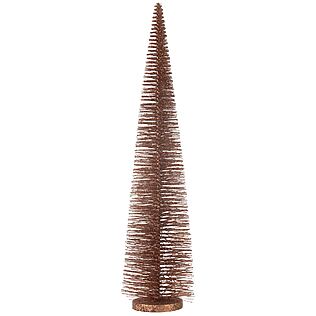
 J-Line Decorative Christmas Tree, subtle glitter effect (brown)
39,95 €
J-Line Decorative Christmas Tree, subtle glitter effect (brown)
39,95 €
incl. VAT
Lieferzeit: 1-3 Werktage
-
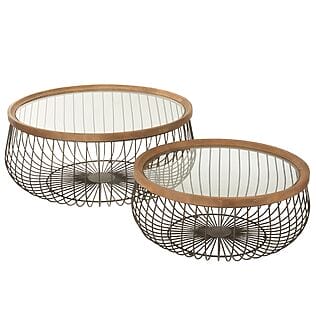
J-Line 2-Set round coffee tables "Wired", metal + glass
875,00 €
incl. VAT
Lieferzeit: 2-4 Werktage
-
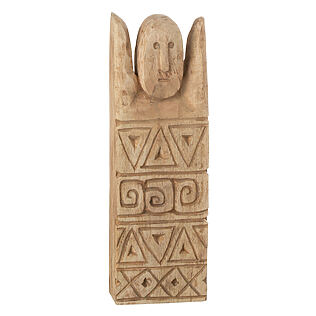
J-Line African carved figure "Happy Woody", natural wood
49,50 €
incl. VAT
Delivery time: 3-5 working days
-
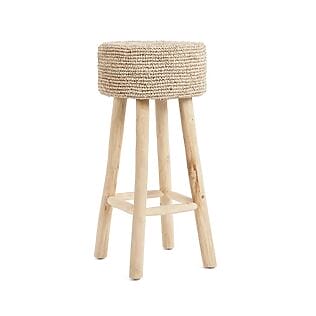
Coastal-Boho bar stool "Raffia" made of raffia and sustainable teak wood
Original price was: €199.00135,00 €The current price is: €135.00.
incl. VAT
Lieferzeit: 2-4 Werktage
-
Filigree swallow flight gold bangle - globetrotter jewelry with gilded swallow as a trailer
20,90 €
incl. VAT
Lieferzeit: 1-3 Werktage
-
J-Line Minimalist Nativity Scene made of natural wood (White/Natural)
44,50 €
incl. VAT
Delivery time: 3-5 working days
-
2.5-seater upholstered sofa "New York" (Right Lounge), Dutch Design
2.950,00 €
incl. VAT
Delivery time: 5-9 working days