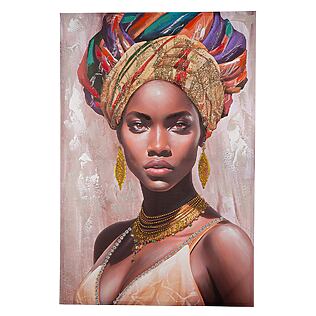
It's fascinating how often seemingly insignificant little objects made of gold, silver, platinum, pearls, and precious stones can captivate us so strongly and lend us such a sophisticated radiance. And it's not just since Marilyn Monroe's popular song that it's been clear that jewelry is a woman's best friend.
Jewelry creation has always been a respected craft with a strong artistic dimension. Jewelry designers are often trained in both design and (gold)smithing, combining these two skills to conceive and produce unique jewelry creations
The art of jewelry making dates back thousands of years. Photo by Kyle Frederick (Unsplash)
The art of jewelry making dates back thousands of years, to when ancient civilizations began crafting jewelry for personal adornment. Some pieces were designed to set and showcase exquisite gemstones, while others were intended to express the wearer's beliefs. Jewelry also served to outwardly display social status.
Depending on the era, geographical region, and cultural context, jewelry took many forms. While some pieces were made from simple materials like shells and hemp cords, diadems and crowns, such as those worn by kings, were generally crafted from precious, expensive, and rare materials like gold, silver, and gemstones.
The constant discovery of new gemstones, precious metals and decorative materials, combined with the further development of tools and metallurgy, has produced an incredible variety and abundance of jewelry over the centuries.
fashion jewelry is affordable for everyone and its extensive range leaves little to be desired – whether off-the-rack, handmade or special vintage pieces from certain eras.
But let's take another brief look back at the history of jewelry design :
A brief history of jewelry design from antiquity to the present day
Over the centuries and from culture to culture, materials considered rare, valuable, and desirable ranged from shells, bones, pebbles, tusks, claws, and wood to so-called precious metals, precious stones, semiprecious stones, pearls, coral, and enamel. They also included glass pastes and ceramics.
In some eras, artists and craftsmen placed less emphasis on the actual monetary value of materials than on their aesthetic function as components and how these contributed to the overall effect of the piece of jewelry.
Accordingly, the artist chose steel or plastic, for example, instead of gold or platinum for the creation of a brooch.
Jewelry as decoration and a sign of social status
Aside from its decorative function, jewelry has, for much of its history, been worn primarily as a symbol of social rank and status within a society. To ensure exclusivity, the privileged and ruling classes legally prohibited the wearing of such jewelry by people outside their social class and threatened draconian punishments for violations.
Jewelry has also been used throughout the ages as a talisman to protect against evil or to boost one's luck.
During the Middle Ages, for example, a ruby ring was supposed to bring its owners land and titles, bestow virtue, protect against temptation and prevent bubbling in water – but only if it was worn on the left hand.
Use in the Stone Age
Early historical evidence for the use of decorative objects comes primarily from the funerary cults and burial customs of ancient cultures. Even in the oldest known civilizations, important individuals were adorned with their most expensive clothing, elaborate ornaments, decorations, and precious grave goods to ensure them a dignified entry into the afterlife.
Likewise, plastic and pictorial iconography in painting and sculpture provided ample evidence of the corresponding jewelry worn in different eras.
It is now considered likely among historians that Stone Age people were already thinking about decorating their bodies before it occurred to them to use something that could be considered clothing.
Before precious metals were discovered, people living by the sea adorned themselves with a variety of shells, fish bones, fish teeth, and colored pebbles. People living inland used the animals they killed for food as decorative materials: reindeer antlers, mammoth tusks, and all kinds of animal bones.
Different materials used in jewelry making. Photo by Franco Antonio Giovanella (Unsplash)
Early civilizations and advanced cultures
During the era of transition from nomadic life to a settled society, and the subsequent birth of the oldest known civilizations and advanced cultures, there were also noticeable developments in the use of jewelry. This also applied to the materials used for it. Indirectly, this led to the discovery of minerals and rock deposits, which initially included primarily gold and precious stones.
This surge in development in human history led to a proliferation of the uses and forms of jewelry. Soon, ornaments and decorations existed for all parts of the body.
For the head there were crowns, diadems, hairpins, combs, earrings, nose rings, lip rings, and earplugs. For the neck and torso, necklaces, fibulae (the old safety pin), brooches, breastplates, girdle bands, belts, and pocket watches were designed.
Arms and hands were adorned with bracelets, bangles, and rings. Skilled craftsmen and blacksmiths designed a wide variety of thigh bands, ankle bands, toe rings, and shoe buckles for thighs, legs, and feet.
Ancient times
Among the oldest discovered pieces of jewelry are the grave goods for the tomb of Queen Pu-Abi in Ur in Sumer (today Tall al-Muqayyar) around 3000 BC.
Sumerian jewelry forms represent almost all types and shapes ever developed throughout history. Impressively, nearly all manufacturing techniques were known in their time: welding, alloying, filigree work, stone cutting, and even enameling.
Inspiration came not only from geometry (discs, circles, cylinders, spheres) but also from the animal and plant world. Forms of expression were based on a fundamental realism, enriched by a moderate use of color.
Other advanced civilizations with a significant cultural heritage, also with regard to the production, use and processing of jewelry, include:
Egyptians – Egyptian craftsmanship created a myriad of different compositions, mainly based on strict symmetry or – as can be observed in jewelry made of pearls – on the rhythmic repetition of shapes and colors.
Aegean – This Bronze Age civilization, which flourished on the Mediterranean island of Crete, is also known as the Minoans. Their burgeoning prosperity stimulated intensive goldwork of high aesthetic value.
Phoenicians – Phoenicia was an important center for both the production and export of jewelry. Thanks to their trade throughout the Mediterranean, we have knowledge of products from civilizations in distant lands – including North Africa, Sardinia, Spain, and Italy.
Etruscans – Etruscan craftsmanship contributed a completely new concept, which elevated jewelry to a new level of splendor, impressive size, and rich decoration. This resulted in some of the most outstanding achievements in the history of jewelry design and production.
Greeks – Since gold was not readily available, jewelry made from it was relatively rare in Greece until around 323 BC. From the Classical period onward, Greek jewelry was mostly found in the form of miniature sculptures depicting individual figures, people, or religious, mythological, and heroic scenes. Under the reign of Alexander the Great, a magnificent era of jewelry finally began as part of the expansion of the Greek Empire. Hellenistic jewelry developed in the major artistic centers of the various regions under Greek rule and went far beyond the realm of painting and sculpture. This marked the golden age of Hellenistic goldsmithing, which was unsurpassed in technique and virtuosity.
Romans – In its early stages, Roman jewelry design was likely significantly influenced by Hellenistic and Etruscan styles. Jewelry was used on an unprecedented scale in ancient Rome, and this level of production only reappeared much later during the Renaissance. Imperial Rome became the center of goldsmithing workshops in the known world. Along with the precious stones and metals brought to the imperial city from all conquered regions, gem cutters and goldsmiths arrived from Greece and the Asian provinces. The gold ring, which under the Republic had been a symbol of distinction between ambassadors, nobles, and senators, gradually appeared on the fingers of people of lower social rank, until it even became common among soldiers. Was this perhaps the birth of the wedding ring as we know it today?
From then on, the history of jewelry design and goldsmithing continued its course and was significantly influenced, changed and further developed eras
During the Middle Ages , the Byzantine, Islamic, and Teutonic cultural spheres played a particularly important role.
Humanity's appreciation for beautiful things has endured. Photo by Camila Quintero Franco (Unsplash)
With the Renaissance, the use of jewelry, ornaments and decorations reached its pompous peak and a new, unprecedented level.
But even outside the Western cultural sphere, the use of decorative and embellishing accessories has not stood still. Especially in East Asia, India, Southeast Asia, Scythia, Africa, and Native Americans, jewelry boasts a tradition spanning centuries or even millennia.
The art of jewelry making in the 21st century
When one compares the span of a human lifespan with the millennia that the world of jewelry has traversed in its history, one is rightly fascinated. Civilizations have been founded and have fallen again – yet humankind's predilection for exquisite objects for personal adornment has remained.
While in the beginning only an elite circle enjoyed this, over the centuries it has become possible for virtually everyone to acquire it almost effortlessly.
Although there are still old-school jewelry designers and artists today who are still rooted in the spirit of the old world's craftsmen, the tools, techniques, and technologies used to make jewelry today have changed considerably since then.
Due to the accelerated pace of general progress in the 20th and 21st centuries, jewelry manufacturing processes have undergone more technological changes in the last three decades than ever before in history. One particular trend in recent years has been the personalization of jewelry, which reflects the changing needs and desires of an increasingly individualized society.
The vendors even celebrate customizable designs with jewelry parties and support potential hosts in getting creative.
Traditional jewelry making
Traditional manufacturing methods include sand casting and lost-wax casting, both of which utilize molds. With the latter technique, the craftsman first creates wax carvings to prepare for the lost-wax casting process.
Models are sculpted and embedded in plaster. The plaster is then fired to remove the models, leaving a mold.
In the next step, the precious metal is melted with a torch and centrifuged into the cavity. The resulting castings are then finished with files, abrasives, and basic grinding tools, or prepared for subsequent soldering and welding.
The methods used in jewelry making in earlier times, and still commonly used today, are so extensive and diverse that simply listing them would far exceed the scope of this article.
So let's try just a small, abbreviated list of the most essential techniques:
“Anodizing” or “Anodic Oxidation” – This involves applying a protective layer of oxide to titanium or aluminum.
Jewelry settings – The three basic components of a ring are the ring head (ring plate), the band (ring shank), and the gemstone. The setting is usually determined by these components.
Doubling or diffusion – the upper part is made of silver and the lower part of yellow gold.
Granulation – The jewelry is given structure by shaping and welding gold and silver ornaments onto the surface.
Glyptics / Stone carving – artistic processing of rock crystals, gemstones and precious stones of all kinds
Faience – lead and tin glazes
Filigree work – application of fine, twisted wires or metal threads with metal beads
Mokume-Gane – This technique involves bonding several thin layers of metal together. The aim is to create a highly contrasting pattern.
Satin finishing – the surface is treated with a thread-cutting tool, either by machine or by hand.
Enameling – a mass of oxides and silicates produced by sintering, fritting, or melting in solidified form.
Zirconia production – An artificial diamond is created
Murano glassmaking – This jewelry technique utilizes the vibrancy of colors through special coloring methods.
Plaque – the application of a chemical coating of precious metal to metal using electrolysis
Chasing – surface structuring technique
Modern high-tech processes
This pure form of traditional jewelry making is probably unique today. We live in a world of computer-aided design. Sculptors who once painstakingly worked with wax or sand casting now use keyboards and a mouse to transform ideas into finished pieces. Through CAD jewelry design , jewelry designers create the original models in a virtual world.
Once completed, the workpieces are milled from wax or grown in resin using high-tech equipment controlled by complex, sophisticated software.
Laser melting also currently revolutionizing the world of jewelry design. This process scores particularly well because it makes it possible to produce delicate parts, complex structures, and small production runs.
In a laser center, finished pieces of jewelry are built up layer by layer from various materials such as titanium, stainless steel, or gold and silver alloys. For designers, this manufacturing process offers absolute geometric freedom and new creative potential.
Another megatrend in the jewelry industry is 3D design , which also represents a completely new chapter in its recent history. With the use of the latest generation of 3D jewelry design software and 3D printers, a level of quality is now being achieved that offers an unprecedented degree of finesse and personalization possibilities for designing and creating enchanting jewelry.
This allows designers today to achieve a level of detail, flexibility, and complexity that would have been unimaginable before the advent of 3D technology.
It is safe to assume that this is far from the end of the line, and we can look forward to what future developments the future will bring in this area.
Owner and Managing Director of Kunstplaza . Publicist, editor, and passionate blogger in the fields of art, design, and creativity since 2011. Graduated with a degree in web design from university (2008). Further developed creative techniques through courses in freehand drawing, expressive painting, and theatre/acting. Profound knowledge of the art market gained through years of journalistic research and numerous collaborations with key players and institutions in the arts and culture sector.
We use technologies such as cookies to store and/or access device information. We do this to improve your browsing experience and to display (non-)personalized advertising. If you consent to these technologies, we can process data such as browsing behavior or unique IDs on this website. Refusal or withdrawal of consent may adversely affect certain features and functions.
Functional
Always Active
Technical storage or access is strictly necessary for the legitimate purpose of enabling the use of a specific service expressly requested by the subscriber or user, or for the sole purpose of carrying out the transmission of a message over an electronic communications network.
Preferences
The technical storage or access is necessary for the legitimate purpose of storing preferences that were not requested by the subscriber or user.
statistics
Technical storage or access that is solely for statistical purposes.Technical storage or access that is used solely for anonymous statistical purposes. Without a subpoena, the voluntary consent of your internet service provider, or additional recording by third parties, the information stored or retrieved for this purpose cannot generally be used to identify you.
marketing
Technical storage or access is required to create user profiles, to send advertising, or to track the user on one or more websites for similar marketing purposes.







 Exotic wall decoration "Lobo" made from banana leaf and coconut
199,95 €
Exotic wall decoration "Lobo" made from banana leaf and coconut
199,95 €