Custom-made jewelry allows us to showcase our personal style through unique pieces. The process many jewelry providers and manufacturers offer, allowing their customers to design individual pieces, opens up a world of creative possibilities. You can coordinate accessories with specific outfits and create meaningful gifts for loved ones. Many jewelry enthusiasts face the decision of whether to collaborate with professional manufacturers or create the pieces themselves.
Creating your own jewelry brings immense satisfaction, especially with pieces that reflect personal preferences and stories or complement a new outfit. Professional jewelry design services give their clients access to fine precious metals and high-quality gemstones.
The design options for bracelets, necklaces, rings, and pendants are now very diverse. However, they still cannot offer the limitless design possibilities inherent in making your own DIY jewelry.
Independent, unbiased and free thanks to your click
Links marked with asymbol are affiliate links. We only recommend products we use (or would use) ourselves. If you visit affiliate links in our content, we may receive a commission on your purchase (at no extra cost to you). This helps fund the free editorial content we provide to you (more details here).
Both approaches offer unique advantages. DIY jewelry making can be learned through affordable courses (see Udemy & Co.) that allow for the creation of inexpensive gifts. On the other hand, professionally custom-made pieces often become cherished family heirlooms. With the comparison in this article, we aim to help you determine which path to personalized jewelry best suits your creative vision, budget, and skill level.
Understanding both approaches: Customization service vs. DIY
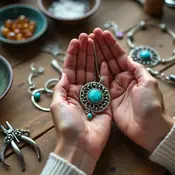
Designing individual jewelry pieces: Personalization service from manufacturers vs. DIY jewelry making. This image is for illustrative purposes and was created using image AI.
Creating personalized jewelry follows two distinct paths: You can collaborate with professional manufacturers or craft the pieces yourself from scratch. Both approaches have their own advantages, but it's essential to understand their fundamental differences before embarking on your jewelry design journey.
Create-Your-Own Service: How does bespoke jewelry design work?
Custom jewelry designs are created when you collaborate with professional jewelers like Pandora , YFN , SMYKBAR , or Perlenreich to craft unique pieces that reflect your vision and style. The process begins with a consultation to discuss your ideas and priorities. Professional designers also utilize specialized computer modeling software to help you visualize your concept before production begins.
You can customize jewelry in many ways – from small alterations to entirely new creations. Custom jewelry services allow you to modify existing designs by changing materials or adding personal touches. Custom jewelry means recombining unique pieces based on design, material, and style options, and enhancing them with engravings or personal elements.
These unique pieces do come at a price, but they are exclusive and distinctive.
What does it mean to make your own jewelry?
Making your own jewelry gives you complete creative freedom – you take care of everything from design ideas, sketches, and concepts to the physical production. This hands-on approach gives you total creative freedom and helps you develop practical skills. DIY jewelry making also allows you to experiment with different techniques and materials based on your budget and style priorities.
The DIY approach requires acquiring your own tools, materials, and skills, as opposed to working with professionals. But nothing surpasses the satisfaction of wearing something you yourself have shaped and completed with your own thoughts, emotions, and hands.
Key differences in process and outcome
Quality and craftsmanship : Professional, custom-made pieces utilize expert techniques, specialized equipment, and more refined materials. DIY jewelry has its own appeal but is not as sophisticated as professional work.
Cost considerations : Professional manufacturers charge more due to skilled workmanship and high-quality materials. DIY jewelry making can save money, especially as you become more skilled.
Time required : Professional, custom-made pieces typically take 4–10 weeks. DIY projects progress at your own pace, depending on complexity.
Creative control : Both approaches allow you to be creative, but DIY gives you complete control. Bespoke services combine your ideas with a predefined framework and professional guidance.
Tools, materials and skills you will need
Making jewelry requires the right tools, materials, and skills, no matter which path you choose. Quality tools make the difference between professional-looking pieces and amateur attempts.
Essential tools for DIY jewelry making
Your own jewelry workshop requires specialized equipment. You'll need round-nose pliers to create loops, flat-nose pliers for gripping and bending, and wire cutters to shorten materials. A high-quality jewelry workstation or dedicated workspace will help you stay organized and work more efficiently.
Here are a few other things you might need:
Measuring tools (rulers, calipers)
Files for smoothing rough edges
Hammers and shafts for shaping metal
Protective equipment (goggles, masks)
Common materials used in both methods
Materials are the foundation of all jewelry. The selection of metals ranges from affordable aluminum and copper to precious gold and platinum. Gemstones add color and personality. Pearls, crystals, and beads create texture and dimension. Your choice of material influences both the appearance and the durability.
Professional services typically work with higher-quality metals and genuine gemstones. DIY enthusiasts often start with sterling silver wire, base metals, and semiprecious stones before moving on to more valuable components.
Skill levels required for each approach
DIY jewelry making requires practical skills that develop over time. Beginners should first learn the basics of simple wire wrapping, stringing, and metal stamping.
Working with manufacturers, in turn, requires a basic understanding of design and, if necessary, design communication skills rather than technical craftsmanship. If the manufacturer offers a service for creating custom-made, one-of-a-kind pieces, then you should be able to express your ideas through sketches, reference images, or descriptions.
The Udemy course "Jewelry Making: Wire Wrapping for Beginners" teaches you how to create beautiful handmade jewelry from wire and gemstones that you can wear, give as gifts, or sell.
This course will enable you to create incredible boutique-quality gemstone jewelry to sell, give as gifts, or wear.
YouTube also offers a wealth of free tutorials for beginners:
Local creative communities and craftspeople host hands-on workshops. Books like "The Complete Jewelry Making Course" offer well-structured learning paths for new designers.
The Complete Jewelry Making Course provides principles, practice, and techniques: A complete beginner's course for aspiring jewelry makers; available on Amazon.
Even if you prefer the customization route with a professional provider, it helps to know jewelry terminology and design principles. This knowledge will allow you to communicate more effectively with professional jewelers when using their services.
Advantages and disadvantages of each approach
The decision between professional fitting and DIY jewelry making requires careful consideration. Both approaches have their own advantages and disadvantages.
Advantages of working with a manufacturer
Professional jewelry makers bring unique expertise to your design vision. Their specialized equipment and techniques deliver a premium quality that is virtually impossible to achieve at home. Custom-made pieces crafted by experts possess excellent long-term value due to superior craftsmanship and materials.
These bespoke jewelry services combine high-quality metals and gemstones that you might find difficult to source yourself. Most manufacturers store your design information in standardized digital systems, facilitating future modifications or replications. Some jewelers will even help you stay on top of current trends in styles and materials, ensuring your design remains fashionable yet timeless.
Advantages of making your own jewelry
Making jewelry by hand gives you unparalleled personal satisfaction, as DIY design enthusiasts can attest. The creative process helps you relax after stressful days. You have complete creative control over the design and approach.
Handmade jewelry means more because it reflects a personal commitment of time and creativity. It's true that handmade jewelry is the most emotional, personalized gift for loved ones. DIY jewelry making supports eco-conscious fashion by reducing the mass production of accessories.
Challenges and limitations of both options
DIY jewelry making requires a lot of time to learn the skills and complete the projects.
Custom manufacturing also takes time – usually 4–12 weeks, depending on the complexity of the piece and the supplier's service speed. These custom-made pieces generally cannot be returned or exchanged.
New jewelry makers often struggle with consistent quality. Their handcrafted pieces may not match the polished look of professional work. Complex designs can be difficult to create without proper training or specialized equipment.
Cost comparison: DIY vs. customized service
Professionally crafted, custom-made jewelry starts at around €900 for simple settings (without center stones). More detailed designs cost more, with most pieces ranging between €1,500 and €2,500. This depends on the materials and complexity. There is no upper limit to the price.
A selection of engagement rings that can be individually designed at YFN.
DIY jewelry making requires upfront investment in tools and materials, but each piece costs less over time. This is a great way to create affordable gifts while developing valuable skills. Professionally made, custom pieces may be more expensive initially, but they retain their value better and require less repair over their lifespan.
A little help with your decision: How to decide which option is more advantageous for you.
Your personal circumstances and goals will help you choose between DIY and professional jewelry customization. Making the right choice requires you to consider several key factors.
Think about your goals: gift, business, or hobby.
DIY jewelry making adds a personal touch to occasional gifts without breaking the bank. Professional manufacturing ensures consistent quality. Hobbyists can start with DIY to explore their creativity and upgrade to custom services as needed.
Time and budget constraints
You need to consider your available time, as DIY involves a learning curve and many hours of production. Budget also plays a role: professional alterations for fine jewelry typically cost between €500 and €5,000+. DIY jewelry-making starter kits start at €50–€200, plus specific material costs for each project.
Creative control vs. professional result
DIY gives you complete creative freedom, but the result might lack refinement. Professional services bring technical expertise and high-quality materials that lead to heirloom-quality pieces, while you will have less hands-on involvement.
Valuable tips for beginners before you make a choice
Start with a small DIY project before buying expensive tools.
Have the manufacturer send you samples before ordering custom-made parts.
You can design it yourself and leave the execution to the professionals.
Attend workshops to see if you enjoy it and if you have the skills.
Jewelry making brings joy in many ways – choose the path that best suits your own vision.
Conclusions
Customizing jewelry opens up exciting possibilities, no matter which path you choose.
Many jewelry enthusiasts combine both approaches over time. They create simple pieces for everyday wear or as gifts and commission professional jewelers for the most memorable life events or special occasions. This combined approach allows them to enjoy the therapeutic and creative benefits of DIY creation while acquiring stunning statement pieces when needed.
Keep in mind that jewelry making, whether DIY or through professional services, connects us to ancient human traditions that date back thousands of years. Craftsmen created the earliest known pieces of jewelry around 25,000 years ago – making your creative experience part of humanity's oldest art forms.
Choose the path that brings you joy, aligns with your goals, and honors your unique vision. The most enchanting pieces of jewelry always tell a personal story, regardless of how they were created.
Affiliate Links Disclaimer: with a - symbol are affiliate links. As a general rule and without exception, we only recommend or link to products that we use (or would use) ourselves and all opinions expressed here are our own. Our product reviews and recommendations are independent and based on research, expert opinions, and/or product testing. If you click on affiliate links in our content, we may receive commissions for your purchases (at no extra cost to you), but we never receive any compensation or payment for the content of our recommendations. This is how we finance our editorial work and the magazine articles we provide to you free of charge (details in our Editorial Standards ). Read the full PrivacyPolicy .
Owner and Managing Director of Kunstplaza . Publicist, editor, and passionate blogger in the fields of art, design, and creativity since 2011. Graduated with a degree in web design from university (2008). Further developed creative techniques through courses in freehand drawing, expressive painting, and theatre/acting. Profound knowledge of the art market gained through years of journalistic research and numerous collaborations with key players and institutions in the arts and culture sector.
We use technologies such as cookies to store and/or access device information. We do this to improve your browsing experience and to display (non-)personalized advertising. If you consent to these technologies, we can process data such as browsing behavior or unique IDs on this website. Refusal or withdrawal of consent may adversely affect certain features and functions.
Functional
Always Active
Technical storage or access is strictly necessary for the legitimate purpose of enabling the use of a specific service expressly requested by the subscriber or user, or for the sole purpose of carrying out the transmission of a message over an electronic communications network.
Preferences
The technical storage or access is necessary for the legitimate purpose of storing preferences that were not requested by the subscriber or user.
statistics
Technical storage or access that is solely for statistical purposes.Technical storage or access that is used solely for anonymous statistical purposes. Without a subpoena, the voluntary consent of your internet service provider, or additional recording by third parties, the information stored or retrieved for this purpose cannot generally be used to identify you.
marketing
Technical storage or access is required to create user profiles, to send advertising, or to track the user on one or more websites for similar marketing purposes.







 Metal art wall decoration "Beviamo Vino", wine bottles and vine branches
51,95 €
Metal art wall decoration "Beviamo Vino", wine bottles and vine branches
51,95 €


