WTAWT – that stands for: “What the Artist wants to tell” or “What the artist wants to tell us” , and the silly abbreviation is absolutely intentional.
Finally, abbreviations are very popular in German entertainment culture, as evidenced by TV hits such as AWZ, ESC, DSDS, GNTM, GZSZ, NCIS, TAAHM, TVoG, VL and WWM [1], and this category is also intended to be about your entertainment.
Admittedly, perhaps TWAWT – “That's what the Artist wants to tell” – or WTATW – “What the Artist tells Women” – would have been even better, and before the zealous advocates of using the German language formulate their first protest articles:
New category on the Kunstplaza blog: WTAWT
Yes, any abbreviation meaning something like "WmdK," short for "Was meint der Künstler" (What did the artist mean), would have been possible. But WmdK is already taken because TV Bruchenbrücken (Turnverein von 1906 Bruchenbrücken – Bruchenbrücken Gymnastics Club of 1906), aware of the Germans' fondness for abbreviations, also registered their website https://was-macht-die-kuh.de under www.wmdk.de.
Why is the website called "what-does-the-cow"? The author was also interested, but unfortunately the answer wasn't provided on the site. Perhaps in 1906 cows were still used instead of parallel bars for gymnastics; if cheerful cows are now excelling at show jumping, that was certainly possible.
The next set of beautiful abbreviations comes from a sentence with the meaning "What the artist wants to tell us," whereby for egocentric Germans, the phrase "What does the artist want to tell us with this?" takes precedence, followed by: "What does the artist want to say with this?", "What was the artist thinking?", "What does the artist want to tell us with this?". The corresponding abbreviations are WwudKds, WwdKds, WhsdKdg, WwdKuds, WdKusw – WTF (please look up the meaning yourself), these are not exactly beautiful abbreviations.
So it remains WTAWT; this lovely category name is only meant to emphasize that this category is truly not and never meant to be taken seriously – all articles in this category, apart from any scientific or factually accurate considerations, are intended solely to offer you slightly whimsical entertainment and imaginative inspiration.
Similar to TV programs that viewers describe with cryptic acronyms, this is about presenting content designed to guarantee you the greatest possible relaxation, and because Kunstplaza is about art, the method chosen is the viewing of a work of art.
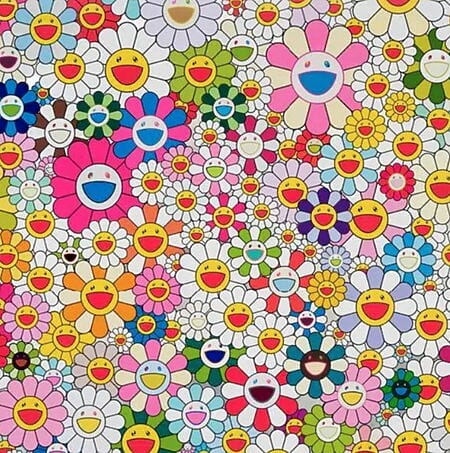
A famous work of art from contemporary history is presented to you, devoid of all reason, with the wildest speculations about what the artist might have meant; only the (scientifically presumed) truth remains completely out of the equation.
What the artist wants to tell us with a work of art is precisely what you shouldn't ask – at least not if you simply want to enjoy the art and have no further ambition.
Art is art, and it either stimulates our imagination or it doesn't, and it's not even certain whether the artist wants to tell us anything at all. And if so, it's not certain whether you (have to) follow this interpretation; therein lies the first major dispute among art historians, the second level then concerns the nuances of interpretation.
One thing art should and can always do is stimulate our imagination, and the “image descriptions” in this category are intended to provide you with initial and amusing assistance in doing so.
[1] Would you like to know what AWZ, ESC, DSDS, GNTM, GZSZ, NCIS, TAAHM, TVoG, VL, WWM mean? Simply enter the abbreviations into the search engine – the first entry that appears is the website for the respective show.
If you happen to find "DC" missing from the list for "Jungle Camp," arguably the most dreadful of all shallow entertainment programs—the abbreviation DC stands for a whole host of sensible terms, and if a Jungle Camp enthusiast, previously untouched by any kind of educational information, were to enter "DC" into a search engine, they might stumble upon content that imparts useful knowledge, such as an article about dendritic cells (the dendritic cells of our immune system), a genuinely interesting segment from the fascinating Discovery Channel, an explanation of what a domain controller does in Windows or what a data center is, a local report from Washington D.C. or from Donaucity, a district of Vienna, or perhaps even just information about the Dreamcast game console, the race car driver David Coulthard, or the German percussion ensemble Drum Connection. And since the television channel certainly didn't want to burden its viewers with receiving any meaningful information anyway, they accepted that the Jungle Camp wouldn't appear when entering "DC"..
But you can also type in “ibeshmhr”, and you'll land directly on the jungle camp website… Seriously! Try it out!
"ibeshmhr" could also be very nicely translated as "I'm honestly Smurf-stupid, I've wrecked myself here", or "constantly trying, endlessly meaningless, highly macabre, retrograde hit rate", or "I'm really shocked, half-ape mistreating hungry riot bride", or "insane, frightening, shocking nonsense, half-motivated media spectacle, here (in) its purest form".
Which of course immediately inspires the invention of entirely new television programs for the other acronyms: AWZ = Everyone Wants Cinnamon Cookies – The new TV hit in the pre-Christmas season; ESC = Elementary Sound Calamities – Young bands perform their first self-written hit; DSDS = Stupid Stars, Stupid Show – Folk music for enlightened viewers
Since this article is supposed to be finished at some point, GNTM, GZSZ, NCIS, TAAHM, TVoG, VL and WWM will remain without new meaning; perhaps you can have fun at the next family Sunday breakfast by imagining new TV formats for these abbreviations.
Like any subject area, art also has a wealth of specialised terminology, expressions, abbreviations, and foreign words.
In this section, we would like to introduce you to some of the most important and common terms from time to time.
You will be able to learn and deepen your understanding of a range of information, definitions, liturgical terms, notes, common technical terms and their abbreviations, as well as concepts from art theory, art history, and art philosophy.
We use technologies such as cookies to store and/or access device information. We do this to improve your browsing experience and to display (non-)personalized advertising. If you consent to these technologies, we can process data such as browsing behavior or unique IDs on this website. Refusal or withdrawal of consent may adversely affect certain features and functions.
Functional
Always Active
Technical storage or access is strictly necessary for the legitimate purpose of enabling the use of a specific service expressly requested by the subscriber or user, or for the sole purpose of carrying out the transmission of a message over an electronic communications network.
Preferences
The technical storage or access is necessary for the legitimate purpose of storing preferences that were not requested by the subscriber or user.
statistics
Technical storage or access that is solely for statistical purposes.Technical storage or access that is used solely for anonymous statistical purposes. Without a subpoena, the voluntary consent of your internet service provider, or additional recording by third parties, the information stored or retrieved for this purpose cannot generally be used to identify you.
marketing
Technical storage or access is required to create user profiles, to send advertising, or to track the user on one or more websites for similar marketing purposes.













 Hypoallergenic lambskin rug in classic black (50 x 85 cm)
67,00 €
Hypoallergenic lambskin rug in classic black (50 x 85 cm)
67,00 €