Tattoos are no longer considered merely part of a subculture . They have now found their place in artistic discourse – as an expression of individual aesthetics and personal attitude. Those who transcend the boundaries of classical body art open up new spaces: for biographical narratives, artistic concepts, and conscious design. This article explores tattoo art as an independent discipline, repositioning itself between sketchbook, studio, and skin.
Artistic practice rarely begins directly on the skin. It is often preceded by a longer process that starts in a sketchbook, on paper, or on canvas. Those who understand tattoos not just as a service but as an artistic endeavor remain active even away from the needle – with pencil, brush, or marker. The creative origin lies in freehand drawing, in the exploration of form, line, and expression. It is precisely here that a style unfolds, one that later bears its signature on the skin.
Sketches as origin – how the drawing pencil became the needle
Before the first tattoo is created, pages are filled with sketches – fragmentary, intuitive, raw. Drawing is thinking in lines , a visual exploration of emotion, movement, and atmosphere. For many tattoo artists with artistic aspirations, these drawings are not an afterthought, but the core of their work. They train the eye, hone the sense of proportion, and form the basis for complex compositions – whether on paper or skin.
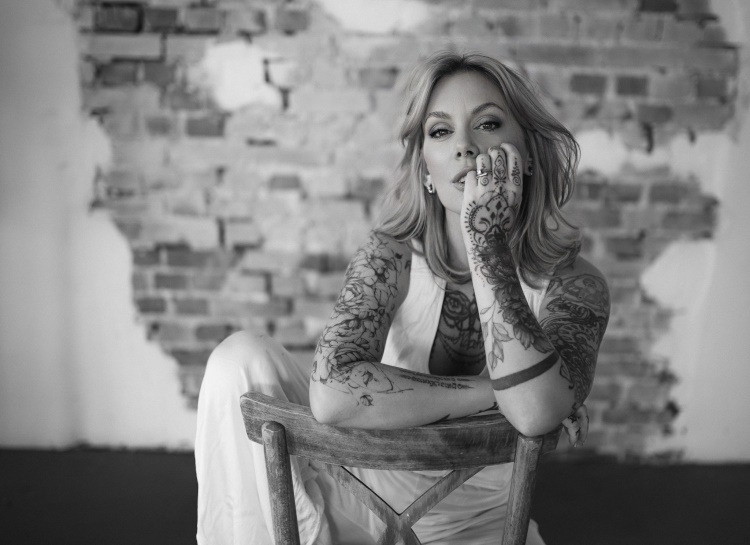
Fauve Lex's tattoos are not created from templates, but rather grow organically from her drawing process. Copyright: Fauve Lex
Sketches serve as blueprints for her later works – they already contain the emotional tone, the compositional rhythm, and the distinctive style. These preliminary studies often become artworks in their own right: as prints, graphics, or series. Thus, the drawing pencil remains ever-present – even when the needle takes over.
From canvas to skin – the tattoo as another medium of expression
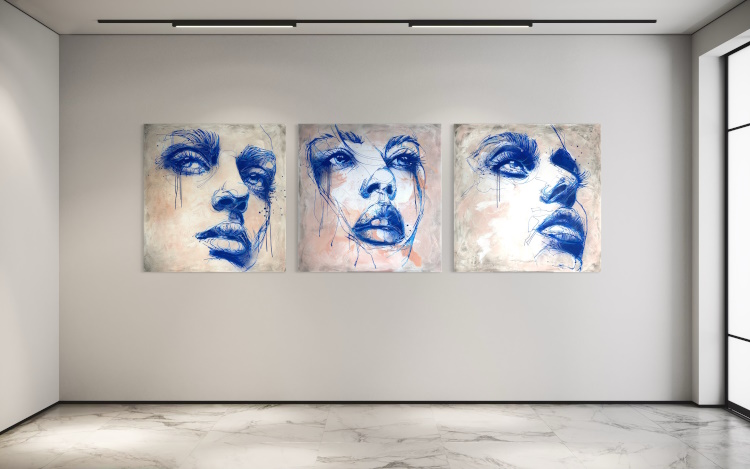
Many artists working in the visual arts are discovering skin as a new canvas. Tattooing is not a break with this tradition, but rather an expansion of their expressive possibilities. Lines, hatching, and areas created on canvases find their way into body art – adapted to movements, muscle patterns, and individual anatomies. Art loses none of its depth here; instead, it gains in intimacy.
For Fauve, skin is not a substitute for the canvas, but an equally valuable surface that presents different challenges. Her independent work—whether on paper or as a digital image—directly influences her tattooing process. It's a dialogue between solid and living surfaces, between classical aesthetics and the intimacy of tattooed skin. The result is a body of work that is not only visible but also tangible.
Sketch Art – a conscious aesthetic of the unfinished
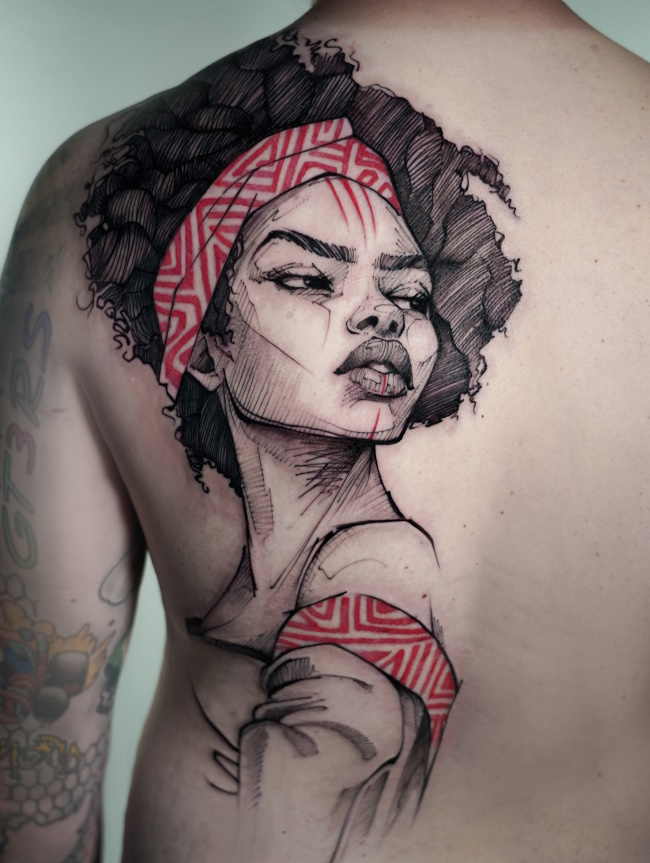
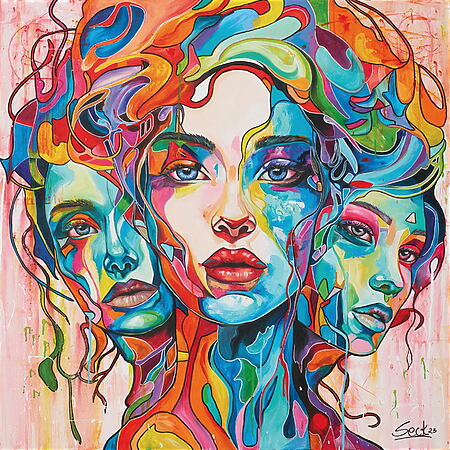
Sketch art thrives on imperfection. Lines overlap, perspectives remain suggested, surfaces incomplete. This is precisely the appeal of this aesthetic – it leaves room for interpretation and creates intimacy through its unfinished nature. Those who consciously choose this style make a statement: against the polished, against the standardized, for the authentic.
For Fauve Lex, sketch art is more than just a style… Copyright: Fauve Lex
Typical features of the sketch art style are:
Open linesthat overlap, dissolve, or are deliberately left unfinished.
Hatchinginstead of smooth surfaces – as an expression of movement, emotion, or inner chaos
Irregularitiesthat are not retouched, but emphasized.
Motif fragmentsthat are only hinted at and thus encourage personal associations
A visual rawnessthat does not strive to be flawless, but rather authentic.
For Fauve Lex, sketch art is more than just a style – it is an expression of an attitude that understands imperfection as true perfection.”
Instead of smooth surfaces, she prefers the raw, the unfinished, the in constant flux. What becomes visible on the skin bears traces of real stories – open, honest, and always vibrant.
Hatching instead of smooth surfaces, overlapping lines – Fauve's stylistic devices for a powerful expression of movement, emotion, or inner turmoil. Copyright: Fauve Lex
Emotion is not a concept – it is a material
Emotions permeate the artistic process like a delicate fabric – not as a consciously employed stylistic device, but as material that shapes the form. In sketch art, they are not staged, but allowed to flow. Fauve Lex understands emotion not as a concept to be illustrated, but as a force that contributes to the drawing. Every line, every stroke carries something personal – sometimes raw, sometimes delicate, but always honest.
Personal expression – without pathos
Feelings find their way into the drawing without being overt. No drama, no excess, but a reduced yet profoundly effective visual language. Empty spaces stand next to suggested forms, distorted lines meet harmonious structures. This tension creates room for individual interpretation – without the claim to fully explain anything. Personal feelings are suggested, not embellished.
The design aim is not to tell a story, but to give it a dignified framework and space for interpretation. Emotion is expressed in the style, not the symbol. This is precisely what distinguishes it from many conventional tattoos: they act as an emotional echo , not a representation. Pathos is avoided – not out of coldness, but out of respect for what lies between the lines.
Making stories visible without explaining them
A design doesn't have to shout to be understood. Often, a subtle detail, a break in the line, a deliberately placed shadow is enough to evoke a memory. Fauve Lex works with visual fragments that ask questions rather than answer them. In this way, the tattoo becomes not a retelling, but a public whisper of a very private story.
The narrative remains open – and therefore vulnerable. People carry their experiences on their skin without having to justify them. What becomes visible is often only the surface of a complex inner life. This reticence is not a flaw, but an artistic choice: it gives the viewer space – and protects what does not want to be told.
Drawing without limits – what remains when the scene becomes too confined?
Scenes can offer support – and simultaneously be restrictive. Those like Fauve Lex, who work artistically but are categorized within the tattoo scene, quickly encounter structural and aesthetic limitations. Expectations regarding style, clientele, or market logic clash with a personal ambition that demands not adaptation, but rather development. The question isn't whether one belongs – but what lies beyond.
Fauve Lex uses drawing as her anchor point, not the scene itself. Her works are often created away from typical studios, characterized by artistic freedom rather than genre conventions. Whether as prints, on skin, or canvas – her style remains distinctive, raw, and fragmentary. What defies categorization is often overlooked – or underestimated. This is precisely where her power lies: between systems, beyond labels. An expression that endures because it doesn't pander.
Attitude behind the needle – responsibility and dialogue
Artistic freedom doesn't end where responsibility begins—it truly begins there. Those who work on skin aren't just creating a design; they're touching a person in their most vulnerable space. Especially in a field often perceived as aesthetically driven or trend-oriented, a certain attitude is needed behind the needle. An attitude that encompasses more than technique: ethical, interpersonal, and professional responsibility.
Between artistic freedom and skin health
Tattooing is a physical procedure with long-term effects. That's why education is paramount. Fauve Lex provides open information about the healing process, risks, and aftercare. Art can be emotional, but never frivolous. Especially in cases of sensitive skin, allergies, or psychological distress, every decision is made collaboratively. The skin tells a story – and that story begins long before the first line.
Freedom in design does not mean arbitrariness. It thrives on dialogue with others. Not every wish is fulfilled, not every idea is immediately embraced. Between impulse and implementation lies a process that observes closely, asks questions, and weighs options.
Art here is not created in isolation, but through mindful collaboration – based on respect for skin, history and boundaries.”
When expertise is part of art
Fauve Lex works not only as an artist but also as a state-certified expert in the field of tattoos. This expertise informs every consultation and assessment. She identifies skin conditions, evaluates healing processes, and provides well-founded advice on when medical assistance is needed. In complex cases, she collaborates with dermatologists—not as an exception, but as standard practice.
Art is never just expression. It is also a responsibility towards the body. That's why the work doesn't end with the final stitch. Aftercare, information, and transparency are just as important as the courage to advise against a course of action. Those who work this way demonstrate that professionalism and creativity are not contradictory – but rather the foundation for art that truly gets under your skin.
Conclusion
Tattooing can be more than just body art – it can become an artistic dialogue, a reflection of inner processes, and a conscious act of self-empowerment. Those who work like Fauve Lex combine craftsmanship with attitude, aesthetics with authenticity, and art with a deep understanding of the stories people carry on their skin.
Between sketchbook and skin surface, a space is created in which emotion, style and responsibility are mutually dependent – without pathos, but with depth.
About the artist
Fauve Lexis an artist, tattooist, and state-certified expert on tattoos. Her specialty is the style of sketch art – a fragmented, sketch-like visual language that leaves room for personal interpretation. Besides skin, she also works on paper and canvas. Her works emerge from the interplay between art, empathy, and reflection.
Owner and Managing Director of Kunstplaza . Publicist, editor, and passionate blogger in the fields of art, design, and creativity since 2011. Graduated with a degree in web design from university (2008). Further developed creative techniques through courses in freehand drawing, expressive painting, and theatre/acting. Profound knowledge of the art market gained through years of journalistic research and numerous collaborations with key players and institutions in the arts and culture sector.
We use technologies such as cookies to store and/or access device information. We do this to improve your browsing experience and to display (non-)personalized advertising. If you consent to these technologies, we can process data such as browsing behavior or unique IDs on this website. Refusal or withdrawal of consent may adversely affect certain features and functions.
Functional
Always Active
Technical storage or access is strictly necessary for the legitimate purpose of enabling the use of a specific service expressly requested by the subscriber or user, or for the sole purpose of carrying out the transmission of a message over an electronic communications network.
Preferences
The technical storage or access is necessary for the legitimate purpose of storing preferences that were not requested by the subscriber or user.
statistics
Technical storage or access that is solely for statistical purposes.Technical storage or access that is used solely for anonymous statistical purposes. Without a subpoena, the voluntary consent of your internet service provider, or additional recording by third parties, the information stored or retrieved for this purpose cannot generally be used to identify you.
marketing
Technical storage or access is required to create user profiles, to send advertising, or to track the user on one or more websites for similar marketing purposes.







 J-Line Bol "Crackelé" candle holder made of glass with gold elements
Original price was: €19.5012,50 €The current price is €12.50.
J-Line Bol "Crackelé" candle holder made of glass with gold elements
Original price was: €19.5012,50 €The current price is €12.50.


