The article Marina Abramović or “The Artist and His Story” reported in detail on the historical and personal backgrounds that play a role in considerations of the artist Marina Abramović and her work (perhaps more so than with other artists).
Now the focus is on Abramović's development as an artist, and on the development of her oeuvre.
How did Marina Abramović come to art and to her art?
The article just mentioned about the artist Abramović showed that Marina Abramović comes from a family in which art and creativity played and still play a major role.
Consequently, Marina Abramović stated in an interview: “I always knew that I would live as an artist. It was a necessity […] the only way I could function in this world” (Lynn MacRitchie, 1996, ‘Marina Abramović: Exchanging Energies’, Performance Research, Volume 1, p. 29).
Abramović studied painting at the Academy of Fine Arts in Belgrade immediately after graduating from high school, from 1965 to 1970. Fellow students at the academy described her as a strikingly beautiful young woman, confident in her effect on others, fabulously gifted in communication, and always enthusiastically optimistic.
At that time, Abramović painted sophisticated and tasteful figurative art on larger canvases than any other student, creating powerful paintings of over two square meters. From 1968 onwards, Abramović began publishing texts, drawings, and his first conceptual works.
Which inexorably developed into performance art as Abramović's artistic expression, albeit only through rejections and coincidences:
In 1970, Abramović wanted to perform her first performance in a famous Belgrade gallery – gradually replacing her own clothes in front of an audience with the clothes of her youth chosen by her mother (calf-length skirt, thick stockings, shoes reminiscent of orthopedics), then putting a pistol loaded with a bullet to her head and pulling the trigger.
Either this proposal from the Doma Omaldine Gallery was too dangerous, or the youthful protest against protective attempts by concerned mothers to reduce attractiveness was too radical for them; in any case, Abramović's proposal resulted in an exhibition of her first abstract artworks, a series of cloud paintings.
Abramović's first performance therefore didn't take place until 1971, when she and other students were exhibiting their work at the SKC (Studentski kulturni centar Beograd = Student Cultural Center Belgrade) in October. Abramović had stretched out on a table in a neighboring gallery (she was supposedly just tired), and fellow artist Era Milivojević wrapped the prone woman in whatever duct tape he happened to be holding until she looked like a mummy – performance art was happening, even if the meaning of the artwork had to be reinterpreted.
The artist had obviously enjoyed the experience; from 1973 onwards she began to create her first own and planned performances.
They didn't just use tape; Marina Abramović made it unmistakably clear with her very first performances that pleasing establishment art was not her thing.
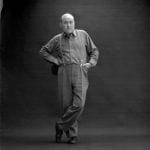
Marina Abramovic at MoMA, New York, 2010 by Shelby Lessig [CC BY-SA 3.0], via Wikimedia Commons
A short time later, in 1975, she made this clear to a wider public by participating in a performance by Hermann Nitsch . The co-founder of Viennese Actionism was no longer Viennese at that time; he had annoyed the "Rhinelanders of the East" for so long in the early 1960s with scandalous painting actions and orgies mystery theatre performances that the authorities rendered him incapable of performing and creating art for weeks through imprisonment, which Nitsch ultimately responded to by moving to Germany.
For both Nitsch and Abramović, the collaboration with another artist was clearly not a success: Nitsch subsequently employed only amateurs, while Abramović commented that she lacked the motivation to work within someone else's concept; the performance was so insignificant overall that no detailed account exists. Nevertheless, Hermann Nitsch and Marina Abramović did manage to make it onto the list of the "10 most shocking performance artworks ever"compiled by London's "The Guardian" in 2013.
Everyone knows this! – The most important works of Marina Abramovic
That establishment art is not her thing is also shown by Abramović's most important works, which most (Central European educated) people know – and even this brief overview makes clear how much movement there is in Marina Abramović's art:
“Balkan Baroque” is a video performance installation that Abramović staged in 1997 in the Yugoslav pavilion of the 47th Venice Biennale. Abramović commented on her homeland and the Balkan conflict by scrubbing mountains of fresh cattle bones with a brush for hours each day, alongside a triptych of video projections, while singing funeral songs from her homeland.
This video is embedded using YouTube's enhanced Privacy mode, which blocks YouTube cookies until you actively click to play the video. By clicking the play button, you consent to YouTube placing cookies on your device, which may also be used to analyze user behavior for market research and marketing purposes. For more information about YouTube's use of cookies, please see Google's Cookie Policy at https://policies.google.com/technologies/types?hl=de.
“Seven Easy Pieces” at the Solomon R. Guggenheim Museum in New York in 2005. The performance lasted seven days and repeated six historical performances by other artists that had caused a sensation in the 1960s and 1970s; the seventh performance was her own new work.
This video is embedded using YouTube's enhanced Privacy mode, which blocks YouTube cookies until you actively click to play the video. By clicking the play button, you consent to YouTube placing cookies on your device, which may also be used to analyze user behavior for market research and marketing purposes. For more information about YouTube's use of cookies, please see Google's Cookie Policy at https://policies.google.com/technologies/types?hl=de.
Abramović referenced:
Vito Acconci's "Seed bed" from 1972
Joseph Beuys' "How to Explain Pictures to a Dead Hare" from 1965
VALIE EXPORT's "Action Trousers, Genital Panic" from 1969
The new original performance was called "Entering the Other Side"
"The Artist is Present" at the Museum of Modern Art (MoMA) in 2010, during a retrospective of her work at the New York museum. Throughout the exhibition's run from March 14 to May 31, 2010, Abramović sat at a table in the museum's atrium, with a chair for visitors opposite her.
This video is embedded using YouTube's enhanced Privacy mode, which blocks YouTube cookies until you actively click to play the video. By clicking the play button, you consent to YouTube placing cookies on your device, which may also be used to analyze user behavior for market research and marketing purposes. For more information about YouTube's use of cookies, please see Google's Cookie Policy at https://policies.google.com/technologies/types?hl=de.
Abramović remained silent. You can see how talkative the visitors were in the following video…
…with the moving moment when her longtime partner Ulay sat down in the visitor's chair. Abramović sat there for a total of 721 hours. By the end of the performance, she had been viewed by 750,000 visitors and "possessed" by over 1,500 people.
These were certainly not all the examples "everyone knows." Marina Abramović's art is exceptionally rich and diverse
The art of Marina Abramović: From spectacular solo performance to eternal performance art
Marina Abramović's first performance in 1971, with its mummy-like attitude, was still quite tame, but she didn't have to work with scandalous activist Hermann Nitsch to really go wild:
In 1973, Abramović amused herself in "Rhythm 10" by stabbing the spaces between her spread fingers with 20 knives (a nod to past female artists, see Art-o-Gramm: Picasso – The Artist, Life and Love – Scenes 2 and 5 on Dora Maar, who also indulged in this unhealthy habit). Abramović, in any case, cuts herself frequently and severely, yet "Rhythm 10" is still (or perhaps because of this) considered her first "adult" work.
This video is embedded using YouTube's enhanced Privacy mode, which blocks YouTube cookies until you actively click to play the video. By clicking the play button, you consent to YouTube placing cookies on your device, which may also be used to analyze user behavior for market research and marketing purposes. For more information about YouTube's use of cookies, please see Google's Cookie Policy at https://policies.google.com/technologies/types?hl=de.
In Rhythm 5 (1974), Abramović soaks a wooden frame in the shape of a five-pointed star (intended to evoke the communists' "Red Star") with 100 liters of gasoline, sets it on fire, and after a few antics, jumps into the frame and lies down on the gallery floor. She immediately loses consciousness in this now oxygen-free space.
Abramović was rescued by a spectator who just realized that an unusually still and immobile Marina Abramović didn't fit with an otherwise quite action-packed performance; the ambulance arrived just in time and took her to the hospital. Here you can see the burning spectacle with the half-dead Abramović at its center.
Abramović evidently survived in good spirits; in the same year, "Rhythm 0" followed: a six-hour performance in which Abramović stood silently amidst the audience. They were provided with 72 objects, with the invitation to do whatever they wished with them (to) the artist. Among these objects were roses and feathers, perfume and honey, bread and grapes and wine, scissors and a scalpel, razor blades and nails, a metal rod, and a pistol loaded with a bullet.
Abramović wanted to find out how far the audience would go. It started gently, with stroking, giving flowers, kissing, and feeding; quite quickly, they were smearing her with lipstick, pouring water over her head, sticking rose thorns in her navel… by the halfway point of the performance, the audience had already cut her clothes off with razor blades; in hour four, they were exploring her skin with the same blades, and one admirer even cut her throat to drink her blood.
A series of sexual assaults followed, which the artist, determined to explore and expose human group behavior, also endured; when the public noticed her resolute surrender of will, a group formed to protect the artist.
When the loaded pistol was held to Abramović's head and her finger was placed around the trigger, a fight broke out in the audience… Ugly, frightening, disillusioning – when Abramović woke up the next morning, she had a gray streak in her hair.
If only she had had access back then to the knowledge available on the internet today! A little information makes it clear that groups of people follow strong leaders (who obviously have bad intentions, even for themselves) and inexplicably accept even obviously false statements as true as soon as they are unsettled, confronted with something new or with changes (one could also say that groups of people show tendencies towards self-destructive group behavior as soon as life doesn't go as usual, Pegida sends its regards).
If Abramović had only read the reports about "The Wave," the Milgram experiment, and Solomon Asch's conformity experiment, she would have been no less frightened or disillusioned, but she might have spared herself the physical experience…
Abramović may have been in a fragile emotional state at the time, as her first marriage had just ended. From 1971 to 1976, Abramović was married to the Serbian artist Neša Paripović , a former classmate at the Belgrade Academy, with whom she had also collaborated at the student cultural center in the early 1970s.
Both worked in a loose group with other artists on nothing less than the deconstruction of the modernist concept of art. Even this work was not without conflict; when the group had to face an encounter and discussion with Joseph Beuys at a festival in Edinburgh, Scotland, in 1973, it dissolved shortly thereafter.
The marriage may not have ended entirely peacefully; when Neša Paripović was asked for an interview by Abramović biographer James Westcott in the early 2000s, he is said to have simply hung up the phone.
In 1975, Marina Abramović performed the "Lips of Thomas" in a gallery in Austria: Completely naked, she ate a kilo of honey, drank a liter of red wine, carved a pentagram on her stomach with razor blades, and lay bleeding and swaying on a cross on ice; she is said to have endured it for half an hour.
Here is a still from the performance: Open image (re-performed at the Guggenheim Museum in New York in 2005). A sequence of four further performances from 1975 and 1976 can be viewed at www.youtube.com/watch?v=ihDy3dD-iUg.
In 1975, she created "Art must be beautiful, artist must be beautiful,"one of Abramović's groundbreaking works, in which she extensively and practically addresses the beautiful artist and beautiful art, which have been impossible to eradicate in the conservative bourgeoisie since Wilhelm Traugott Krug's "System of Theoretical Philosophy, Part 3, Theory of Taste" (1810). An excerpt is shown here:
This video is embedded using YouTube's enhanced Privacy mode, which blocks YouTube cookies until you actively click to play the video. By clicking the play button, you consent to YouTube placing cookies on your device, which may also be used to analyze user behavior for market research and marketing purposes. For more information about YouTube's use of cookies, please see Google's Cookie Policy at https://policies.google.com/technologies/types?hl=de.
In 1975, Abramović also moved to Amsterdam, where she met and fell in love with the German performance artist Frank Uwe Laysiepen (Ulay). They lived and worked together from 1979 to 1988, leading a nomadic artistic life, constantly on the move, even traveling to the Aborigines and Tibet. Many of her most famous and influential works date from this period.
“Charged Space”, 1978, is now in the collection of the Museum Ludwig in Cologne. A still image of the madcap dance dedicated to Jane Crawford and Gordon Matta-Clark, the last work in their series of “14 Performances,” can be seen on newmedia-art.org. The performance took place in May 1978 during the “European Performance Series” at the Brooklyn Museum, New York.
In 1980, "Rest Energy", a performance in which Ulay held an arrow and Abramović the bow; as they both leaned back, the arrow pointed at Abramović's heart. Their lives in his hands, as so often in their joint performances.
In 1982, Abramović and Ulay placed a cactus in a gallery in their performance "Like Luther," surrounded it with barbed wire, and asked the gallery owners to speak kindly to the cactus every day. They wanted to see if it would shed its spines in such a protected and loving atmosphere (it didn't).
And so it continued (with plenty of room for your own discoveries of spectacular performances) until Abramović and Ulay parted ways in 1988/1989. Of course, not just like that, and not in a bad mood, but with a performance—a three-month performance on the Great Wall of China.
Ulay started in the west, Abramović in the east, then they each walked 2,500 kilometers towards each other. However, this wasn't quite the original plan; when the performance began, it was called "The Lovers" and was intended to help revive their already strained relationship.
When Ulay impregnated the Chinese translator along the way, and Abramović confessed this at the end of the 2500-kilometer reconciliation walk, there wasn't much that could be done to help... the meeting in the middle of the wall was the last encounter between Ulay and Abramović for a long time.
From 1989, Abramović collaborated with film director, performance and video artist Charles Atlas (known for his long-standing collaboration with Merce Cunningham, which resulted in 10 dance films) on the stage piece "The Biography," which presents her artistic life to date as a solo work. "The Biography" premiered in 1992 and showcases varying facets of her artistic practice and personal development at each performance.
In 1994, Abramović staged the theatre performance Delusional, in which she addressed her helplessness and anger over the events during the Yugoslav Wars – a precursor to the 1997 performance “Balkan Baroque”, which focused on the grief over the atrocities, the many victims and the now irreversible state of disintegration.
In 2001, for her work "Human Nests," Abramović carved seven artificial caves into the walls of a quarry and equipped each one with a rope ladder. Intended for contemplation, but "garnished" with the danger of falling from the small hollows, it created an environment that was both protected and unsettling.
In 2002, the artist spent twelve days and nights in three open-fronted rooms visible to the public at the Sean Kelly Gallery in New York for her work "The House with the Ocean View." She consumed only mineral water, no eating, speaking, writing, or reading, slept no more than seven hours a day, and showered three times daily—a public, monastic meditation retreat in the heart of New York City.
This reminiscence by Abramović of the work of her brother Velimir Abramović, philosophy professor and Tesla expert, dates from 2003: “Tesla Ball”.
In 2005, Abramović performed the “Seven Easy Pieces” outlined above , thus initiating a fundamental discussion about the permanence and durability of performance art .
In the same year, Abramović produced the art film "Balkan Erotic Epic", which deals with sexual and fertility rites in the Balkans: Abramović explains various rites in individual scenes, while women held their breasts in the sun and their vulvas in the rain, and men masturbated or penetrated the ground (a slightly confusing description, but it doesn't seem to be recorded why the women didn't also hold their vulvas in the sun or how hard the ground was that the men were supposed to penetrate).
In 2010, Abramović was again required to remain still for "a few hours" in the aforementioned performance "The Artist is Present," this time while seated. Excerpts from the performance without Ex Ulay appearing can be viewed in part 11 of the YouTube series of the documentary "The Future of Art" (Erik Niedling, Ingo Niermann, Germany, 2010).
This video is embedded using YouTube's enhanced Privacy mode, which blocks YouTube cookies until you actively click to play the video. By clicking the play button, you consent to YouTube placing cookies on your device, which may also be used to analyze user behavior for market research and marketing purposes. For more information about YouTube's use of cookies, please see Google's Cookie Policy at https://policies.google.com/technologies/types?hl=de.
(The series, with its 21 parts covering many important contemporary artists, is worth watching in its entirety).
In 2011, "The Life and Death of Marina Abramović" premiered at the Manchester International Festival, The Lowry, Manchester, UK. This "crossroads of theatre, opera and visual art" was created by theatrical genius and universal artist Robert Wilson in collaboration with Marina Abramović and toured theatre festivals and art venues after its premiere.
deSingel in Antwerp, Theater Carré in Amsterdam, Theater Basel, Teatro Real in Madrid, Luminato Festival in Toronto and Park Avenue Armoury in New York; at the end of the “series of masterful scenes” the audience stood and applauded (The Independent, UK).
Here are two excerpts:
This video is embedded using YouTube's enhanced Privacy mode, which blocks YouTube cookies until you actively click to play the video. By clicking the play button, you consent to YouTube placing cookies on your device, which may also be used to analyze user behavior for market research and marketing purposes. For more information about YouTube's use of cookies, please see Google's Cookie Policy at https://policies.google.com/technologies/types?hl=de.
This video is embedded using YouTube's enhanced Privacy mode, which blocks YouTube cookies until you actively click to play the video. By clicking the play button, you consent to YouTube placing cookies on your device, which may also be used to analyze user behavior for market research and marketing purposes. For more information about YouTube's use of cookies, please see Google's Cookie Policy at https://policies.google.com/technologies/types?hl=de.
In 2013, Abramović designed the set for the new production of Maurice Ravel's "Boléro" at the Paris Opera Garnier. Sidi Larbi Cherkaoui and Damien Jalet directed the production, and the Italian fashion designer Riccardo Tisci of the Parisian fashion house Givenchy designed the dancers' costumes.
From June 11 to August 25, 2014, Abramović performed the long-term piece “512 Hours” at London’s Serpentine Gallery. She completely dispensed with objects and forced the audience to do the same: anyone could enter during opening hours and spend time with her, but had to leave their jacket, luggage, and electronic devices at the cloakroom.
With her “Seven Easy Pieces” , Abramović sparked a discussion that could decisively change performance art: whether a performance can be re-performed, how the cultural knowledge of performance art should and can be preserved, what the protection of the performers' rights as producers entails; all new questions that could turn the traditional understanding of performance art upside down.
While it was previously assumed that performance was bound to the performer's body and not repeatable, performers and performance recipients and evaluators now have to grapple with repeatability and re-performanceability, with the exchange of artistic knowledge whose cultural and historical significance has been lost over time.
Abramović is thus also advocating for the stabilization of performance art. Only in this way, she argues, can performance artists succeed in asserting the rights to their work against commercial exploitation and misrepresentation in a world of increasing digitalization and the interchangeability of cultural knowledge.
The Abramović works just presented were by no means all of them. There is still much to discover in the work of this sensitive and extraordinary artist for people interested in contemporary art.
Marina Abramović's work in the public sphere: exhibitions, art in public spaces and in public collections
Marina Abramović's work has been publicly displayed in 79 solo exhibitions and 632 group exhibitions ; that makes a good 700 public exhibitions, 122 of them in the USA, 79 in Germany, 63 in Italy, a good 50 in Spain, a good 40 in France and the remaining 350 spread around the world.
Here is a selection of highlights, biennials and documentas:
1975 IX Biennale de Paris
1982 documenta 7, Kassel
1982 4th Biennale of Sydney: Vision in Disbelief, Sydney, NSW
1985 18° Bienal de Sao Paulo, São Paulo, Brazil
1987 documenta 8, Kassel
1990 I Bienal de la Imagen en Movimiento '90, Madrid
1992 documenta 9, Kassel
1995 4th International Istanbul Biennial, Istanbul
1995 SITE Santa Fe's First International Biennial - Longing and Belonging: From the Faraway Nearby, Santa Fe, NM
1997 47th Venice Biennale, Venice
2000 1st Echigo-Tsumari Art Triennial 2000, Niigata-ken, Japan
2001 Yokohama 2001 – International Triennale of Contemporary Art, Yokohama, Tokyo
2003 50th Venice Biennale, Venice
2003 II Bienal de Valencia – La Ciudad Ideal, Valencia
2004 The 3rd Seoul International Biennale of Media Art – Digital Homo Ludens (Game and Play), Seoul Musuem of Art (SeMA), Seoul
2005 5th Cetinje Biennale, Cetinje, Montenegro
2005 5th Bienal do Mercosul, Porto Alegre, Brazil
2007 52nd Venice Biennale, Venice
2007 Prague Biennale 3, Karlin Hall, Prague
2007 Art Film Biennale 2007, Bonn Art Museum
2008 Yokohama Triennale 2008 – Time Crevasse, Central and Waterfront Sites, Yokohama
2008 28° Bienal de São Paulo, São Paulo
2008 Mediation Biennale 08, Centrum Kultury Zamek, Poznan
2008 Xviii Biennale Internationale di Scultura, Accademia di Belle Arti di Carrara
2009 5a Bienal VentoSul – o mundo todo aqui, vai mexer com voce, Instituto Paranaense de Arte, Curitiba, Brazil
2009 3rd Moscow Biennale of Contemporary Art, Moscow
2009 7th Florence Biennale, Florence
2009 Biennial of Moving Images, Deventer
2011 54th Venice Biennale, Venice
2011 3rd Biennial of Moving Images, Inspired Video Art, Deventer
2012 11th Havana Biennial, Centro de Arte Contemporáneo Wifredo Lam, Havana
2012 7th Seoul International Media Art Biennale, Seoul Musuem of Art (SeMA), Seoul
2013 4th Thessaloniki Biennale of Contemporary – Old Intersections make it new 2, State Museum of Contemporary Art, Thessaloniki
2013 2nd Mediterranean Biennale in Sakhnin, Arab Heritage Museum of Sakhnin, Israel
2014 V Bienal De Arte Contemporáneo De La Fundación Once, CentroCentro Cibeles, Madrid
2015 1st Trio Bienal, Rio de Janeiro, Brazil
Marina Abramovic as a public figure: Prizes and awards, teaching activities, repercussions
A selection of the awards that Marina Abramovic has received:
1982 ars viva Prize for Video Art, Cultural Circle of German Business in the BDI e. V., together with Uwe Laysiepen
1997 Golden Lion at the 18th Venice Biennale, for the performance “Balkan Baroque”
2003 Lower Saxony Art Prize
2003 Bessie Award, for “The House with the Ocean View”
2004 Honorary doctorate from the School of the Art Institute of Chicago
2008 Austrian Decoration for Science and Art
2009 Honorary Doctorate of Arts, University of Plymouth, England
2011 Cultural Leadership Award, American Federation of Arts, New York
2012 13th July Lifetime Achievement Award, Podgorica, Montenegro
2012 Appointment to the competition jury of the 69th Venice International Film Festival
2012 Berlin Bear, award from the daily newspaper BZ Berlin
2012 Honorary Member of the Royal Academy of Arts, London
2013 Member of the National Academy of Design, New York
2018 Global Award
2021 Princess of Asturias Award for Art
Immediately after completing her studies, Marina Abramović began to pass on her knowledge and experience: In the 1970s, she began teaching at the Academy of Fine Arts in Novi Sad.
From 1990 to 1991, Marina Abramović held a visiting professorship at the Académie des Beaux-Arts in Paris and at the University of the Arts in Berlin.
From 1992 to 1996 she was a professor at the Hamburg University of Fine Arts, and from 1997 to 2004 she was a professor of performance at the Braunschweig University of Art.
In 2005, she founded the Independent Performance Group (IPG) in New York, a forum for contemporary performance art, to collaborate with talented young artists. The Independent Performance Group was dissolved in 2007, and Abramović founded the Marina Abramović Foundation for the Preservation of Performance Art.
Preparations for the installation of the “Marina Abramović Institute” (MAI) have been underway since 2012. The institute is intended to support the development of innovative performance art and, as a “living archive,” preserve historical performances through re-enactment.
As part of this long-term project, a building in Hudson, New York, will be converted and renovated starting in 2013 to house the Marina Abramović Institute. The building, which also houses an "Office for Metropolitan Architecture" by architect Rem Koolhaas, has 3,000 square meters of floor space.
Abramović intends to use the spaces as a “laboratory for the exploration of time-bound and timeless art” – performance art, but also film, music, opera, dance, theatre, video – and to collaborate with practitioners from the fields of science, technology and education, OMA – Marina Abramovic Institute.
In the current stage of design development, architects Rem Koolhaas and Shohei Shigematsu involved as partners. Rem Koolhaas is an internationally renowned Dutch architect who, in 1975 in Rotterdam, founded what has become the most prestigious architectural firm, OMA (Office for Metropolitan Architecture), together with Elia and Zoe Zenghelis and Madelon Vriesendorp.
The OMA and its affiliated think tank AMO, which focuses on projects beyond architecture and urban planning, are internationally active and renowned. The OMA is responsible for an impressive portfolio of avant-garde contemporary architectural projects, including, in Germany, the Koolhaas House at Checkpoint Charlie, the Axel Springer Campus, the Dutch Embassy in Berlin, and the expansion of the Zollverein World Heritage Site in Essen; and in other countries, the Kunsthal Rotterdam, the Nexus Housing in Fukuoka, Japan, the Prada Epicenter stores in Beverly Hills and New York, the Guggenheim Hermitage in Las Vegas, the Casa da Música in Porto, and the National University Museum of Art in Seoul; the list includes 295 additional buildings.
In 2000, Rem Koolhaas received the Pritzker Architecture Prize, a globally renowned award for architecture, one year after Norman Foster and one year before Herzog & de Meuron. In 2014, he was appointed director of the 14th International Architecture Exhibition at the Venice Biennale ("Fundamentals"). As a professor at Harvard, Koolhaas focuses on fundamental research in architecture.
Shohei Shigematsu has worked at OMA since 1998 and has been a partner since 2008. Since 2006, he has headed the OMA office in New York. In addition to numerous other urban buildings, Shigematsu has designed cultural venues such as the Quebec National Beaux Arts Museum and the Faena Arts Center in Miami Beach, and enjoys working directly with artists (e.g., Cai Guo Qiang, Marina Abramović, Kanye West). At the Harvard Graduate School of Design, he heads a research institute called "Alimentary Design, investigating the intersection of food, architecture and urbanism."
The MAI's motto is the combative one: "Art can only be done in destructive societies that have to be rebuilt" – there seem to be many of these at the moment, so there is plenty for the MAI to do; just as "Balkan Baroque" is sadly gaining relevance in the slightly more southerly part of the world.
Another forward-looking activity of Marina Abramović is the dissemination of the Abramović Method, a series of holistic exercises for body and mind that Abramović has developed over the last 40 years to experience and overcome the limitations of body and mind.
In complete accordance with modern medicine, which overcomes the limitations of traditional medicine at every turn, Abramović has developed meditative and physical exercises that can protect performance artists from suffering physical damage from the typical stresses associated with performance art.
She primarily teaches this method to young performance artists; alongside the ideas conveyed through the MAI, it is another way to make performance art and subsequent generations of performance artists "fit for the future".
Marina Abramovic turned 75 in 2021 and, over the course of her long life, has risen to become the controversial yet highly respected queen of performance art . She was instrumental in popularizing the genre. To achieve this, she sometimes sat silently on a chair for more than 700 hours, threw herself against walls, and cut herself bloody with razor blades.
titled "Balkan Baroque", was also made in 1999. The screenplay was written by director Pierre Coulibeuf together with the artist. Marina Abramović portrays herself in the film. Ubu Film: Pierre Coulibeuf.
You can view art by Marina Abramović in the following galleries:
Brazil: Luciana Brito Galeria São Paulo
Greece: Kappatos Gallery, Athens
Italy: Lisson Gallery Milan, Galleria Lia Rumma Napoli
Netherlands: PARC Editions Lent
Norway: Galleri Brandstrup Oslo
Austria: Galerie Krinzinger, Vienna
Spain: Bernal Espacio Galería Madrid, La Fabrica Galeria Madrid
Switzerland: Art Bärtschi & Cie Geneva
USA: Kathryn Miriam Greenwich CT, Kunzt.gallery Miami FL, Sean Kelly Gallery New York City NY
United Kingdom: Lisson Gallery London
Marina Abramovic in public collections:
Australia: Art Gallery of New South Wales Sydney NSW, Museum of Contemporary Art Sydney (MCA) Sydney NSW
Belgium: Museum for Contemporary Art Antwerp (MuHKA) Antwerp, Stedelijk Museum for Actual Art (SMAK) Ghent
Germany: Wemhöner Collection Berlin, Kunsthalle Bielefeld, Museum Ludwig Cologne, Julia Stoschek Collection Düsseldorf, Kunstpalais Erlangen, Kunsthalle zu Kiel
Finland: Kiasma Museum of Contemporary Art Helsinki
France: Center d'Art le LAIT Albi, FRAC Franche-Comté Besançon, Musée d'Art Contemporain Lyon, 49 NORD 6 EST Frac Lorraine Metz
Greece: National Museum of Contemporary Art (EMST) Athens
India: Kiran Nadar Museum of Art (KNMA) New Delhi
Italy: Studio Stefania Miscetti and Nomas Foundation Rome
Canada: National Gallery of Canada Musée des beaux-arts du Canada Ottawa ON
Croatia: Museum of Contemporary Art (MSU) Zagreb
Luxembourg: Musée d'Art Moderne Grand-Duc Jean (MUDAM) Luxembourg
Macedonia: East Museum of Drawing Skopje
Netherlands: Stedelijk Van Abbemuseum Eindhoven
Poland: Muzeum Sztuki Nowoczesnej w Niepołomicach (MOMA) Niepolomice
Serbia: Museum of Contemporary Art Belgrade (MoCAB)
Slovenia: Moderna galerija Ljubljana
Spain: Centro de Artes Visuales Helga de Alvear Cáceres, Museo de Arte Contemporáneo de Castilla y León (MUSAC) Léon, ARCO Collection and Fundación Telefónica Madrid, Es Baluard Museu d'Art Modern Palma de Mallorca, Fundación Montenmedio Arte Contemporáneo (NMAC) Vejer de la Frontera Cádiz
USA: Museum of Contemporary Photography (MoCP) Chicago IL, Eileen S. Kaminsky Family Foundation (ESKFF) Jersey City NJ, The Progressive Art Collection Mayfield Village OH, Cisneros Fontanals Art Foundation (CIFO) Miami FL, Solomon R. Guggenheim Museum and Museum of Modern Art (MoMA) New York City NY, The Fabric Workshop and Museum Philadelphia PA, San Francisco Museum of Modern Art (SFMOMA) San Francisco CA
At pippinbarr.com/games/dmai you will find the “Digital Marina Abramović Institute” where you can do various things… and support the real Marina Abramović Institute: “If you enjoy your digital experience of the Institute, please help to make MAI a reality by supporting here.”
In 2012, the documentary film "The Artist Is Present" by Matthew Akers and Jeff Dupre was released, showing the preparations for the retrospective and the performance, and the events at MoMA.
One of her most recent projects, "7 Deaths of Maria Callas," was celebrated in Munich and Paris a few months ago. In this work combining music, song, and film, the artist, alongside US actor Willem Dafoe, stages her own death.
This video is embedded using YouTube's enhanced Privacy mode, which blocks YouTube cookies until you actively click to play the video. By clicking the play button, you consent to YouTube placing cookies on your device, which may also be used to analyze user behavior for market research and marketing purposes. For more information about YouTube's use of cookies, please see Google's Cookie Policy at https://policies.google.com/technologies/types?hl=de.
Abramovic spent most of the time during the Corona pandemic in the countryside near New York – gardening, swimming, observing animals and doing yoga.
“I feel like I’ve reached the best phase of my life. I don’t drink, I don’t smoke, I don’t take drugs, and I do fifty minutes of yoga every morning, said the multi-award-winning artist, who was honored this year with the Spanish Princess of Asturias Award, among other accolades.
Conceptual art is an artistic stylethat was coined in the 1960s by the US artist Sol LeWitt (in English-speaking countries: Conceptual Art).
The origins of conceptual art lie in minimalism , and with it the theories and tendencies of abstract painting further developed.
What is special about this style is the fact that the execution of the artwork is of secondary importance and does not have to be carried out by the artist themselves. The focus is on the concept and the idea, which are considered equally important for the artistic work.
In this section of the art blog you will find numerous articles and content about this topic, as well as about artists, exhibitions and trends.
We use technologies such as cookies to store and/or access device information. We do this to improve your browsing experience and to display (non-)personalized advertising. If you consent to these technologies, we can process data such as browsing behavior or unique IDs on this website. Refusal or withdrawal of consent may adversely affect certain features and functions.
Functional
Always Active
Technical storage or access is strictly necessary for the legitimate purpose of enabling the use of a specific service expressly requested by the subscriber or user, or for the sole purpose of carrying out the transmission of a message over an electronic communications network.
Preferences
The technical storage or access is necessary for the legitimate purpose of storing preferences that were not requested by the subscriber or user.
statistics
Technical storage or access that is solely for statistical purposes.Technical storage or access that is used solely for anonymous statistical purposes. Without a subpoena, the voluntary consent of your internet service provider, or additional recording by third parties, the information stored or retrieved for this purpose cannot generally be used to identify you.
marketing
Technical storage or access is required to create user profiles, to send advertising, or to track the user on one or more websites for similar marketing purposes.




 Gold-plated puzzle necklace in a twin pack - friendship necklaces for girlfriends
26,90 €
Gold-plated puzzle necklace in a twin pack - friendship necklaces for girlfriends
26,90 €


