Anyone who wants to learn about art will styles – such as Expressionism – because styles are important reference points that help us to classify art.
An individual artist communicates their artistic style through their adherence to a particular style. Alternatively, their categorization within a style can help a layperson better understand them, as they are clearly drawn to what that style expresses.
Understanding artistic styles helps in understanding art, and Expressionism is one of the most significant artistic styles . Expressionism comes from the Latin "expressio," meaning "expression." In an art movement of this name, the expression of the artwork is clearly paramount. What this means exactly can only be determined by comparing it to other art styles.
Expressionism, as Art Movement , initially opposed Naturalism , the traditional realistic way of depicting things in paintings. However, Impressionism , Symbolism, and Fauvism also shared this intention of innovation. What is the difference between Expressionism and these art styles?
Expressionism primarily aims to make the artistic experience comprehensible to the viewer; only then do aesthetics, artistic appeals, and the objective level come into play. This is diametrically opposed to Impressionism and Fauvism and their pictorial methods, which prioritized capturing the impression or the skillful composition of colors and spaces.
It is also a completely different approach to artistic renewal than that envisioned by Symbolism, which adhered to naturalistic forms of representation and, above all, redefined the emotional depth of the image. The Expressionists dealt with colors and forms in an unprecedentedly free way, reducing their motifs to striking elements and dissolving traditional perspective. The Expressionist artists did not want to depict impressions or beautiful forms, but rather to express their subjective emotions.
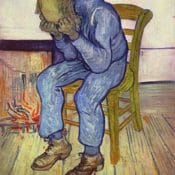
At the end of the 19th century, the first works with expressionist influences emerged as a reaction to Impressionism. The painters included Vincent van Gogh and Paul Gauguin, Henri de Toulouse-Lautrec and Edvard Munch , and other established artists searching for new forms of expression.
The bridge"
The second wave of Expressionism was even more intense, featuring artists such as Georges Rouault and PicassoDresden-based Brücke group in 1905 .
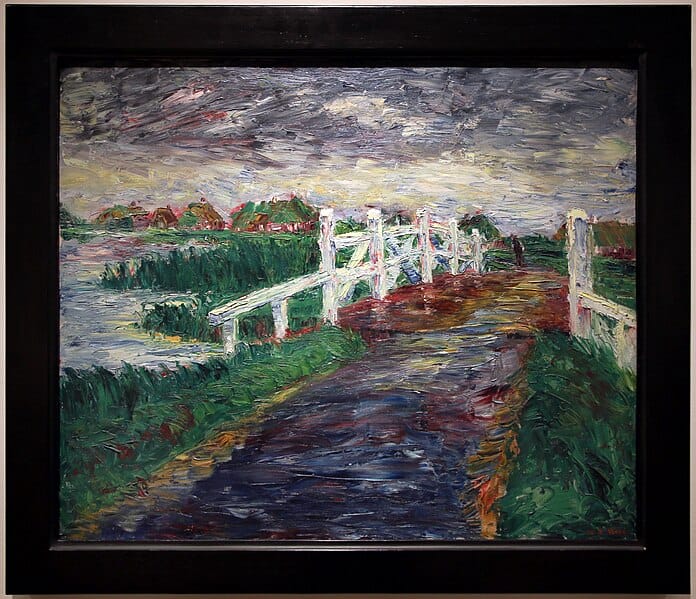
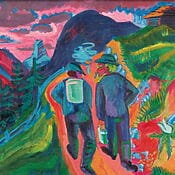
The "Brücke" group was founded in Dresden in 1905 by artists such as Ernst Ludwig Kirchner and Emil Nolde . They aimed to liberate art from traditional norms and to depict the raw, often shocking emotions of life.
Emil Nolde, Bridge over the Swamp, 1910 (Carmen Thyssen-Bornemisza Collection) Image source: Francesco Bini, CC BY-SA 4.0, via Wikimedia Commons
She worked there until 1913. Important works by Ernst Ludwig Kirchner and Karl Schmidt-Rottluff, Otto Mueller, Erich Heckel and Max Pechstein created here.
Her works were characterized by delicate colors, distorted shapes, and dynamic compositions that draw the viewer directly into the emotional storm of the depicted scenes.
The “Blue Rider”
Another expressionist artists' association was the New Artists' Association of Munich, which brought together famous names such as Wassily Kandinsky, Franz Marc, Gabriele Münter, and Marianne von Werefkin. From this group emerged the editorial board and artists' association "Der Blaue Reiter" (The Blue Rider) Der Blaue Reiter further developed the expressionist approach to the point of abstraction.
In contrast to the “Brücke” group, the “Blaue Reiter” group, led by Wassily Kandinsky and Franz Marc, placed great emphasis on spiritualistic and abstract elements. They sought a universal expression beyond physical reality and explored the connection between color and emotion. This mutual influence not only fostered a new perspective on art but also created space for a deeper exploration of human existence within the tense context of their time.
This was possible because the program of German Expressionism was essentially defined negatively. It was about painting in a way that was not true to nature, not conventional, and not bourgeois. Expressionism was not recognizable by stylistic features, but rather by an intellectual attitude.
The artists associated with the Blue Rider group are considered important pioneers of 20th-century modern art. However, the loose network of relationships they formed only lasted until the beginning of the First World War. The Blue Rider group disbanded in 1914.
World War I and its impact on Expressionism
The First World War had a disturbing influence on the artists of the time, which also led to Expressionism being replaced or overlaid by new styles in the following period:
Constructivism rejected the established forms and imagery of painting. New Objectivity turned to socially critical themes. Dadaism revolted against every known art form and against the society of the time and its value systems .
In art, the classification of artists and artworks into stylistic periods occurs. These are based on common characteristic features of the artworks and cultural products of an era.
The division into eras serves as a tool for structuring and classifying works and artists within a temporal framework and a cultural-historical event.
Knowledge of Art Periods And Movements plays a major role, especially in the art trade , as well as in art theory and classical image analysis.
In this section of the art magazine, we would like to help you gain a better understanding of these epochs, styles and movements.
Art styles and movements
The art style or also the direction in artworks refers to the uniform expression of the artworks and cultural products of an era, an artist or an artist group, an art movement, or an art school.
This is a tool for categorising and systematising the diversity of art. It denotes similarities that distinguish it from others.
The term is thematically related to the Art Movement, but it should not be viewed solely within a temporal framework and is therefore much broader.
In this section, we would like to help you gain a better understanding of styles and movements in art.
We use technologies such as cookies to store and/or access device information. We do this to improve your browsing experience and to display (non-)personalized advertising. If you consent to these technologies, we can process data such as browsing behavior or unique IDs on this website. Refusal or withdrawal of consent may adversely affect certain features and functions.
Functional
Always Active
Technical storage or access is strictly necessary for the legitimate purpose of enabling the use of a specific service expressly requested by the subscriber or user, or for the sole purpose of carrying out the transmission of a message over an electronic communications network.
Preferences
The technical storage or access is necessary for the legitimate purpose of storing preferences that were not requested by the subscriber or user.
statistics
Technical storage or access that is solely for statistical purposes.Technical storage or access that is used solely for anonymous statistical purposes. Without a subpoena, the voluntary consent of your internet service provider, or additional recording by third parties, the information stored or retrieved for this purpose cannot generally be used to identify you.
marketing
Technical storage or access is required to create user profiles, to send advertising, or to track the user on one or more websites for similar marketing purposes.






 Terracotta belly vase "Styly" with raffia details, black (size: L)
Original price was: €65.9532,95 €The current price is €32.95.
Terracotta belly vase "Styly" with raffia details, black (size: L)
Original price was: €65.9532,95 €The current price is €32.95.