In an era characterized by opulent splendor and magnificent beauty, the Baroque as a style with unique features. The Baroque period , marked by sumptuous architecture and elaborate church buildings , continues to fascinate with its rich cultural heritage .
Let us immerse ourselves in the world of the Baroque, its music, literature and the lives of the people in this magnificent era.
Baroque splendor – An era full of magnificence and opulence
Life in the Baroque period was characterized by a combination of architectural mastery and opulent lifestyle.
The magnificent palaces and churches of the Baroque period reflect the splendor of this era, in which art and life were inextricably intertwined. The Baroque styleItaly (the so-called Italian Baroque ), inspired by dramatic depictions and vibrant colors.
People of that era found expression for their emotions and longings in Baroque art, while wars and political upheavals shook the world around them. Baroque architecture combined aesthetics with function, with palaces like Versailles becoming symbols of absolutist power.
These magnificent buildings still tell of a time when splendor and magnificence defined life.
The Baroque style period: characteristics, influences and legacy for art history
In art history, the Baroque style represents an era full of passion and drama. The characteristics of this style are opulent forms, dynamic movements, and vibrant colors.
Inspired by the Counter-Reformation and absolutism , the Baroque period reflects a time of change and self-discovery. Artists such as Caravaggio , Bernini, and Rubens shaped this era with their unique works, which are still admired today.
Her artworks tell stories of power, faith, and emotions in a way that deeply touches the viewer. The Baroque style revolutionized the art world and left a lasting influence on subsequent generations of artists.
The Baroque as an Art Movement – A Summary
The Baroque period (17th-18th centuries) was an era of art that began in Italy in the 17th century and flourished well into the 18th century in other places. This era encompassed various art forms such as painting , sculpture , architecture , decorative arts , and music .
The baroque style was primarily adopted by countries involved in religious conflicts; the elaborate works were created on behalf of the Roman Catholic Church and were characterized by emotional depth.
Among the most important representatives of this period were Annibale Carracci (of the Carracci family), Caravaggio, and Gian Lorenzo BerniniPalace of Versailles is an outstanding example of Baroque art .
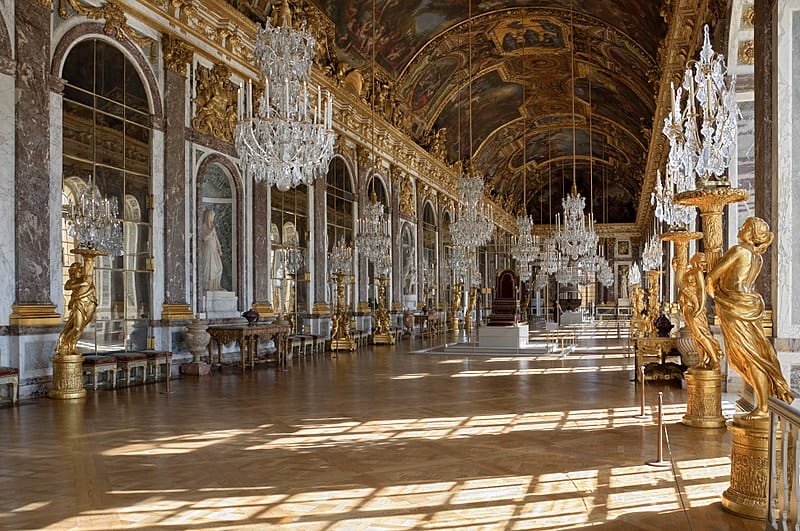
All the artworks in the room, together with the painted ceiling frescoes, create a magnificent setting for Louis XIV's Hall of Mirrors at the Palace of Versailles. Photo by Myrabella / Wikimedia Commons
In music , it is generally accepted that the Baroque period lasted roughly between 1600 and 1750; during this time of Baroque music, important new genres such as operas , oratorios , cantatas , as well as sonatas and concertos – while composers such as Claudio Monteverdi , Johann Sebastian Bach , and George Frideric Handel flourished.”
The origin of the term
The origin of the term Baroque likely lies in the Italian word “barocco” , which was used by philosophers in the Middle Ages to describe an obstacle in logical structure. Later, the meaning evolved to a distorted idea or a complex thought process.
An alternative source could be the Portuguese word “barroco” (Spanish: barrueco ), which describes an irregular or misshapen pearl and is still preserved “baroque pearl”
In art criticism, the term Baroque was used to describe anything that deviated from established rules and proportions—be it through irregularity, bizarreness, or other deviations. This biased view of art styles persisted until the end of the 19th century, with such styles being regarded as strange, grotesque, and over-decorated.
It was only through Heinrich Wölfflin's groundbreaking study "Renaissance and Baroque" (1888) that the term "Baroque" its place as a designation for a specific style instead of a term of abuse and enabled a systematic presentation of the characteristics of the Baroque.
Historical context of the Baroque era
Three major cultural and intellectual movements significantly shaped Baroque art and music.
Counter-Reformation and the Council of Trent
Initially, this was the rise of the Counter-Reformation and its expansion, both territorially and intellectually. The refined courtly style of Mannerism was increasingly perceived as inadequate towards the end of the 16th century, particularly for religious art.
In response to the Reformation movement, the Roman Catholic Church adopted a propagandistic stance Council of Trentart served to strengthen faith in the Church. This led to the introduction of a deliberate artistic program with works that exerted a strong emotional and sensual appeal on believers.
The resulting Baroque style paradoxically combined sensuality with spirituality; naturalistic depictions made religious images more understandable for the average believer, while dramatic and illusionary effects were used to promote piety and convey an impression of divine splendor.
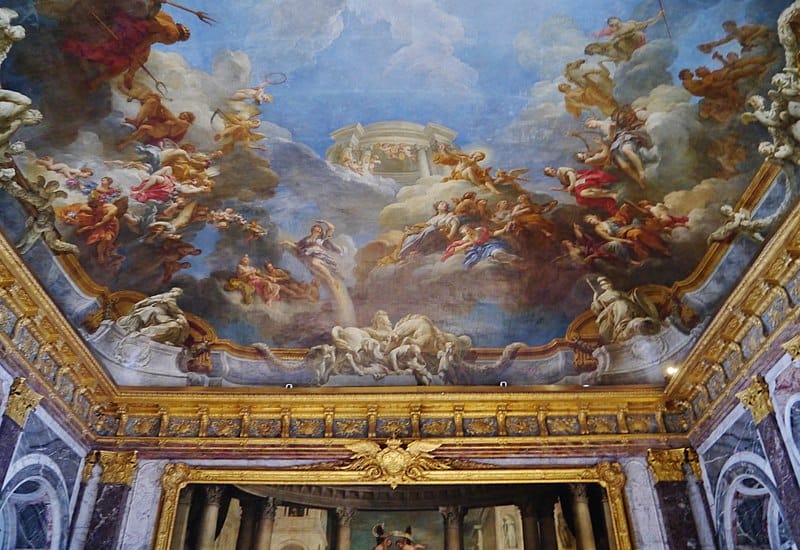
Ceiling of the Hercules Salon in the Palace of Versailles, Versailles, Yvelines Department, Île-de-France Region, France, photographed by Zairon, CC BY-SA 4.0, via Wikimedia Commons
Thus, baroque ceiling paintings dissolved into vivid scenarios that transported the viewer into infinite perspectives and devoted his senses to heavenly matters.
Absolutism and the strengthening of monarchies
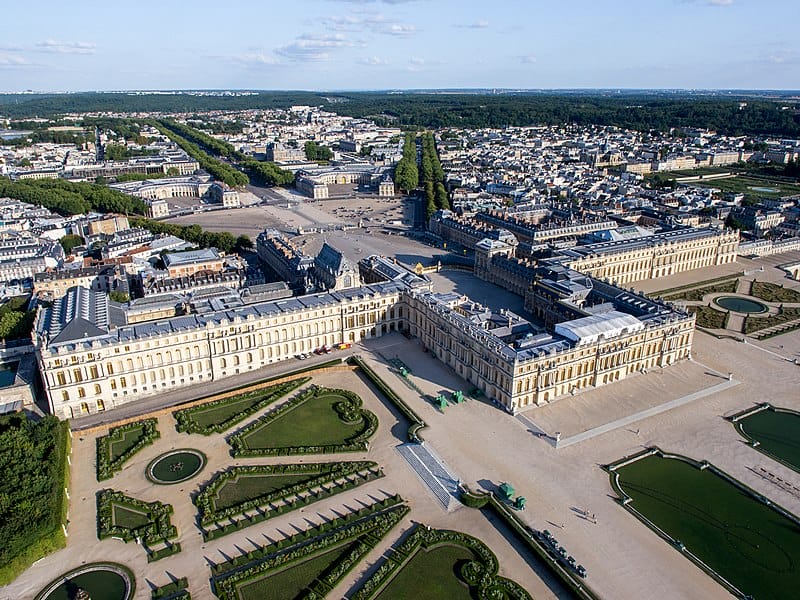
Another development was the strengthening of absolutist monarchies , accompanied by the emergence of an influential and powerful middle class that became active in the field of art patronage . Magnificent Baroque palaces were built to emphasize the power and grandeur of the centralized state – most clearly visible in the royal palace and gardens of Versailles.
Aerial view of the Palace of Versailles, France, taken by ToucanWings, CC BY-SA 3.0, via Wikimedia Commons
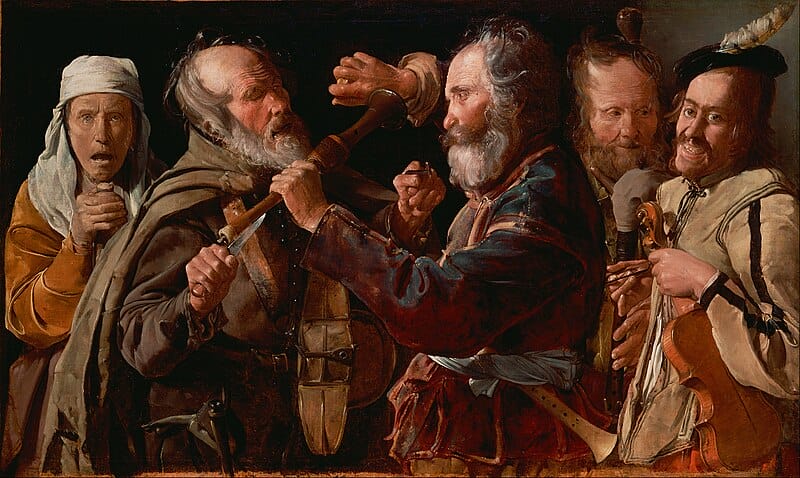
art market emerged for the middle class with a tendency towards realism in works such as those of the Le Nain brothers and Georges de La Tour in France, as well as various schools of 17th-century Dutch painting (see Rembrandt van Rijn or Jan Vermeer van Delft ).
Georges de La Tour: The Musicians' Fight (Hurdy-Gurdy Group) (c. 1625–1630). Oil on canvas, 85.7 x 141.0 cm (33.7 x 55.5 in). Getty Museum, Los Angeles
Newly discovered interest in nature and scientific progress
The third trend showed a newly awakened interest in nature and a general broadening of people's intellectual horizons, driven by advances in science and discoveries of the world.
These simultaneously led to a new awareness of both the insignificance of man (particularly facilitated by the Copernican shift of the earth from the center of the universe) and the unimagined complexity and infinity of the natural world.
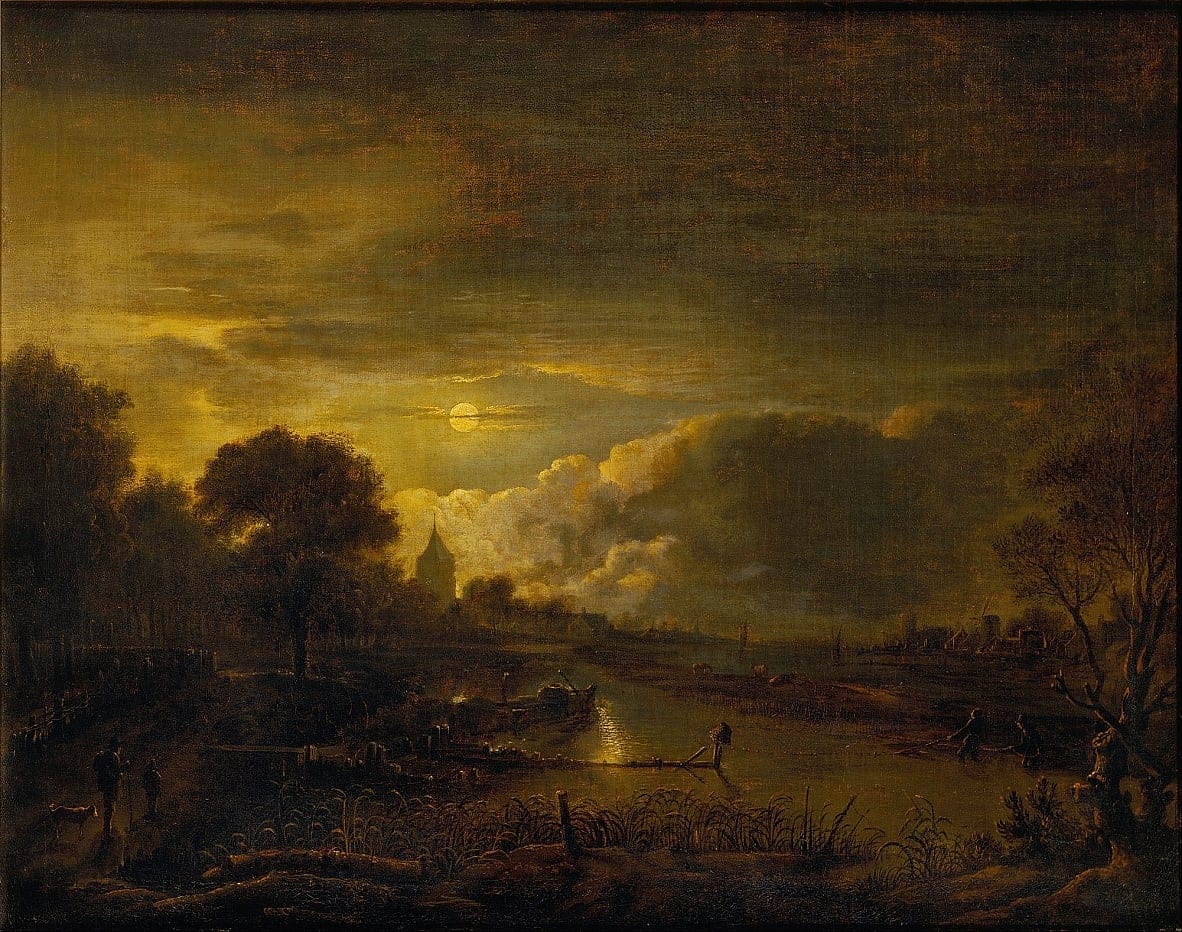
The development of landscape painting in the 17th century, in which people are often depicted as tiny figures in a vast natural environment, illustrates this changed understanding of human existence.
River scene in moonlight by Aert van der Neer; the small, inconspicuous people are typical of 17th-century Baroque landscape painting
Socioeconomic and cultural conditions in the Baroque period
The Thirty Years' War and the Turkish Wars led to devastation and significant population losses in Hungary. The plague epidemics of 1679 and 1713 further exacerbated this situation. To repopulate the territories taken from the Turks, the bureaucracy initiated resettlement projects for German and other immigrants in the south of the country.
Mercantilism and state intervention in trade
Protestants had been exiled during religious conflicts, but in the 18th century they were deliberately relocated to sparsely populated parts of the empire. From the 1660s onward, mercantilist ideas , supported by the government, dominated industrial and commercial activity.
The situation of the peasants was difficult ; protective measures under Leopold I and Charles VI had little effect. Despite the establishment of certain "model industries," mainly textile factories, their success remained limited. The absolutist state intervened heavily in trade organizations : guilds were suppressed or excluded from new manufactories.
Although trade was encouraged, it generated only modest profits for the state. Industrial and commercial enterprises were partly managed directly by the state, but mostly by privileged groups or private individuals. Notable examples include the first Oriental trading company (1667), the second Oriental trading company (1719), and the Ostend Company (1722).
Chronically overburdened public finances
Mediterranean trade was also intensified. Despite promising colonial projects in India, these were discontinued for political reasons in the mid-18th century. Under Charles VI, numerous new roads were planned and built. The state suffered from a constant shortage of funds due to ongoing wars and large economic investments, which strained public finances. Initially, the state financed itself through wealthy bankers such as Samuel Oppenheimer and later Samson Wertheimer.
Later he attempted to establish state-controlled banking companies; while the Banco del Giro of 1703 quickly failed in Vienna, the Wiener Stadtbanco of 1705 was able to hold its own; however, after a short time the Universalbancaliy of 1715 was also liquidated.
The Catholic Church controls the education system
After the victory of the Counter-Reformation, the Roman Catholic Church largely assumed control over the education system. The secondary schools, especially those run by religious orders such as the Jesuits and Benedictines , set a very high standard.
In 1677, a new university was founded in Innsbruck, whose theological faculty would soon become renowned. Historical writing flourished, particularly through works such as those by the two Benedictine brothers Bernard and Hieronymus Pez, Abbot Gottfried Bessel of Göttweig, and Franz Wagner of the Jesuit order, the official historian of Leopold I.
The Austrian Jesuits were known for their scientific and geographical research, especially for their explorations in China.
Achievements of the Baroque period for poetry, music and theatre
Among the achievements of Baroque poetry are Wolf Helmhart von Hohberg , whose works offer fascinating insights into the life of the nobility, and Katharina von Greiffenberg , a Protestant whose highly spiritual poems reflected the pressure of the Counter-Reformation.
Baroque theater was characterized by magnificent decorations and innovative stage technology. The productions ranged from elaborate Italian operas to the uninhibited humor of popular plays.
Music reached a particularly high level thanks to three emperors who were themselves active as composers (Ferdinand III, Leopold I, and Joseph I). Charles VI was also a talented musician and engaged JohannJoseph Fux from eastern Styria as a prominent composer and teacher for his services.
The magnificent architecture is the outstanding characteristic of Austrian Baroque culture. Initially, Italian architects were dominant, but local talents soon emerged.
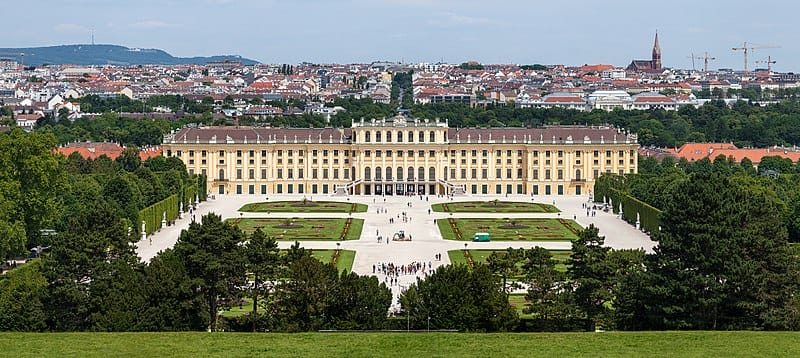
Among the most important were Johann Bernhard Fischer von Erlach , known for works such as the first plan of Schönbrunn Palace and St. Church in Vienna as well as the Collegiate Church in Salzburg , and his son Josef Emanuel Fischer von Erlach, who designed, among other things, the Court Library in Vienna.
Schönbrunn Palace in Vienna, Austria, photographed by Thomas Wolf, www.foto-tw.de, CC BY-SA 3.0 DE, via Wikimedia Commons
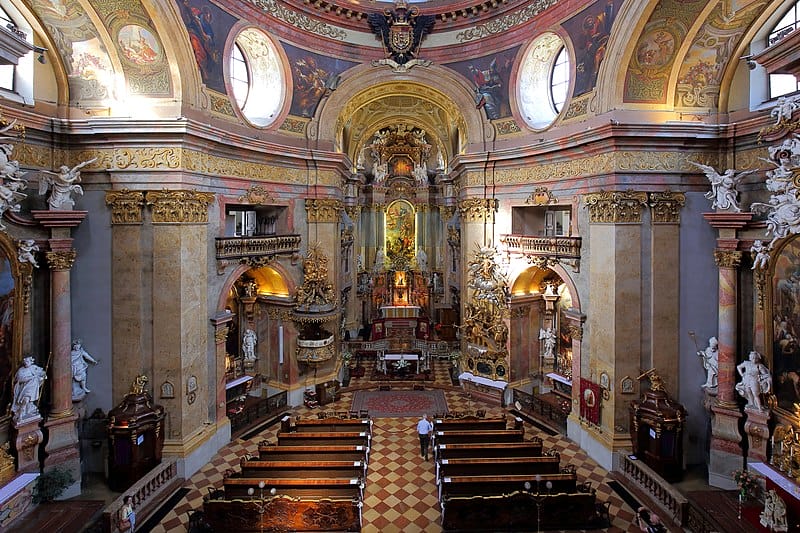
They were challenged by Jakob Prandtauer with monasteries in Herzogenburg and Melk, and especially by Johann Lucas von Hildebrandt with castles such as Schwarzenberg and Belvedere in Vienna, St. Peter's Church and Göttweig Abbey.
Interior view of St. Peter's Church in Vienna, the Austrian capital. The church, Vienna's first Baroque domed building, was constructed from 1701 onwards by the lay community of the Brotherhood of the Most Holy Trinity (from 1703 according to plans by Johann Lucas von Hildebrandt) and completed and consecrated in 1733. The Baroque furnishings are the work of important artists such as Matthias Steinl, Johann Michael Rottmayr, and Martino Altomonte. Photograph by C. Stadler/Bwag, CC BY-SA 4.0, via Wikimedia Commons
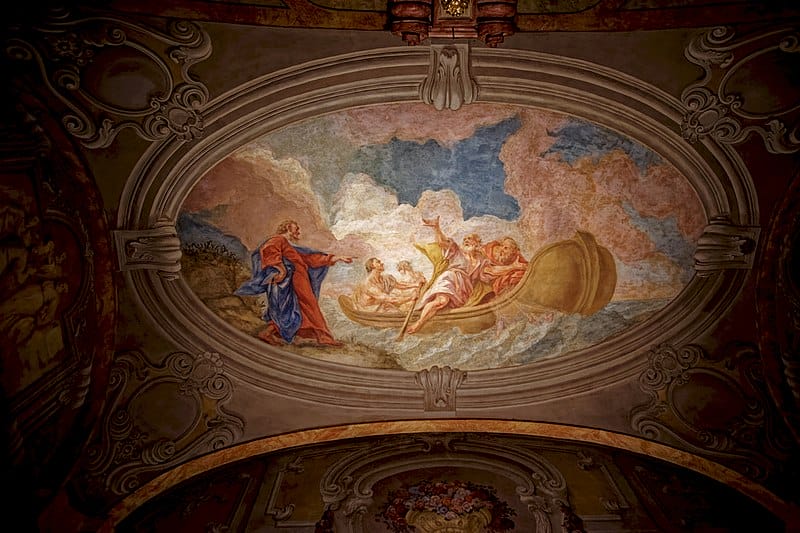
Among the local sculptors, Georg Raphael Donner out both in stature and in the quality of his work. Fresco painting was significantly influenced by artists such as Johann Michael Rottmayr from Salzburg, Daniel Gran from Vienna, and Paul Troger from the Puster Valley in Tyrol.
Vienna – St. Peter's Church 1701-22 – View from above of the church entrance: Peter sets his foot on the surface of the sea – Frescoes 1713 by Johann Michael Rottmayr. Photo by Txllxt TxllxT, CC BY-SA 4.0, via Wikimedia Commons
Stylistic features of the Baroque – an era of diversity in Europe
The arts in the Baroque period are characterized by an extraordinary diversity, as currents of Naturalism and Classicism existed side by side and merged with the characteristic Baroque style.
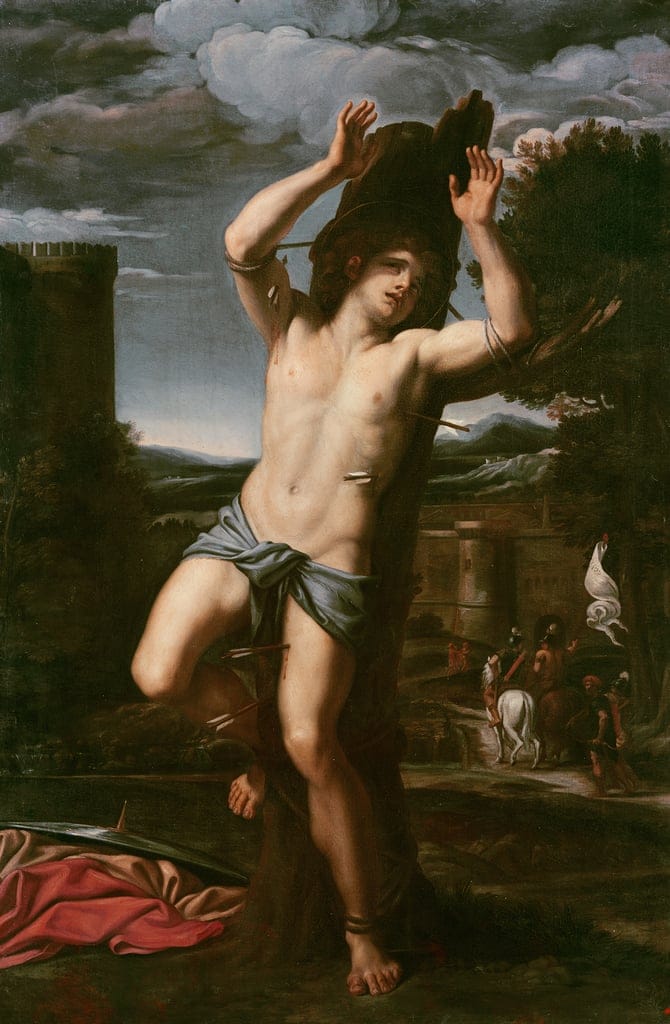
Annibale Carracci and Caravaggio , two Italian painters, decisively broke with Mannerism in the 1590s, thus contributing to the introduction of the Baroque style, painting in the classicist and realistic styles respectively.
The Martyrdom of Saint Sebastian by Annibale Carracci
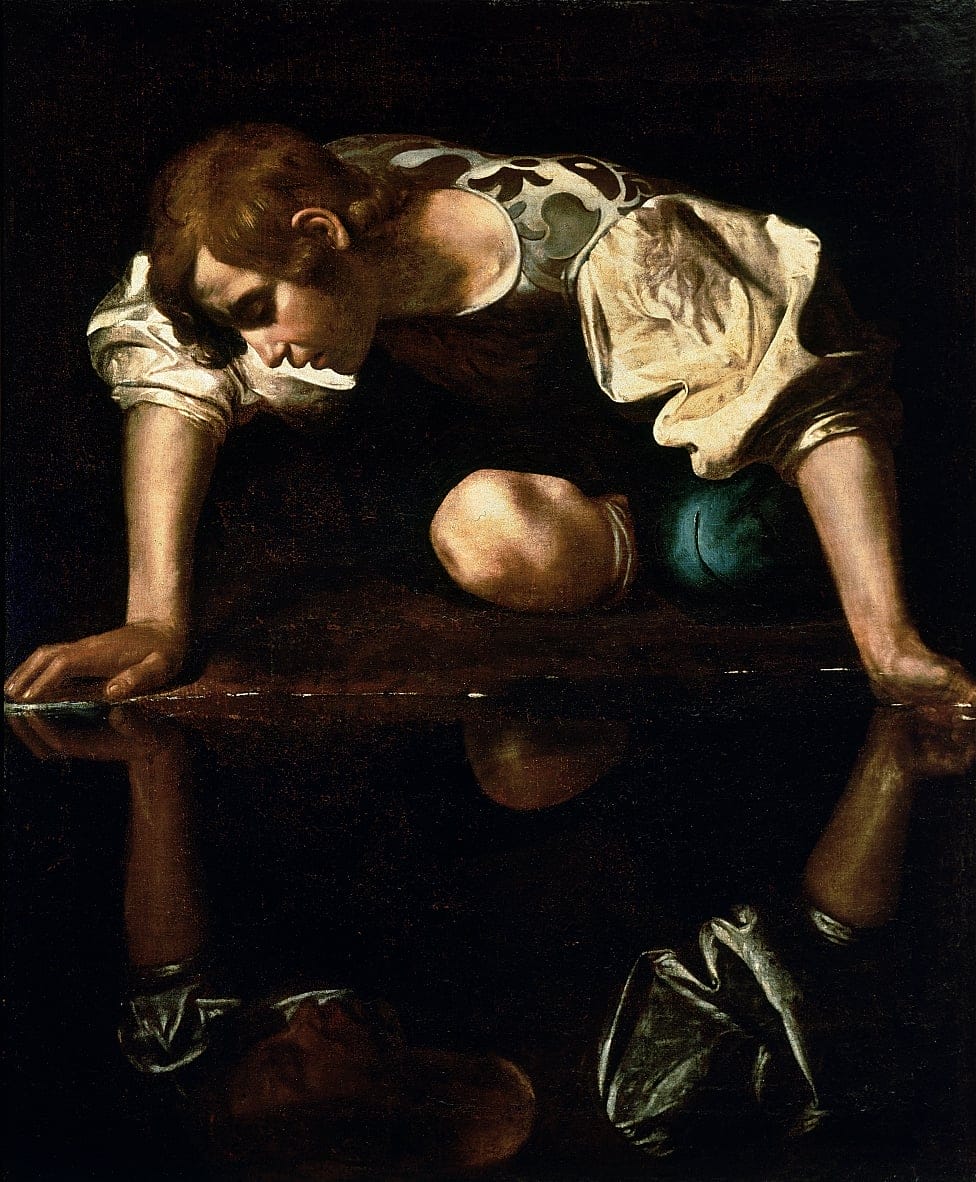
Caravaggio is particularly known for popularizing tenebrism , the use of extreme contrasts between light and dark. Artemisia Gentileschi used this technique very effectively in her history paintings – an unusual theme among contemporary female artists.
Narcissus by Michelangelo Merisi Caravaggio, a striking example of tenebrism in Baroque painting
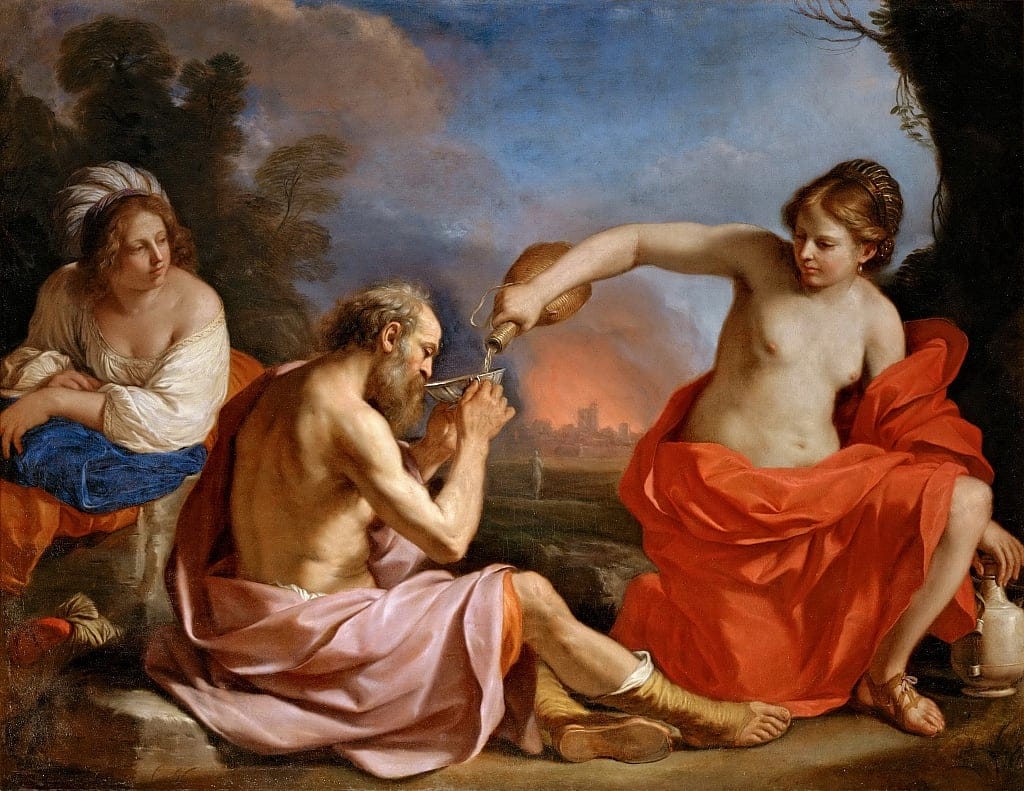
In the 1620s, a specifically baroque painting style developed in Rome, primarily through monumental ceiling paintings by Pietro da Cortona , Guido Reni , Il Guercino , Domenichino , and many other artists.
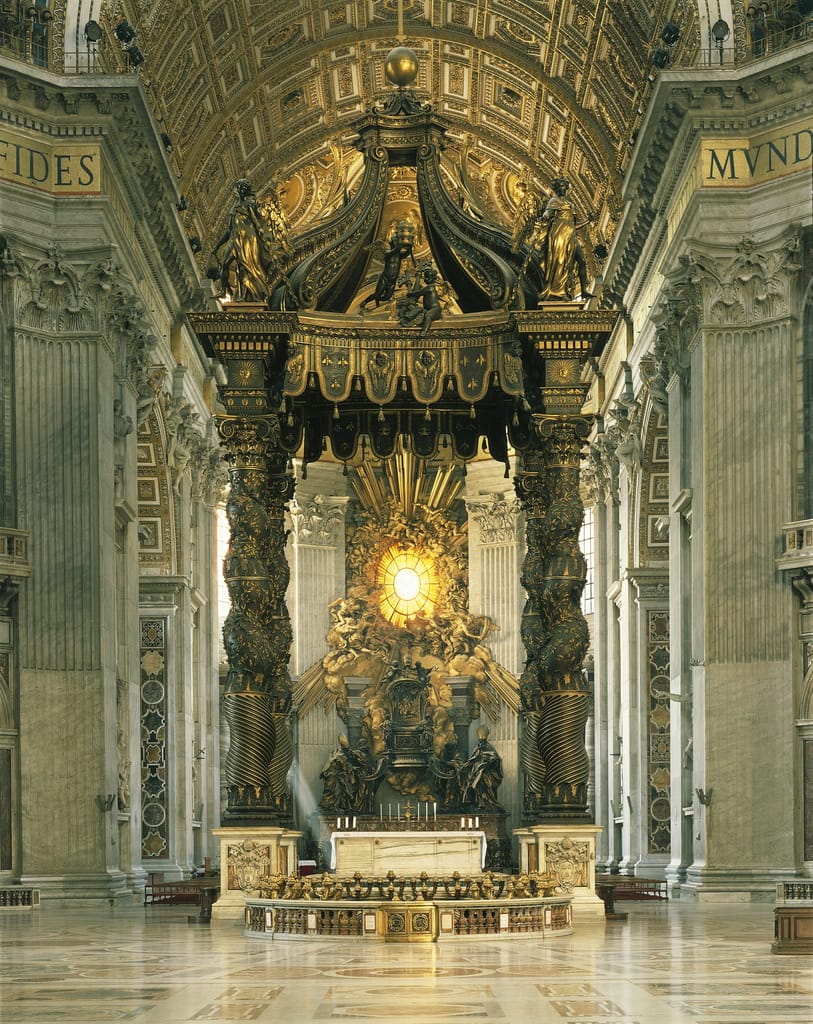
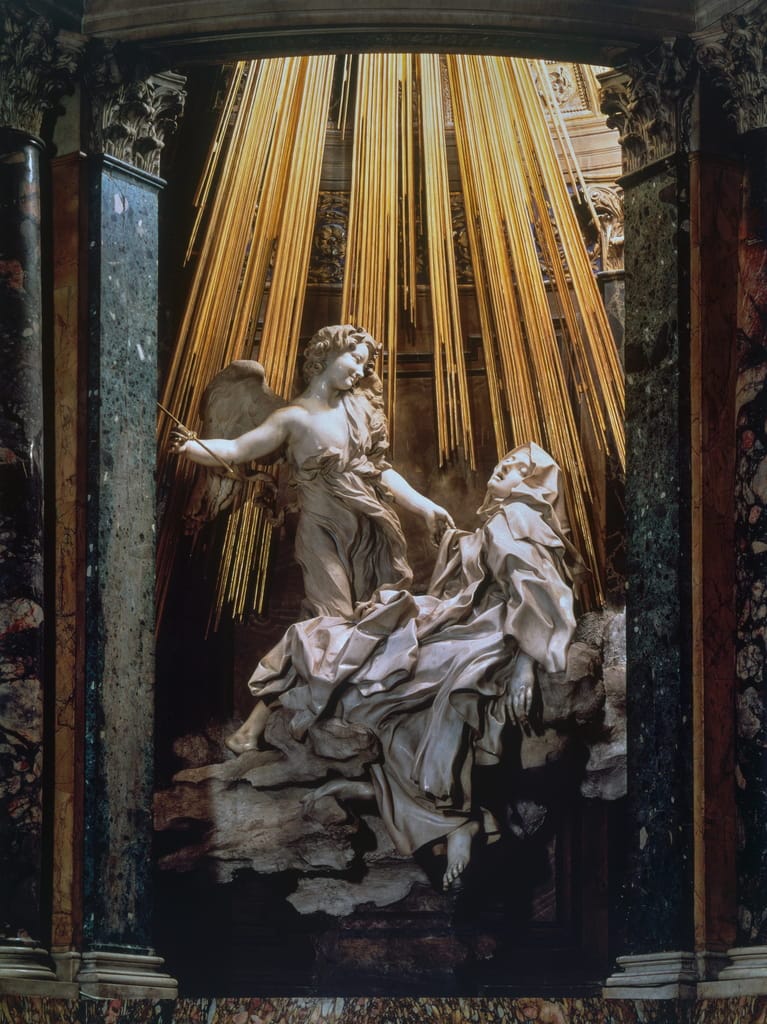
Gian Lorenzo Bernini was one of the most important sculptors and architects of this period; among other things, he designed the baldachin over the altar in St. Peter's Basilica and the huge colonnade in front of it.
Baldacchino of St. Peter's by Gian Lorenzo Bernini
The baroque architecture of Bernini, together with Carlo Maderno , Francesco Borromini and Guarino Guarini, emphasized massiveness, monumentality, movement, dramatic sequences of space and light, as well as rich interior decorations with contrasting surface textures, vibrant colors and luxurious materials to highlight the physicality of the structure and to convey immediacy and sensual pleasure.
The Ecstasy of Saint Teresa of Avila by Gian Lorenzo Bernini
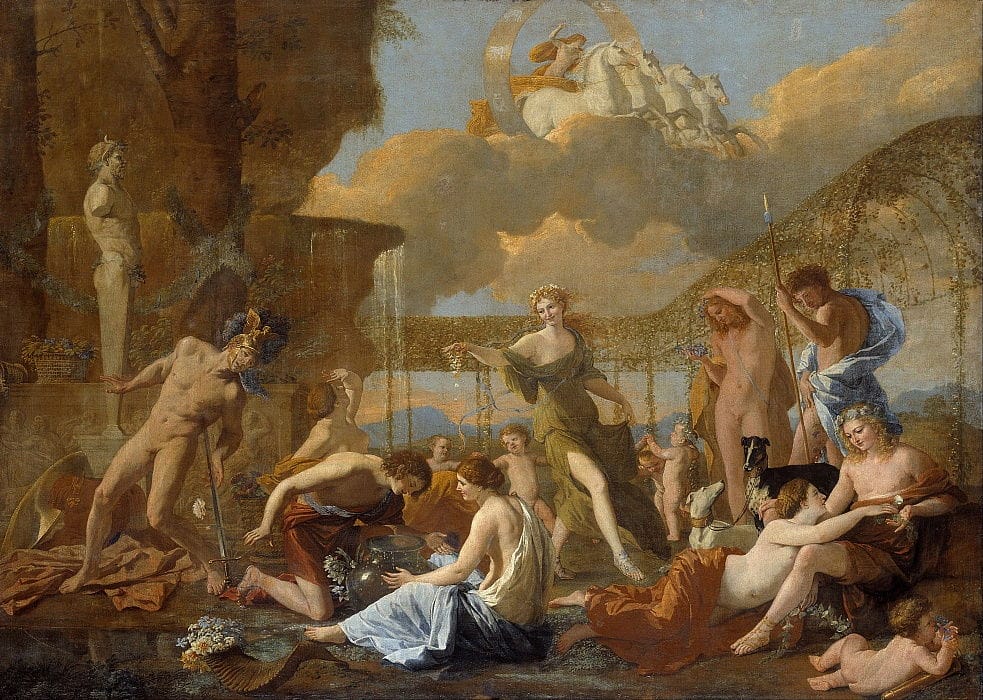
In France, the baroque influences were tempered by pronounced classicist tendencies, as can be seen in the serious, logical and orderly paintings of Nicolas Poussin , as well as the somewhat more magnificent works of Charles Le Brun and the portraitists Hyacinthe Rigaud and Nicolas de Largillière .
French architecture, on the other hand, is less Baroque in style due to its subtlety, elegance, and restraint. The understated architecture of Jules Hardouin-Mansart demonstrates that the Baroque impulse in France was more subdued and classical in nature.
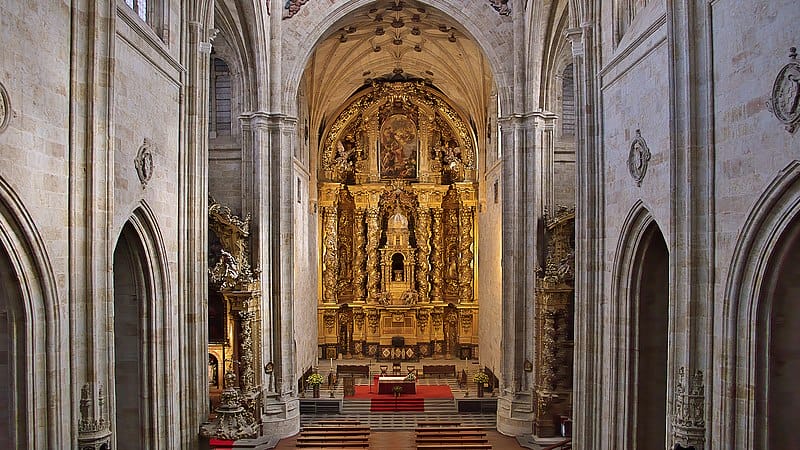
In strictly Roman Catholic Spain, however, the Baroque style was enthusiastically adopted, particularly in architecture. The most important Spanish architect, José Benito Churriguera, clearly demonstrated Spain's interest in surface textures and opulent details.
Juan de Álava (1480-1537), also known as Juan de Ybarra, drew up the plans for the church in 1524. The magnificent altarpiece is a work by José Benito de Churriguera, 1692-1693. Photographed by José Luis Filpo Cabana, CC BY-SA 4.0, via Wikimedia Commons
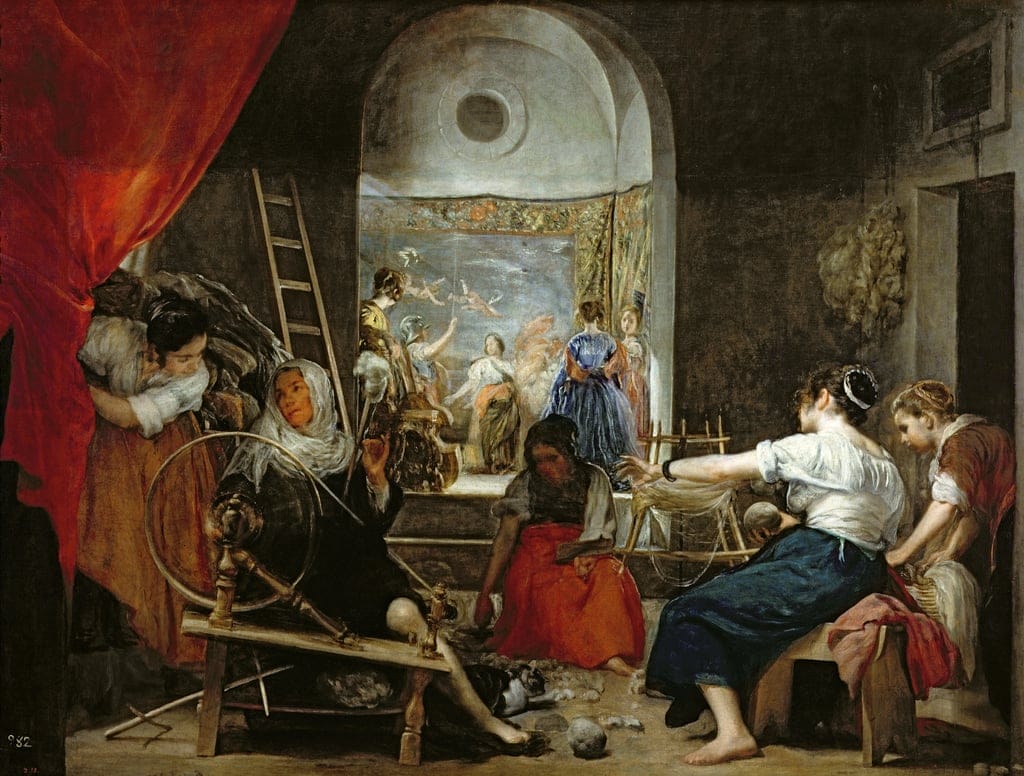
His style, known as “Churrigueresque,” found many followers, and its adaptation spread to the Spanish colonies in the Americas. Diego Velázquez and other 17th-century Spanish painters pursued a dark but powerful naturalistic approach that had little in common with mainstream Baroque painting.
The Spinners, or the Fable of Arachne, 1657 by Diego Velázquez
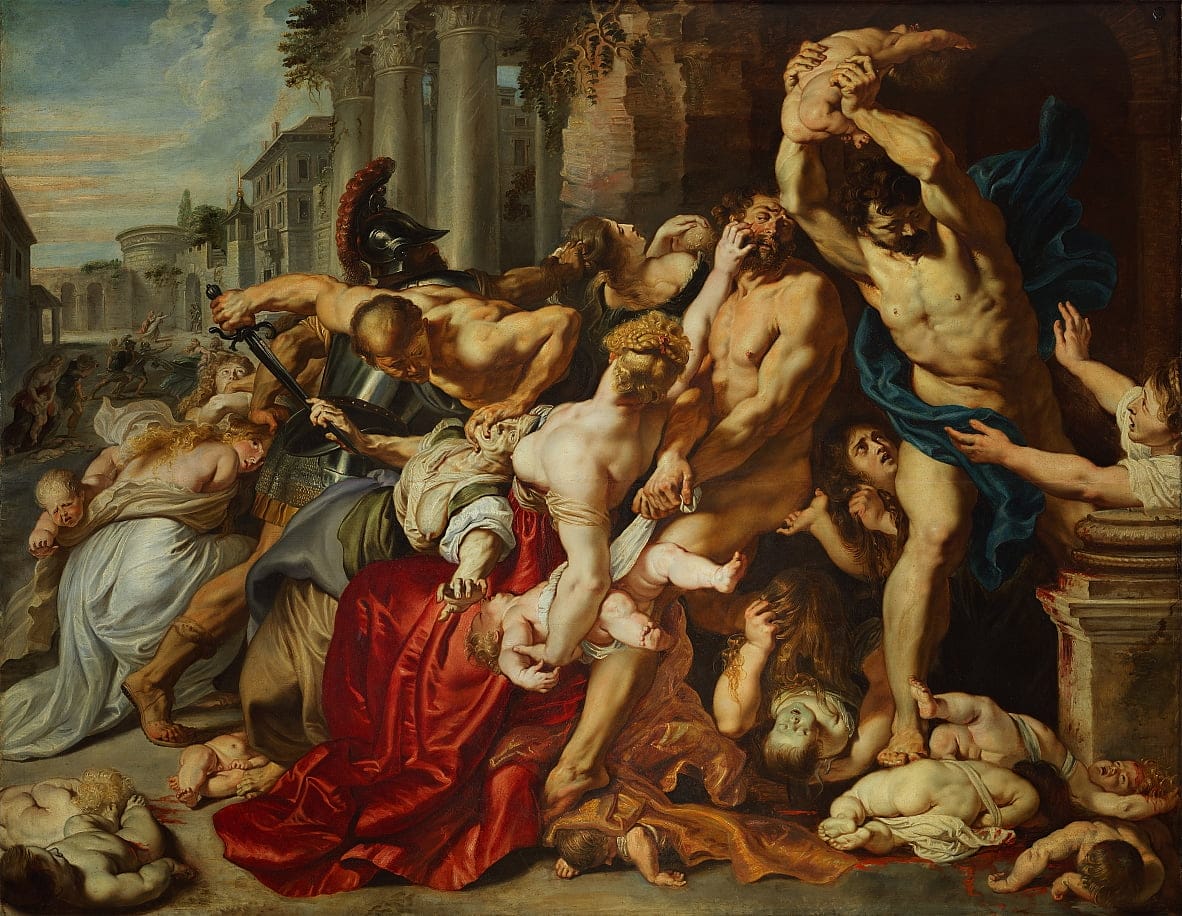
The Baroque style had only a limited spread in Northern Europe, particularly in what is now Belgium. The most outstanding master of this Spanish-ruled, largely Roman Catholic region was the painter Peter Paul Rubens , whose dynamic diagonal compositions and sumptuous figures represent the pinnacle of Baroque painting.
The Massacre of the Innocents by Peter Paul Rubens
The elegant portraits of Anthony van Dyck and the vigorous figurative works of Jacob Jordaens were influenced by Rubens' style. In the Netherlands, art was strongly influenced by the realistic tastes of its predominant bourgeois patrons, which meant that both the country's numerous genre and landscape painters and important masters such as Rembrandt and Frans Hals left important aspects of the Baroque untouched.
Nevertheless, the Baroque style showed a remarkable influence in England , particularly in churches and palaces designed by Sir Christopher Wren and Sir John Vanbrugh .
The last golden age of the Baroque style took place mainly in largely Roman Catholic southern Germany and Austria , where local architects left Italian architectural styles behind from the 1720s onwards.
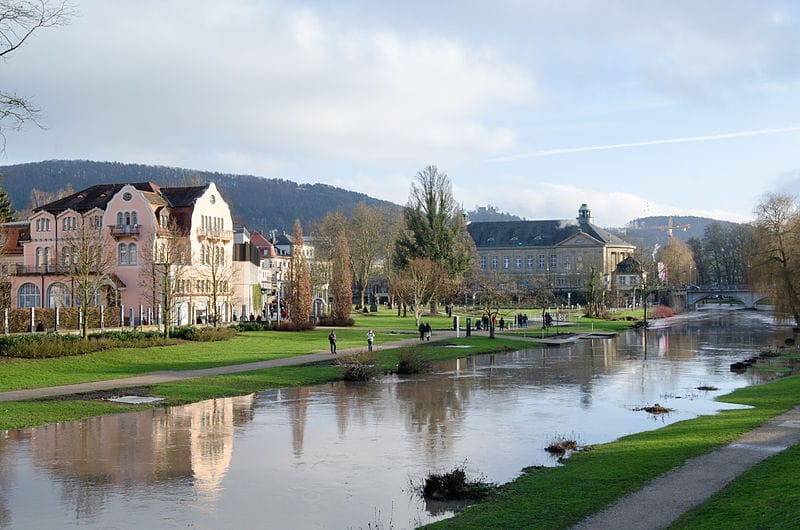
In ornate churches, monasteries and palaces, JB Fischer von Erlach , Balthasar Neumann , JL von Hildebrandt , Dominikus Zimmermann , as well as Cosmas Damian Asam and Egid Quirin Asam, created subtle illusionistic effects with a richly refined style of stucco decoration combined with painted surfaces.
Bad Kissingen, Balthasar-Neumann-Promenade, photographed by Tilman2007, CC BY-SA 3.0, via Wikimedia Commons
Baroque architecture: Magnificent palaces, churches and gardens
Amidst the baroque splendor rise majestic castles, whose facades are characterized by opulent decorations.
Baroque architecture testifies to a striving for overwhelming beauty and grandeur. Churches , as spiritual centers, were designed as impressive structures with lavish stucco work and magnificent domes. Gardens were laid out as a harmonious extension of the architecture, with geometric forms and artfully arranged flowerbeds.
The Baroque architectural style spread not only in Italy , its country of origin, but also throughout Europe. Magnificent buildings like the Palace of Versailles stand as symbols of this splendid era, which represents a pinnacle of artistic creativity.
Baroque architecture embodies a time of exuberance and devotion to beauty, embedded in political turmoil and social upheaval.
The Baroque architectural style – origins and characteristics
Baroque architecture is a style of building that originated in Italy in the late 16th century and persisted until the 18th century in regions such as Germany and colonial South America.
Its roots lie in the Counter-Reformation, when the Catholic Church exerted a strong emotional attraction on believers through art and architecture.
Complex floor plans, primarily based on the oval, as well as dynamic contrasts and overlapping spaces, were favored to emphasize movement and sensuality. Further characteristic features include grandeur, drama and contrasts (especially in lighting), curved forms, and diverse surface treatments with richly ornamented elements and gilded statues.
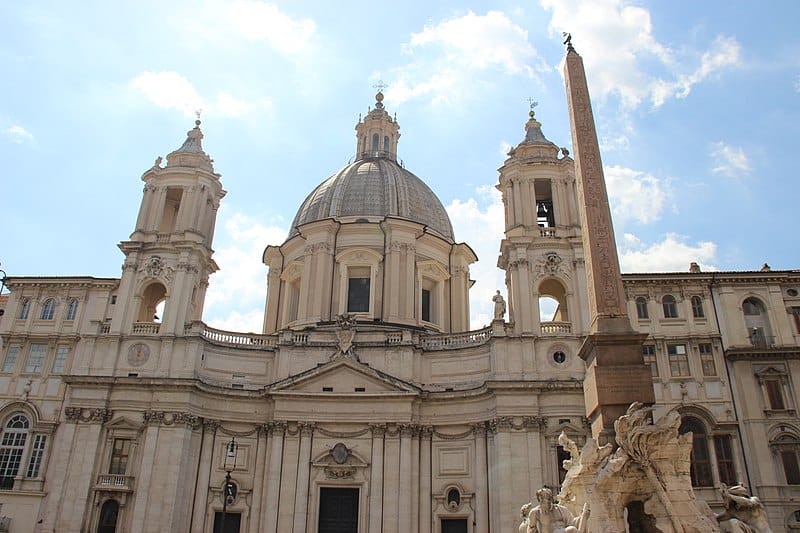
Baroque architects favored vibrant colors and illusionistic ceiling paintings. In Italy, Gian Lorenzo Bernini, Carlo Maderno, Francesco Borromini , and Guarino Guarini were among the most important representatives of this era; while classical elements gave this style a more subtle appearance in France.
Piazza Navona, Obelisk of Domitian and Francesco Borromini, Sant'Agnese, 17th-century Baroque church. Photo by Gary Todd from Xinzheng, China, PDM-owner, via Wikimedia Commons
The Baroque style arrived later in Central Europe, but flourished, for example, in the work of the Austrian architect Johann Bernhard Fischer von Erlach.
Great Britain was also influenced by the Baroque style – especially through the works of Christopher Wren. The late Baroque period is often referred to as Rococo or Churrigueresque style .
Music in the Baroque period: Composers such as Bach, Vivaldi and Handel shaped the era
The sounds of the Baroque era reveal a world full of passion and elegance. Bach , Vivaldi , and Handel , masters of their time, wove musical masterpieces that continue to touch hearts today.
Her compositions reflect the magnificent opulence of the Baroque era, with virtuosic melodies and profound harmonies. Baroque music was more than mere entertainment – it was an expression of feeling and beauty that touched the souls of its listeners.
Through the works of these ingenious composers, music became a language of emotions and thoughts that united people all over the world for centuries.
Characteristics of Baroque music and important representatives
Baroque music , a genre that dominated from about 1600 to about 1750, is known for its magnificent, dramatic and energetic spirit, as well as its stylistic diversity.
Claudio Monteverdi's madrigals are one example . One of the most significant turning points in music history occurred in Italy at the beginning of the 17th century.
The stile antico gave way to a new interest in expressive harmony – developed for secular use. This led to a clearer definition of the differences between sacred and secular music, as well as between vocal and instrumental styles, and a more pronounced highlighting of national characteristics.
The introduction of opera , oratorio , and cantata marked a significant turning point in music history . These new vocal forms enabled composers to express complex stories and emotions through music.
Claudio Monteverdi is considered a pioneer of this “New Music” , followed by other outstanding Italian composers such as Alessandro Scarlatti and Giovanni Pergolesi . In Italy, Baroque music flourished with masters such as Arcangelo Corelli , Antonio Vivaldi , and Giuseppe Tartini .
Their works were distinguished by their virtuosity and passion. In France, Jean-Baptiste Lully as a leading opera composer, and Jean-Philippe Rameau excelled in French Baroque music.
In England, the Stuart masques to the development of vocal music, with George Frideric Handel from Germany playing a central role. His musical genius brought him international acclaim.
Johann Sebastian Bach, on the other hand, concentrated on Baroque church music and created timeless works for choral and organ music. Germany was also home to other renowned Baroque composers such as Heinrich Schütz , Dietrich Buxtehude , and Georg Philipp Telemann. Their influence significantly shaped the musical landscape of the 17th and 18th centuries.
The combination of two artistic innovations – the development of perspective in the 15th century and the premiere of the first opera in 1597 – laid the foundation for Baroque theatre , which remained influential well into the 19th century. During this period, all countries were affected in similar ways, with Italy being the most important source of inspiration.
Instead of the classical drama of the 16th century, a variety of entertainment forms emerged, such as intermezzi , ballet , masked performances , and opera buffa . The introduction of new techniques for creating spectacular visual effects led to the installation of increasingly sophisticated machinery in theaters. The result was a dominant spectacle overshadowing all other aspects of performance design.
The Baroque architectural style, which originated in Italy and spread throughout Europe, significantly influenced theater construction between approximately 1650 and 1790. Characteristic features included the refinement of the proscenium stage and the horseshoe-shaped auditorium in the Renaissance style.
Private Court Theatre
New innovations were introduced in private court theaters , where up to five shallow balconies were arranged vertically. For the first time, there was an underground orchestra pit in front of the stage, and the stage floor was lowered to create space for scenery, equipment, and dancing.
With the rise of operas and ballets, increasingly sophisticated sets were Terms & Conditions . Famous names of this era include Giacomo Torelli from Italy and the Bibiena family with their unique productions. Strict etiquette demanded perspective lines on the stage as seen from the royal box seat.
The construction of theaters was controlled by financial support from the nobility, which led to a rigid architectural formalism. The auditoriums reflected social stratification – a good example is the French court theater at Versailles (1769) designed by the architect Jacques-Ange Gabriel.
The stages were mechanized in the style of the Bibiena family, with pulley systems for effects such as flying scenery. Despite their size, many operas premiered in these expensive court theaters, and they also played an important role in the development of classical ballet.
Public opera houses
In the 18th century, there were two types of public theatres . One of them was a logical continuation of the earlier private court theatres and met the sophisticated, urban, aristocratic demand for theatre as entertainment.
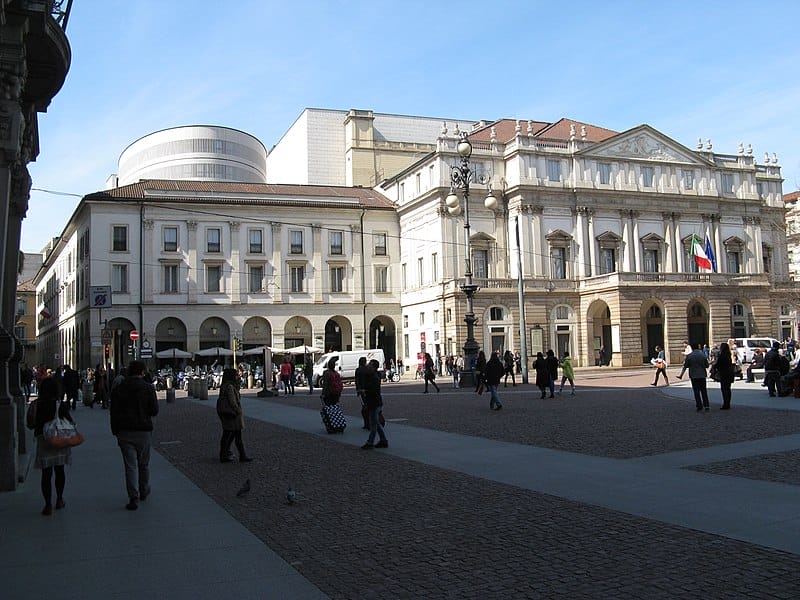
The Teatro alla Scala (1776–78) in Milan is a prime example of the numerous theaters built by the nobility in the capital cities of Europe during the 18th century. Public theaters like La Scala differed from private court theaters only in the size of their auditorium and stage.
The Teatro alla Scala in Milan Photo by Yair Haklai, CC BY-SA 3.0, via Wikimedia Commons
While the auditorium at Versailles offered fewer than 700 seats, La Scala had more than 2,000 seats. At that time, opera with its accompanying ballet was the preferred form of entertainment, especially in Italy.
The restoration playhouse
The restoration theatre in England differed from other forms of public theatre. The horseshoe-shaped auditorium with a deep stage and orchestra pit was popular throughout Western Europe and influenced the style of opera houses.
The actors performed in front of elaborately painted backdrops behind the proscenium arch. Unlike Baroque theaters, the Restoration theater had a deep forestage that extended over the proscenium and where most of the action took place.
The English, with their Shakespearean tradition, greatly valued the direct contact between actors and audience from the Elizabethan era, which is why they maintained this in the Restoration theatre.
On both sides of the stage front there were doors for the actors as well as additional baroque-style audience boxes stacked on top of each other.
Baroque Literature – Characteristics, Authors and Works
Baroque literature is an important part of a significant European movement known as the Baroque, both in literature and art.
Since around 1800, literary production in Europe has been referred to as Baroque literature, while in France it is more often associated with Classicism, although similar stylistic devices are used. Baroque elements can also be found in 17th-century European literature.
There is thus a distinction between the epochal term and a stylistic concept for specific features such as metaphors , religious and mythological allegories . Due to its "artificiality," Baroque literature often eludes direct empathy; due to its lack of "naturalness," it was poorly regarded by critics of the early and middle Enlightenment.
Baroque literature manifested itself in various forms, from the Euphism of English poets to Preciosité in France, Marinism in Italy, the First and Second Silesian Schools in Germany, and Conceptism and Kulturanism in Spain.
Baroque authors include:
in Spain : Luis de Góngora, Francisco de Quevedo, Sor Juana Inés de la Cruz, Bernardo de Balbuena and Miguel Hidalgo;
in Catalonia : Francesc Fontanella, Francesc Vicenç Garcia, Josep Romaguera;
in Portugal : António Vieira, Gregório de Matos, Francisco Rodrigues Lobo;
in England : the metaphysical poets John Donne, George Herbert, Andrew Marvell, Henry Vaughan and
in Germany : Andreas Gryphius and Angelus Silesius.
In Spain, the Baroque era coincides with the Golden Age. Themes of love , honor, religiosity (amidst the ongoing Counter-Reformation), and satire dominate. Poetry is characterized by a mix of controversies between Conceptualism and Kulturanismo, as well as the discovery of new stanza forms alongside the continuation of the Renaissance sonnet.
The novel experiences a period of maximum splendor with works by Cervantes and a multitude of subgenres (with the picaresque novel being particularly prominent).
In the theater, comedies take center stage, along with "Auto Sacramental" or dramatizations of biblical passages. Pedro Calderón de la Barca blends the rules of comedy with serious themes, thus continuing to develop Hispanic tragic theater.
Origins and constitutional elements
Originally, the term Baroque was used exclusively for the visual arts . It wasn't until the 1820s that people began to speak of a literary Baroque, even though its heyday was in the 16th and 17th centuries. This suggests that this movement not only influenced art in terms of its sculptural forms, but was also relevant in literature.
It is important to acknowledge the existence of a literary Baroque and to view it as an ideological movement – not merely a formal one – as well as to understand its close connection to the Counter-Reformation. Some have even gone so far as to claim that the Baroque opposed the Renaissance and represented a confrontational movement – which is incorrect.
The Baroque period brought about a renewal of techniques and styles. Particularly in Europe, and especially in Spain, the Counter-Reformation had a major influence on these trends; Italian influences from the Renaissance were assimilated and simultaneously shaped by Spanish influences – with techniques and styles being adapted even more strongly to the Spanish tradition.
Baroque poetry
The Baroque poets of the 17th century mixed traditional stanzas with new and sophisticated forms such as the trio , the quartet , the sonnet , and the redondilla .
They employed numerous rhetorical figures and strove for an elaborate formal design. This did not signify a departure from Renaissance classicism, but rather an intensification of stylistic means in the pursuit of ornamental complexity and an exaggeration of sensory elements, culminating in formal intricacy.
The Spanish literary Baroque characterizes the 17th century. During the 17th century, the Baroque movement featured themes that were already present in the Renaissance, but intensified, especially the negative aspects: the transience of life, the speed with which time passes, the disappearance of pleasures, the complexity of the world around man, etc.
The literature of the 16th century was characterized by a calm and balanced style; the Baroque of the 17th century disrupted this calm and various forces came into conflict.
Closing remarks
Amidst the baroque exuberance, a world of unparalleled beauty and elegance unfolds. The magnificent palaces and opulent churches reflect the essence of this era, characterized by lavish architecture and vibrant colors. Stepping into the halls of these buildings feels like entering another time, where life itself art .
Every stone tells stories of bygone eras, of war and peace, of love and passion. The Baroque architecture of Italy and France continues to inspire generations of artists and architects worldwide. A visit to Versailles brings the splendor of the Baroque era back to life in an unparalleled way.
Baroque literature was often dominated by complex metaphors and allegories, as well as sophisticated rhetoric. The music of this period was characterized by opulent compositions with numerous ornaments and contrasts.
Overall, the Baroque period can be described as an artistic era known for its opulence, drama, and splendor, and which had a tremendous influence on European art and cultural history.
Affiliate Links Disclaimer : As a general rule and without exception, we only recommend or link to products that we use (or would use) ourselves and all opinions expressed here are our own. Our product reviews and recommendations are independent and based on research, expert opinions, and/or product testing. If you click on links in our content, we may receive commissions on your purchases, but we never receive any compensation or other payment for the content of our recommendations. This is how we finance our editorial work and magazine articles (details in our Editorial Standards ). Read the full PrivacyPolicy .
Owner and Managing Director of Kunstplaza . Publicist, editor, and passionate blogger in the fields of art, design, and creativity since 2011. Graduated with a degree in web design from university (2008). Further developed creative techniques through courses in freehand drawing, expressive painting, and theatre/acting. Profound knowledge of the art market gained through years of journalistic research and numerous collaborations with key players and institutions in the arts and culture sector.
Like any subject area, art also has a wealth of specialised terminology, expressions, abbreviations, and foreign words.
In this section, we would like to introduce you to some of the most important and common terms from time to time.
You will be able to learn and deepen your understanding of a range of information, definitions, liturgical terms, notes, common technical terms and their abbreviations, as well as concepts from art theory, art history, and art philosophy.
In art, the classification of artists and artworks into stylistic periods occurs. These are based on common characteristic features of the artworks and cultural products of an era.
The division into eras serves as a tool for structuring and classifying works and artists within a temporal framework and a cultural-historical event.
Knowledge of Art Periods And Movements plays a major role, especially in the art trade , as well as in art theory and classical image analysis.
In this section of the art magazine, we would like to help you gain a better understanding of these epochs, styles and movements.
Art styles and movements
The art style or also the direction in artworks refers to the uniform expression of the artworks and cultural products of an era, an artist or an artist group, an art movement, or an art school.
This is a tool for categorising and systematising the diversity of art. It denotes similarities that distinguish it from others.
The term is thematically related to the Art Movement, but it should not be viewed solely within a temporal framework and is therefore much broader.
In this section, we would like to help you gain a better understanding of styles and movements in art.
We use technologies such as cookies to store and/or access device information. We do this to improve your browsing experience and to display (non-)personalized advertising. If you consent to these technologies, we can process data such as browsing behavior or unique IDs on this website. Refusal or withdrawal of consent may adversely affect certain features and functions.
Functional
Always Active
Technical storage or access is strictly necessary for the legitimate purpose of enabling the use of a specific service expressly requested by the subscriber or user, or for the sole purpose of carrying out the transmission of a message over an electronic communications network.
Preferences
The technical storage or access is necessary for the legitimate purpose of storing preferences that were not requested by the subscriber or user.
statistics
Technical storage or access that is solely for statistical purposes.Technical storage or access that is used solely for anonymous statistical purposes. Without a subpoena, the voluntary consent of your internet service provider, or additional recording by third parties, the information stored or retrieved for this purpose cannot generally be used to identify you.
marketing
Technical storage or access is required to create user profiles, to send advertising, or to track the user on one or more websites for similar marketing purposes.




 Dining chair "Monaco" with bouclé upholstery & swivel function (sand) – set of 2
295,00 €
Dining chair "Monaco" with bouclé upholstery & swivel function (sand) – set of 2
295,00 €