“From exclusion to acceptance: How art can contribute to inclusion” is a fundamental and very topical issue that shows how art promotes the inclusion of people with disabilities throughout Germany.
Through cultural projects, art enables a new approach to education and creates spaces for contact and participation . Music , theatre, and other artistic media offer a unique platform to break down barriers and celebrate the diversity of our society.
Inclusion in art is the way in which people can express their own cultural identity and actively promote the development of an inclusive society.
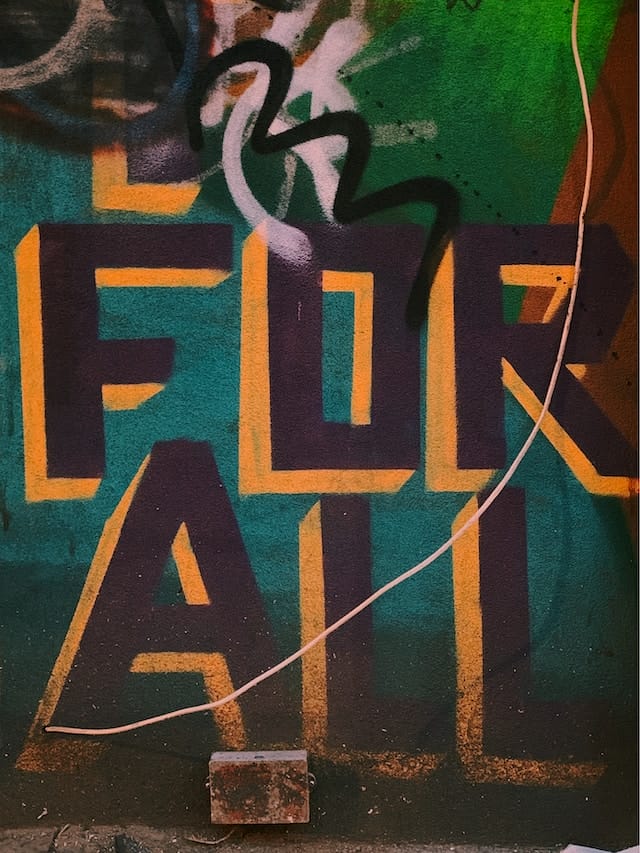
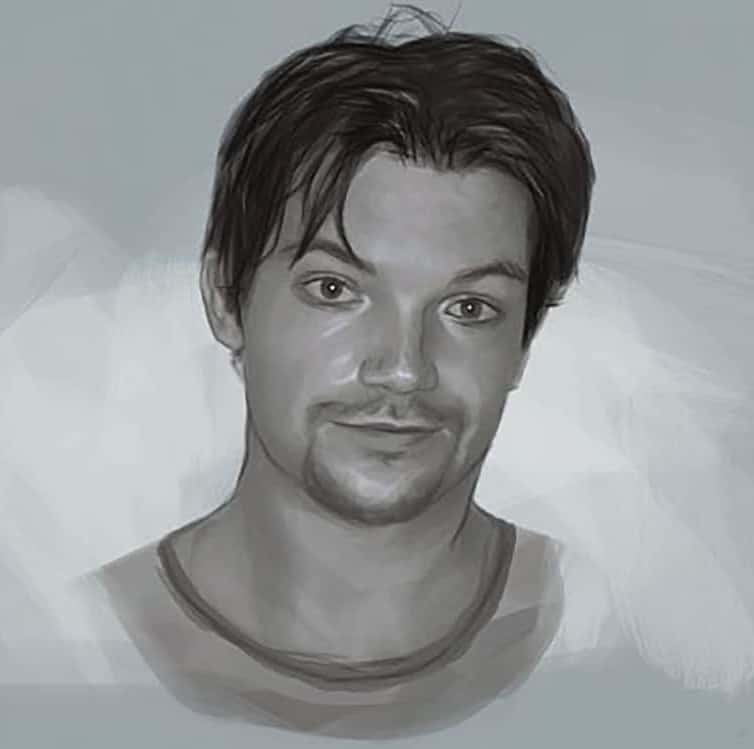
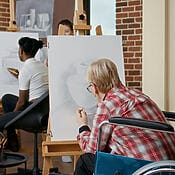
Art for All – How can art promote inclusion? Photo by Jon Tyson @jontyson, via Unsplash
Art has the unique ability to promote inclusion and involve people with various disabilities. In Germany, there are numerous projects and initiatives aimed at creating an inclusive art scene. This encompasses not only physical disabilities, but also sensory, cognitive, or psychological differences that people may have.
Art enables them to express their experiences and perspectives and to connect with society. Through contact with artistic media such as music, theater, or visual arts, people with disabilities can experience participation and significant cultural experiences.
Artistic expression allows them to express dreams, feelings, and thoughts in their own way, leading to a deeper understanding and greater acceptance of diversity. Art thus provides a space where people with disabilities can develop their creativity and abilities to create a more inclusive society.
In the following sections, we will take a closer look at how art can support people with disabilities and what current challenges the art world needs to address in order to promote inclusive culture
What is inclusion?
Inclusion, a central concept in modern society, is also playing an increasingly important role in art. But what exactly is inclusion?
Inclusion refers to a socio-political idea that aims to allow all people to participate equally in all areas of society, regardless of their individual abilities, limitations or origin.
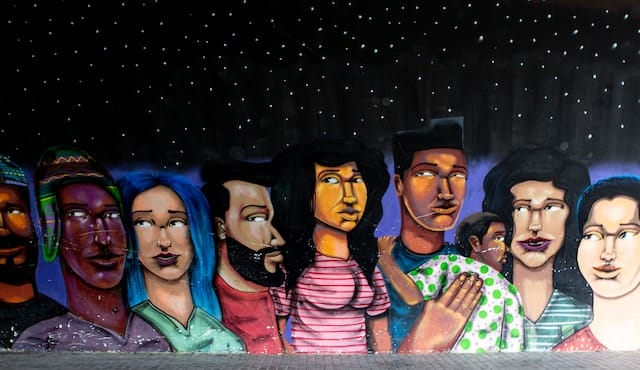
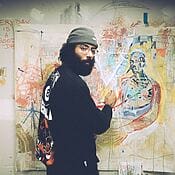
Inclusion opposes the exclusion and discrimination of people in society. Photo by Miles Peacock @milesypea, via Unsplash
In art, inclusion means that people with disabilities, whether physical or mental, can actively participate in the artistic creative process and have their works presented in the cultural public sphere.
In Germany, particularly in metropolitan areas, a vibrant inclusive art scene has developed, bringing together people with and without disabilities and encompassing diverse artistic forms of expression such as music, theatre and visual arts.
This not only enables those affected to experience a new form of self-expression and participation in cultural life, but also helps to dismantle existing prejudices and barriers. Through contact with and engagement with inclusive art, new experiences are gained and an awareness of the needs and potential of people with disabilities is fostered.
Inclusion in art therefore means not only an expansion of the cultural offerings, but also a social enrichment and a statement in favor of a diverse and inclusive culture.
How can art support people with disabilities and contribute to inclusion?
Art plays a crucial role in promoting inclusion and supporting people with disabilities. By breaking down barriers and creating new avenues for communication and participation, it enables equal participation in society.
Inclusion in art means that people with disabilities have the opportunity to contribute their own experiences, ideas and perspectives to artistic forms of expression.
An example of inclusive art projects can be found in Berlin. Numerous initiatives and events there give people with disabilities the opportunity to express themselves artistically and develop their talents. Through collaboration with professional artists, they can further develop their artistic skills and participate in exhibitions, performances, and other artistic projects.
This not only fosters their artistic abilities but also strengthens their self-esteem and promotes their social participation. Art can also help overcome prejudices and stereotypes about people with disabilities. By providing a platform for exchange and dialogue between people of different backgrounds and abilities, it reduces prejudice and achieves greater understanding and acceptance.
Artistic representations of inclusion and diversity create alternative narratives that contribute to a more inclusive understanding of culture and society.
Status quo in dealing with exclusion and injustice in the art world
The current handling of exclusion and injustice in the art world has gained increasing attention in recent years. It is undeniable that people with disabilities in Germany and worldwide still face numerous barriers and prejudices when it comes to their participation in cultural life and the art scene.
Often, their experiences and perspectives are not adequately considered in the art world , leading to further exclusion and injustice.
European studies indicate low participation of people with disabilities in art and culture
A comprehensive review of the literature on barriers to and facilitators of social participation for people with disabilities in Europe revealed that issues of labor market participation are predominant. Only two of the 37 identified articles focused on participation in the arts (dance, theatre, and other cultural activities). Researchers Mesquita and Carneiro (2016) point out that while research on the cultural participation of people with disabilities has increased, it remains limited.
In this context, data on cultural participation and access to cultural institutions for people with disabilities are also lacking, and we need further measures to improve access. Regarding blind or visually impaired people, a survey by the European Blind Union (2012: 7) found that research “in the cultural sector hardly considers people with disabilities, making this group invisible” (see Barriers and Facilitators to Cultural Participation by People with Disabilities: A Narrative Literature Review , Scandinavian Journal of Disability Research).
There are several studies on participation rates in the cultural sector. Generally, they paint a bleak picture, pointing to low participation rates of people with disabilities, both among audiences and creators. One survey found that while the proportion of adults with long-term illness or disability engaged in artistic activities in England has increased since 2005/06, engagement rates in 2015/16 were lower (72.9%) than those of other adults (77.5%).
Reports from other countries also indicate that cultural institutions are not accessible or that the participation rates of people with disabilities are lower compared to the rest of the population.
The proportion of people with disabilities working in the cultural sector – as artists or cultural producers – is also low. Preliminary results from a Europe-wide survey in the performing arts show that knowledge and experience regarding artists with disabilities and their work are limited (British Council 2021).
Differences are observed between art forms, with theatre, dance, and combined arts faring better than music and visual arts (Arts Council England 2017: 16). As the arts sector has been in crisis due to the Covid-19 pandemic (UNESCO 2021), employment rates for people with disabilities in the arts have likely worsened (Gentry 2021; IDEA Consult et al. 2021).
In welcome contrast, Arts & Disability Ireland (Maitland 2017) found that people with disabilities in Ireland were more likely to attend an arts event last year than the general population.
Author Laura Gehlhaar on ableism in our society
The term "ableism" will be mentioned several times in the following paragraphs. This term describes a form of discrimination in which people with disabilities are disadvantaged due to unequal treatment, violations of boundaries, and stereotypical assumptions. The term is derived from the English "ableism," which originates from "to be able" and the suffix "-ism." "Ableism" is intended to evoke the English term "racism.".
In an interview with STERN magazine, the young author and consultant Laura Gehlhaar summarizes her experience of ableism in our society as follows:
People with disabilities are not present in the center of our society.”
Laura Gehlhaar has been in a wheelchair since she was 23, but her disability doesn't cause her any problems. Rather, it's the everyday discrimination she faces that burdens her.
In an interview with the STERN reporter, the author and consultant talks about exclusion, insensitive remarks, and insecurities. When Laura advises companies, she often hears that people with disabilities wouldn't apply for jobs. In her personal life, many admit they would like to have contact with people with disabilities, but in everyday life, they rarely see them.
Laura has a clear answer to the question of why: People with disabilities are structurally excluded . Accessibility is lacking in all areas of life, and this leads to this exclusion.
Laura knows what she's talking about. During her time at the Gymnasium (grammar school), Laura's muscular weakness became noticeable, and she was bullied by other students. The teachers recommended that she transfer to a special needs school where she would have been among others like herself. But the bullied girl was simply declared a problem and was to be sent away. Laura, however, stood her ground and graduated.
After graduating from high school, she wanted to become an actress, but there were no accessible drama schools in Germany . When she became interested in studying psychology, she was advised to train as an office administrator. The question of how she could help others when she herself needed help left Laura speechless. Nowadays, Laura can laugh about her story because she didn't let it deter her and went on to study psychology and social work in the Netherlands.
Society's perception of people with disabilities is shaped by social labels such as "hero" or "victim ." One reason for this is the one-sided media coverage of them, without actively engaging with them. Laura explains that this promotes ableism.
It wasn't until after her studies and while living in Berlin that Laura realized she needed to connect with other people affected by disability. Through these interactions, she recognized discrimination and learned to speak out about it. Today, she speaks openly about ableism and advocates for fair representation of people with disabilities.
What even is normal? Outsiders in art
Art brut and outsider art are two other key terms that one repeatedly encounters in the context of art and people with disabilities.
The Museum van de Geest in Amsterdam and Haarlem has been European Museum of the Year 2022. It poses an important question:
What is normal?
The exhibitions present outsider art , inviting visitors on a journey into the deepest recesses of the human soul. “Twist” visits the museum and introduces artists who give us a glimpse into their innermost thoughts and feelings.
The Hermitage Museum in Amsterdam houses the only collection of Outsider Art in the Netherlands. The historic Dolhuys building in Haarlem, on the other hand, invites us on a journey through time. For over 700 years, it sheltered people excluded from society, including lepers, outcasts, prostitutes, and above all, the mentally ill. Today, this museum focuses on the enormous artistic potential of these individuals.
In addition, the art of two locksmiths, Erwin Hapke and Heinz Henschel, is presented; their work is exhibited at the Lower Rhine Museum in Kevelaer. Both worked in seclusion and without any connection to the art world. Only after their deaths did their heirs discover the unique artistic legacy they had left behind.
Then the Twist team visited Candoco during rehearsals for their latest piece in London. For over 30 years, the company has produced unique stage shows and dance films featuring professional dancers with and without disabilities performing together. Finally, the video segment shows Jean-Luc Johannet in Blois, France. The trained architect has been building fantastical objects and residential sculptures for himself for decades and calls himself an “anarchitect .
For Melanie Schmitt, the terms Art Brut , Art Cru , or Outsider art little significance. The art historian and therapist runs the “Kunsthaus Kaethe:K” in Pulheim near Cologne, an initiative of the Gold-Krämer Foundation , where eleven people with cognitive disabilities live and work.
Since 2020, they have had the opportunity to work creatively in the art center's studios and develop their artistic potential. Melanie Schmitt emphasizes that she and her team are committed to creating the conditions for people to work artistically and to unlocking their creative potential.
Why is it important to think inclusively when it comes to culture?
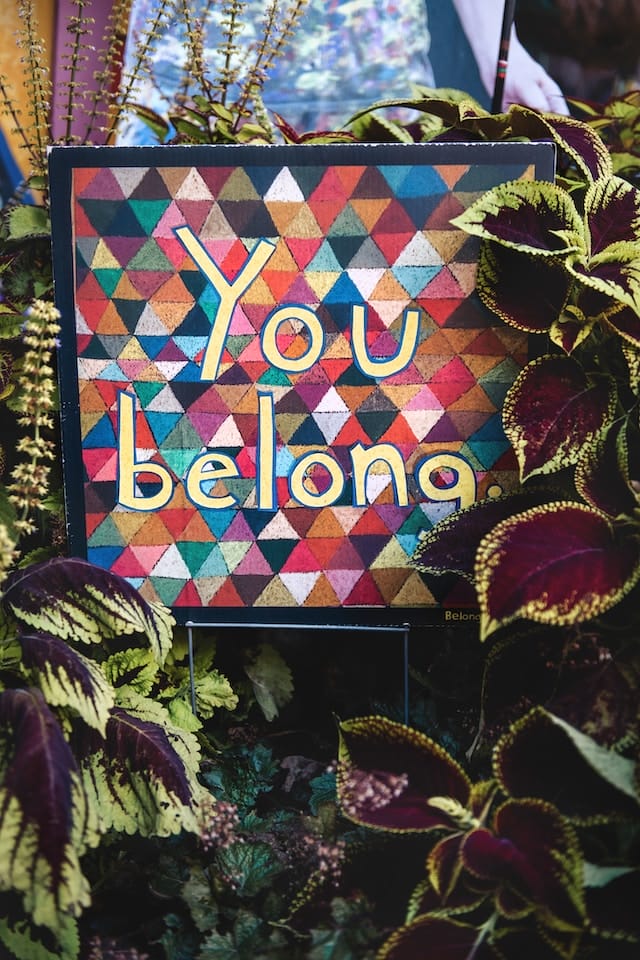
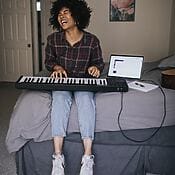
It is important that people with disabilities are represented in the media and can tell their stories. Photo by Tim Mossholder @timmossholder, via Unsplash
Inclusion in art is an important facet that not only concerns people with disabilities but involves society as a whole. When it comes to culture, it is crucial to think and act inclusively. Why is this? Because inclusion forms the foundation of a just society in which every person can participate on an equal footing, regardless of their abilities, origin, or cultural background.
Inclusion means breaking down barriers, whether physical obstacles or prejudices and stereotypes. Culture plays a central role in shaping identity, community, and communication. It shapes our perception and influences how we see ourselves and others.
Therefore, it is of great importance that the cultural landscape becomes more inclusive in order to reflect the diversity of our society. Inclusive art creates spaces where people from different backgrounds and experiences come together to learn, communicate, and contribute their individual perspectives. It promotes intercultural dialogue and allows us to view the world from different angles.
Inclusive art projects and initiatives allow people with disabilities to develop their talents and abilities and have their voices heard. The artists have the opportunity to overcome barriers and discover new forms of expression. Inclusive artistic projects also facilitate contact between different cultural communities and offer space for mutual understanding and empathy.
Inclusive thinking regarding culture also requires a redesign of the educational and media landscape . It is important that people with disabilities are represented in the media and can tell their stories. Furthermore, educational institutions should be accessible to everyone and reflect the diversity of our society.
The general upswing in inclusive art projects that have emerged throughout Germany is noteworthy. These projects aim to dismantle barriers and prejudices against people with disabilities in the art world and to create an integrative and inclusive culture.
The artistic activities range from inclusive theatre performances to music and media projects that bring together people with and without disabilities, promoting exchange and participation. Raising awareness and education play a crucial role. Through educational outreach and workshops, efforts are made to cultivate a societal understanding of the importance of inclusion in the arts.
Overall, inclusive thinking regarding culture is essential to creating a just and inclusive society.
How can artists contribute to creating a more inclusive society?
Artists have the unique ability to connect people and break down barriers through their art. By creating artworks that address the theme of inclusion and involve people with various disabilities, they can contribute to the creation of an inclusive society.
In many German cities, there are countless projects that make art and culture accessible to people with disabilities. These projects not only offer artistic activities but also promote exchange and participation in cultural life.
Furthermore, the media also play an important role in promoting inclusion in the arts. Reporting on inclusive art events and projects raises public awareness and strengthens understanding of the importance of inclusion.
By creating artworks inspired by the diversity of human experience, artists can help break down barriers and raise awareness of inclusion. It is important that artists, regardless of their background or artistic training, recognize the importance of inclusion in art and actively advocate for an open society.
How to support people in accepting themselves and others
An important aspect of inclusion in art is supporting people in accepting themselves and others. Especially in a society where exclusion and injustice are still present, it is essential to create a culture of togetherness.
People living with disabilities often face prejudice and barriers that make it difficult for them to lead confident and fulfilling lives. Art can make a significant contribution here by creating spaces where everyone can contribute their own experiences, interests, and talents.
Artists across Germany are increasingly involved in inclusive art projects, where people with different backgrounds and abilities come together and create art together.
What can I do for inclusion?
There are various ways you can actively promote inclusion. An essential measure is raising awareness and educating people about inclusion. You can, for example, organize lectures or information events in your community or at schools to increase understanding of the importance of inclusion.
Furthermore, you can also get involved in associations or organizations that advocate for the rights of people with disabilities. Here you can contribute your energy and skills to support projects and initiatives that promote inclusion.
Another crucial step is active participation in social activities and the creation of an inclusive environment. For example, you can ensure that people with disabilities can participate on an equal footing in your neighborhood or workplace and that barriers are removed.
If you are a manager yourself, you can ensure that inclusive practices and policies are implemented in your company or organization. This could include, for example, creating accessible workplaces or introducing inclusive HR policies.
Last but not least, it is important that you address the topic of inclusion in your personal circle and promote an inclusive society. Approach people with disabilities openly, listen to them, and support their needs and rights.
Overall, there are many ways you can advocate for inclusion. Every small contribution counts and helps create an inclusive society in which all people can participate on an equal footing.
Examples of inclusive art actions and projects
Inclusion in art is evident in a wide variety of activities and projects that bring together people with and without disabilities and enable their artistic participation. One example is the "Art for All" in Berlin, which offers people with various physical and intellectual disabilities the opportunity to express themselves creatively and create their own works of art.
Through special workshops and courses, they are taught artistic techniques and can incorporate their experiences and stories into their works.
Another inspiring project is the inclusive theatre ensemble “Theater für Alle” (Theatre for All) . Here, people with and without disabilities work together on plays, bringing diverse perspectives to the stage. The performances impressively demonstrate how culture and art can transcend boundaries and provide a platform for exchange and understanding between different people.
The "pik" programfor inclusive art practice aims to improve the working conditions of artists with disabilities. It supports cultural institutions in working inclusively and employing artistic staff with disabilities.
This initiative aims to support a necessary transformation in the cultural landscape, one from which all artists can benefit. An inclusive culture encourages a focus on the abilities and needs of diverse individuals and embraces new perspectives on artistic practice and collaboration. The program initiates a process that ultimately benefits everyone.
The "pik" program aims to foster artistic innovation and compensate for existing disadvantages faced by people with disabilities. It comprises three modules, each targeting different groups and sectors within Germany's inclusive cultural scene: an open mentoring program for disabled leadership , a network for the performing arts, and a consulting service provided by a nationwide team of advisors for culture and inclusion. This team will, among other things, develop a public academy program for cultural professionals and evaluate and communicate its findings.
“Arts Impact” project also pursues a promising idea: to make inclusive art and culture accessible to a broad public. The creators are convinced that they will touch, engage, and move many people – all the qualities that art, at its best, embodies.
One example is the Forward Dance Company from Leipzig, which works with dancers with and without disabilities. As part of the “euro-scene Leipzig” festival in 2021, they performed the piece “Einblicke” (Insights) , allowing the audience to experience firsthand how a dance piece is created. The online gallery currently presents projects from all over Germany and is constantly being expanded to soon include performers from Switzerland and Austria as well.
Club 68 Cologne has made it its mission to establish an inclusive art scene in Cologne . The aim is to enable both disabled and non-disabled artists to present their work together. To achieve this goal, the association is planning exhibitions throughout the city.
The euward Art Prize , awarded every three years by the Augustinum Foundation in Munich, is one of the most prestigious international awards for art created by people with intellectual disabilities. In the summer of 2021, the works of the euward prize winners were exhibited at the renowned Haus der Kunst in Munich . Klaus Mecherlein founded the art prize more than 20 years ago to raise awareness of the art created by people with cognitive impairments.
There are numerous other inclusive art initiatives and projects in Germany that enable people with disabilities to express themselves artistically and participate in the art scene. These examples demonstrate the importance of thinking and acting inclusively in order to create a society in which every person can develop their individual abilities and in which diversity is seen as an enrichment. Art can make a significant contribution here and promote inclusion.
From exclusion to acceptance – a rocky but worthwhile path to inclusion
By actively involving people with different disabilities in the artistic creation process, art enables a positive experience of inclusion and participation.
The portrayal of artistic projects with an inclusive approach plays an important role in the media in overcoming prejudices and stereotypes. Promoting inclusive thinking and action is of considerable importance, because inclusion in art not only creates more opportunities for people with disabilities, but also enriches culture as a whole.
A more inclusive society is characterized by openness, understanding, and respect for the diversity of all people. Overall, inclusive art initiatives and projects can serve as models and demonstrate how art can contribute to inclusion.
It is essential to think inclusively when it comes to culture, in order to give all people the opportunity to accept themselves and to embrace others.
This snapshot shows that there is still much to be done – in politics, in the media, in the arts, and in the minds of us all. The path is rocky, and many hurdles must be overcome. It requires the effort of us all to consistently continue on the path to a more inclusive society. The many successful art projects and initiatives provide us with the necessary confidence and strength!
SAKAGUCHI, Aline do Socorro Martins Pacheco. Art and Inclusion: The Influence of Art Education on the World Perception of People with Disabilities . Revista Científica Multidisciplinar Núcleo do Conhecimento. Year 6, Issue 3, Vol. 8, pp. 104-118. March 2021. ISSN: 2448-0959
Owner and Managing Director of Kunstplaza . Publicist, editor, and passionate blogger in the fields of art, design, and creativity since 2011. Graduated with a degree in web design from university (2008). Further developed creative techniques through courses in freehand drawing, expressive painting, and theatre/acting. Profound knowledge of the art market gained through years of journalistic research and numerous collaborations with key players and institutions in the arts and culture sector.
We use technologies such as cookies to store and/or access device information. We do this to improve your browsing experience and to display (non-)personalized advertising. If you consent to these technologies, we can process data such as browsing behavior or unique IDs on this website. Refusal or withdrawal of consent may adversely affect certain features and functions.
Functional
Always Active
Technical storage or access is strictly necessary for the legitimate purpose of enabling the use of a specific service expressly requested by the subscriber or user, or for the sole purpose of carrying out the transmission of a message over an electronic communications network.
Preferences
The technical storage or access is necessary for the legitimate purpose of storing preferences that were not requested by the subscriber or user.
statistics
Technical storage or access that is solely for statistical purposes.Technical storage or access that is used solely for anonymous statistical purposes. Without a subpoena, the voluntary consent of your internet service provider, or additional recording by third parties, the information stored or retrieved for this purpose cannot generally be used to identify you.
marketing
Technical storage or access is required to create user profiles, to send advertising, or to track the user on one or more websites for similar marketing purposes.



 Coastal Bohemian Interior wall mirror "La Principessa", abaca fibers, natural
219,95 €
Coastal Bohemian Interior wall mirror "La Principessa", abaca fibers, natural
219,95 €