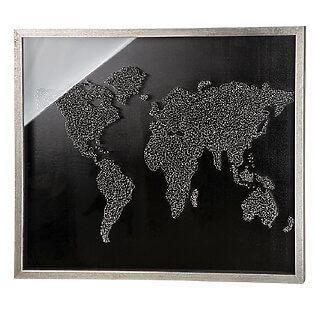
Public art is an aesthetic expression that reminds us of the diversity of human culture. It is a vibrant and dynamic element that helps to enrich and inspire public spaces . In this article, we will explore how public art can help us express our cultural identities and what role it plays in our modern society.
Culture and aesthetics are closely intertwined and play a crucial role in art in architecture. Culture encompasses the entirety of a society's intellectual and material ways of life, while aesthetics is the study of beauty and taste. Art in architecture, as an expression of our time, thus reflects not only cultural but also aesthetic values and norms.
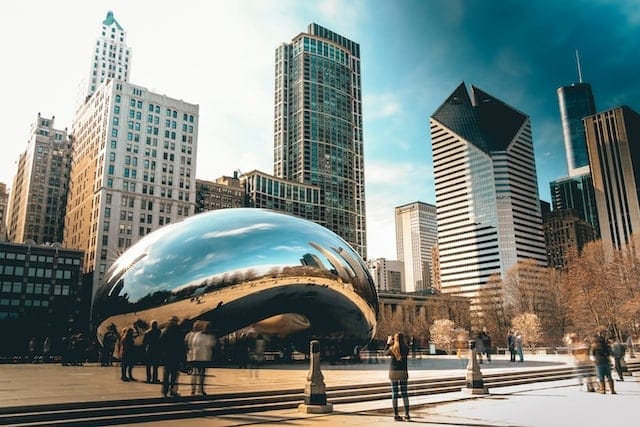
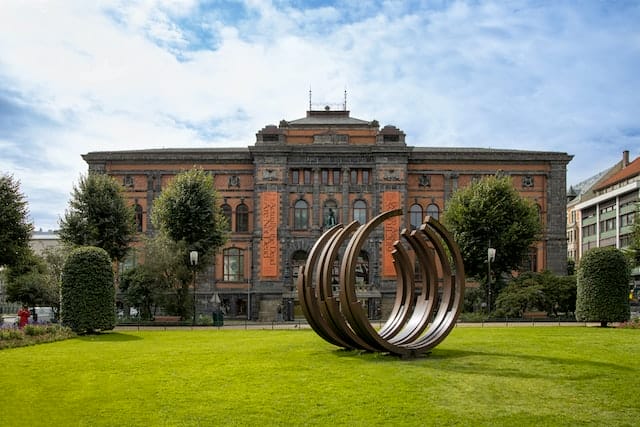
Art in architecture as an expression of our time. Photo by Sawyer Bengtson @sawyerbengtson, via Unsplash
However, the definition of culture and aesthetics is not static, but subject to constant change and development over time. art in architecture must continually adapt and reinterpret itself to meet current cultural and aesthetic demands.
Social and political developments also play an important role. Artworks in public spaces can therefore be understood as an expression of social and political changes. Overall, it can be said that culture and aesthetics are inextricably linked.
What is meant by art in public spaces?
“Art in public space”—also known as “art in architecture” or “public art” —describes the artistic design of urban space and is a significant phenomenon in the development of art in recent decades. Its aim is to stimulate public discussion by placing artistic elements in specific locations that encourage city users to engage with issues of urban development.
Through its long-lasting impact, which extends beyond temporary installations, “art in public space” can contribute to changing perspectives and developing collective and cultural memory.
Art projects that consciously situate themselves within everyday social life can take place both in urban public spaces and in buildings and their associated facilities. In both fields, art functions as a "clarifier," a point of disruption, an observation, and a commentary on the functional structure of urban life.
The task is to bring artistic aspirations into public spaces not typically associated with art . The difference between "art in architecture" and "art in public space" lies in their spatial context and funding. While "art in architecture" focuses on a specific building and its functions and is financed from the construction budget via the "K7 guideline," "art in public space" seeks out public squares as venues. In the database of the artists' associations of the German federal states, both fields of work have been grouped under the umbrella term "art in public space" to reflect their societal approach.
The debates of the 19th century paved the way for the themes of modernity and began with the displacement of art from public life. By referencing “antiquity” and the Middle Ages, they led to a development that transformed urban space into a revitalized stage for art, staging it through architectural sculptures , murals , and monuments .
The creation of funds for the realization of“monumental artworks” reflected a growing national consciousness and simultaneously resulted from the socially motivated desire to provide artists with an income and public commissions. Alongside discussions about the socio-political significance of the arts and the qualitative improvement of cities, the social predicament of the artist's existence contributed to the initiative, which was seen as a metaphor for the rootless modern individual.
In the Weimar Republic, public support was sought for special “art in architecture” measures in order to revive and realign a centuries-long hegemony of architecture as the mother of all arts and a symbiotic “art of building”.
This demand was explicitly made by artists' associations after World War I due to the increasing impoverishment of the artistic profession and a stronger social orientation of art, and was ideologically instrumentalized under the Nazis. After the war, the German Bundestag decided to incorporate this "art in architecture" program into legislation for the purpose of reconstruction and the promotion of the visual arts, allocating a portion of the construction budget for public buildings to the realization of art.
This 1 percent rule, later increased to 2 percent and known as “Guideline K7” , was also applied in the GDR. From the 1960s onwards, the institutionally critical initiatives of progressive Western artists, as a declared rejection of the autonomy of art and a move towards a newly achieved connection between art and life, had a activating effect in the public sphere.
Land art projects , environmental and installation works , as well as site-specific and conceptual projects outside of art institutions gained traction. The city-state of Bremen is considered a pioneer, having initiated the financing of "art in public space" in 1974 by abolishing the mandatory link of the "K7 guideline" to new construction projects.
Art in architecture as an expression of our time
Art in architecture unites architecture, craftsmanship, and art into a harmonious whole. It is not merely an aesthetic element, but also fulfills a function. It can structure space, influence the atmosphere, and inspire the viewer. Today, art in architecture is more diverse and experimental than ever before.
Artists use modern technologies and materials to realize their ideas and create new forms. It's not just about the beauty of the object, but also about its expressiveness and meaning. An analysis of art in architecture can reveal a great deal About us society and its values. It can show us how we see ourselves and how we position ourselves in the world.
But it can also raise awareness of the environment and the social challenges of our time
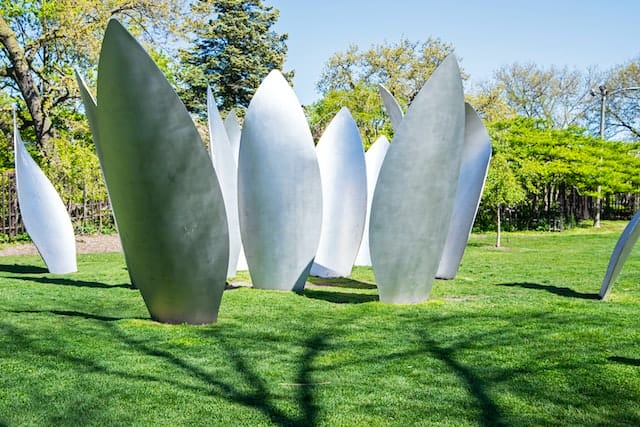
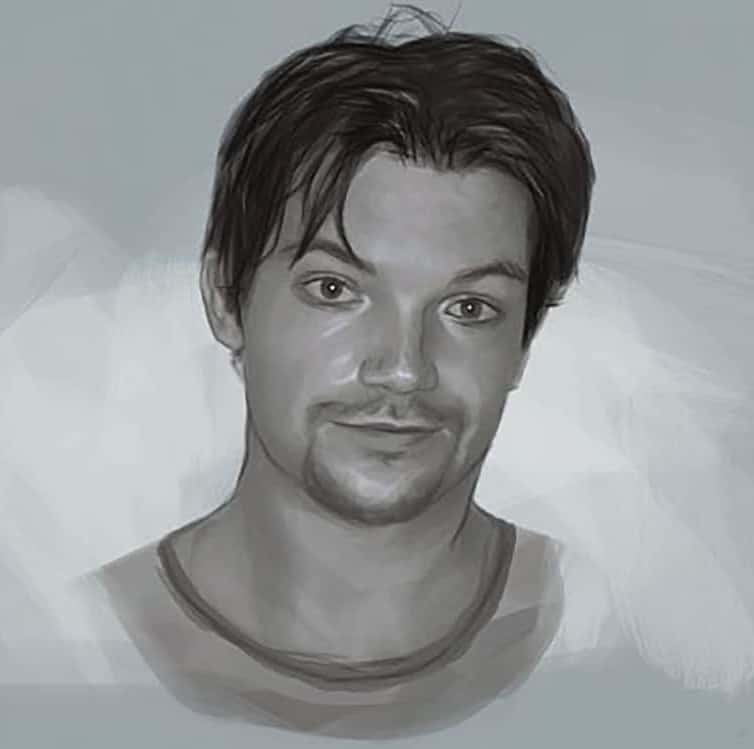
Public art raises awareness of the environment and the social challenges of our time. Photo by Walter Martin @rise13law, via Unsplash
The current view held by public clients that "art in public space" is increasingly used as a tool to conceal urban problems is just as discrediting as the underestimation of "art in architecture" projects as mere decoration serving the architectural purpose. The artistic approach should instead aim to create striking points of friction through visual means and to address, in diverse ways, discussions that explore what characterizes public living spaces.
The widespread perception and engagement with public art projects demonstrates that art has the power to make public urban space a unique experience and to stimulate urban discourse. It is crucial to utilize this potential constructively.
Public art has the ability to make public urban space a unique experience. Photo by mostafa meraji @mostafa_meraji, via Unsplash
Based on the regionally varying levels of cooperation between urban officials, developers and art institutions, the aim should be to understand projects in outdoor spaces and outside of museum presentations as opportunities for a specific social connection to urban situations and as impulses for thought processes.
Art can increasingly rediscover its much-demanded socio-political function today by providing impetus for change in the minds of city dwellers. Within the gallery space, this function merely serves as a token gesture.
The importance of aesthetic experience in building design
The design of buildings is an art form that surrounds us every day. But how important is the aesthetic experience in building design, really? The answer is simple – it is crucial. Aesthetics is a fundamental component of architecture revisit and reinterpret traditional building styles
A building cannot simply be functional; it must also be aesthetically pleasing to have a positive effect on the viewer. The aesthetic experience can inspire us, soothe us, or even thrill us. Architecture can transport us to another world and place us in another time.
Cultural implications
The cultural implications of art in architecture are diverse, ranging from the representation of history and tradition to the promotion of innovation and creativity . It can also help to strengthen the identity of a place and connect the community.
But art in architecture is not just an aesthetic aspect, but also a political one. It shows us who we are and who we want to be.
Impact on architects and property developers
Art in architecture also has some noteworthy implications for real estate developers and architects. For example, the increase in market value of properties through art in architecture can be considerable.
It has long been known that art and real estate values are closely linked . When real estate projects integrate artworks into their buildings—whether in public spaces or interiors—their value increases on the market and for investors. According to Forbes, public art is a secret weapon in real estate marketing.
Property developers of all sizes – from high-end luxury to medium-sized and smaller projects – can commission artists to integrate artwork into their buildings. This not only increases the financial value of the property but also enhances the neighborhood.
The artistic possibilities for property managers and development companies are diverse. They can commission small or medium-sized sculptures for interior spaces such as lobbies, elevators, and hallways. Large public art installations and street art murals are also possible, offering the local community a great atmosphere and interesting visuals.
Art-loving property seekers in Northern Germany can contact a real estate agent from Hamburg , Bremen, or Berlin to find properties with integrated art. In Southern Germany, they will primarily find such properties in the major cities of Munich, Stuttgart, and Freiburg.
An extremely interesting read on the topic of “Art in Architecture and the Real Estate Industry” is the detailed written documentation of the 14th workshop discussion held by the Federal Ministry for the Environment, Nature Conservation, Building and Nuclear Safety in February 2015. A downloadable version, as well as further materials and information on art in architecture, can be found on the website www.kunst-am-bau-in-deutschland.de.
Function of the artwork in the urban environment
In public spaces, there are art projects and artworks that fall under the umbrella term "public art." This term originates in the history of artistic practice in urban spaces and the discussions surrounding it. As early as the 19th century, the loss of art's natural integration into social life was lamented.
Public art understands itself as having an enlightening function, aiming to overcome the alienation of city dwellers from urban life and the artistic environment. It assumes that art has been suppressed in the urban space and in the consciousness of its inhabitants, and that it is necessary to restore this connection. In this sense, public art offers a means of fostering identification and counteracting the loss of a once self-evident link between art and urban life.
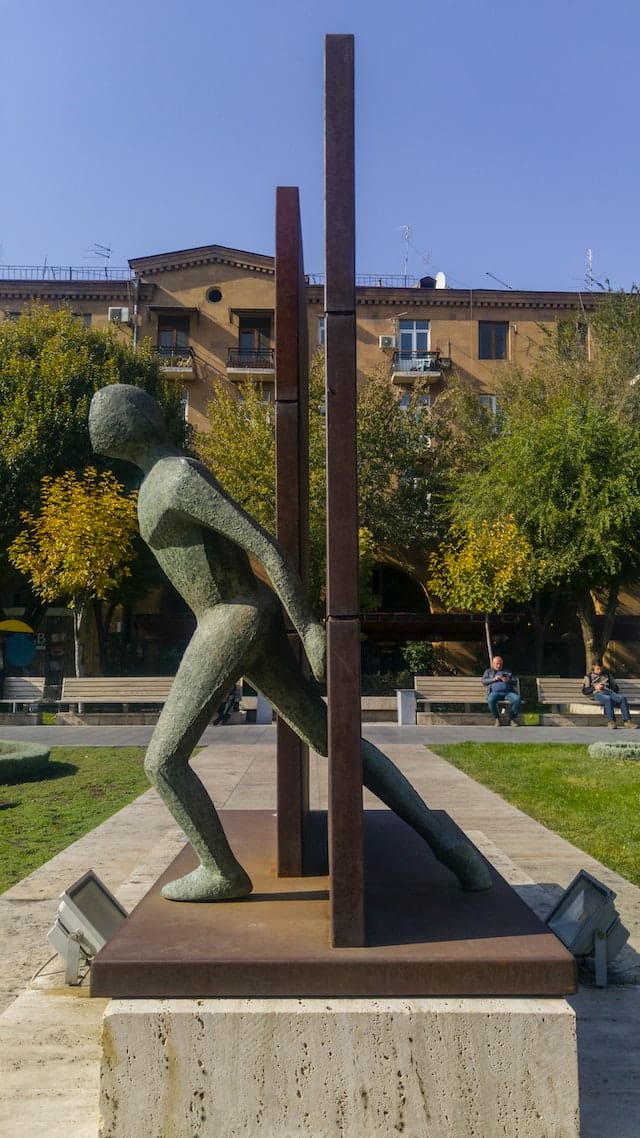
Public art is a way to identify with and address the loss of connection between art and urban life. Photo by ThePowerCouple @thepowercouple, via Unsplash
Artworks in urban environments create a space for dialogue and discussion and can address and reflect on social and political issues. They can have a positive effect on mental health and foster a sense of community and cohesion. Artworks can also serve as landmarks, thus facilitating navigation within the city.
Overall, art in architecture can be seen as an expression of our time, reflecting the cultural identity of a city and at the same time making an important contribution to improving the quality of life of its citizens.
How does art in architecture influence our perception of cities?
Art in architecture is an important part of our urban landscape and significantly influences our perception of cities.
First and foremost, it can help us to engage more consciously with our surroundings. By integrating artworks into architecture, we become more attentive and curious, which can lead us to observe and appreciate our environment more closely.
Especially in public spaces, works of art can help us feel more comfortable and relaxed, as they have a positive and calming effect on us.
Guidelines for art in architecture to promote greater collaboration between developers, architects and artists
It is of great importance to promote collaboration between developers, architects, and artists. The "Guidelines for Art in Architecture" published by the Federal Ministry of Transport, Building and Urban Development can serve as a practical framework in this regard, which can also be applied to other public and private construction projects.
The guidelines for art in architecture from the Federal Ministry for Housing, Urban Development and Construction can be found in the section on specialist information for federal construction.
A handbook was developed as part of the symposium “Art and Architecture,” initiated by the Saxon Artists' Association and organized in cooperation with the Saxon Chamber of Architects. The aim of this handbook is to provide comprehensive information on the preparation, practical implementation, and execution of art in architecture projects, thereby promoting collaborative endeavors.
Owner and Managing Director of Kunstplaza . Publicist, editor, and passionate blogger in the fields of art, design, and creativity since 2011. Graduated with a degree in web design from university (2008). Further developed creative techniques through courses in freehand drawing, expressive painting, and theatre/acting. Profound knowledge of the art market gained through years of journalistic research and numerous collaborations with key players and institutions in the arts and culture sector.
We use technologies such as cookies to store and/or access device information. We do this to improve your browsing experience and to display (non-)personalized advertising. If you consent to these technologies, we can process data such as browsing behavior or unique IDs on this website. Refusal or withdrawal of consent may adversely affect certain features and functions.
Functional
Always Active
Technical storage or access is strictly necessary for the legitimate purpose of enabling the use of a specific service expressly requested by the subscriber or user, or for the sole purpose of carrying out the transmission of a message over an electronic communications network.
Preferences
The technical storage or access is necessary for the legitimate purpose of storing preferences that were not requested by the subscriber or user.
statistics
Technical storage or access that is solely for statistical purposes.Technical storage or access that is used solely for anonymous statistical purposes. Without a subpoena, the voluntary consent of your internet service provider, or additional recording by third parties, the information stored or retrieved for this purpose cannot generally be used to identify you.
marketing
Technical storage or access is required to create user profiles, to send advertising, or to track the user on one or more websites for similar marketing purposes.







 "Snake" ring made of 925 sterling silver
42,90 €
"Snake" ring made of 925 sterling silver
42,90 €