Rising rents, overcrowded apartments and difficulties in financing are making thehousing shortagein German metropolitan areas increasingly noticeable and pose an immense challenge for society.
The seriousness of the situation becomes particularly clear when one looks at the figures: As early as 2022, only 0.3% of apartments in Berlin were available (compared to 5.1% in 2013), while in Hamburg it was around 0.4% (compared to 2.4% in 2006). In Frankfurt am Main, the vacancy rate was even lower, at a shockingly low 0.2%.
These alarming statistics (source: Statista) not only illustrate the acute need for housing, but also that vacancy rates are continuing to fall.
enormous challengesfor tenants, but also has far-reaching implications for the construction and interior design industries. The need to find innovative solutions for using scarce living space more effectively and optimally has never been more urgent. This means that architects, designers, and urban planners are challenged to develop creative concepts that are both functional and aesthetically pleasing.
Modular designcould be a promising answer to this challenge. This concept allows for flexible apartment layouts that can be adapted to the different needs and lifestyles of their residents.
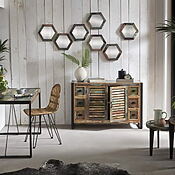
Modular housing construction not only promotes efficient use of space but also enables faster and more cost-effective construction. The desire for individual living space design is also taken into account. Example illustration, created using the AI image generator ImageFlash.
This field, in particular, is likely to offer numerous opportunities for freelance work as an architect at renowned architectural studios, which could prove to be a springboard, especially for young architects. Universities are also likely to have several research focuses in this exciting area.
Modular design not only promotes efficient use of space but also enables faster and more cost-effective construction. This could be the solution that both counteracts the increasing housing shortage and accommodates the desire for individual lifestyles.
Modular housing is one of the major architectural trends of our time
Leading industry events such as theModular Home Expo 2024in Zagreb or theNational Modular Housing Conference 2023in Pittsburgh (USA) have impressively demonstrated thatmodular housingnot only offers apractical solutionto current housing problems and is an important step towards affordable housing, but can also be aplatformfor innovative, sustainable and aesthetically pleasing design.
The Modular Home Expo takes place annually in Zagreb
What does modular housing construction mean?
Modular housing construction describes a building method in which entire buildings or rooms are assembled from prefabricated modules. Each module is manufactured in a factory under controlled conditions and then assembled on site.
This technique makes it possible to significantly shorten construction time, reduce costs, and at the same time ensure high quality and sustainability.
Modular design through the ages
The roots of modular design reach back to the post-World War II era, when the need for rapid and affordable housing concepts led to the development of prefabricated modules. These initial designs focused primarily on functionality, neglecting aspects such as aesthetics and individuality.
Technological advances
As technology advanced, modular design also took shape. The introduction ofCAD(Computer-Aided Design) software opened the door to more complex and precise modules, significantly expanding the options for individual customization and design diversity.
Sustainability and environmentally friendly design
In response to growing awareness of environmental challenges, modular design has embracedsustainable construction methods. The integration of recyclable materials, energy-efficient technologies, and the minimization of construction waste are characteristic features of contemporarymodular homes.
Aesthetics and individualization
Today's modular homes are no longer limited to their functional origins, but showcase a wide variety of styles and designs. From elegant, minimalist modules to variations that imitate classic architectural styles, there is a suitable design for every taste.
Global influence and adaptability
The modular concept has been adapted to different climate zones and cultural conditions, emphasizing its global appeal.
In Scandinavia, for example, the use of wood as the primary material embodies both the regional aesthetic and the need for insulation against the cold.
The advantages of modular architecture
Modular construction has many advantages. Whether for homeowners or builders/suppliers, there are many different reasons to consider a modular solution.
Advantages for owners
diversity
Modular homes look similar to conventional residential buildings. Thanks to today's technological advances, modular home manufacturers are able to realize almost any desired architectural style, be it a simple ranch or a custom-designed modern home.
Individual design
The construction process begins as early as the planning phase. Module manufacturers use highly developed computer-aided design stations that support them in the customized design of floor plans as well as in the creation of drawings and material lists.
You can design a house that is precisely tailored to your personal preferences and requirements.
Accelerated process
Efficiency begins with modern assembly line techniques. A modular home is transported to sites where all necessary construction trades are represented. There are no delays due to weather conditions, subcontractor no-shows, or material shortages. Your house will be completed exactly when you expect it, allowing you to plan your near future without worry.
Energy efficiency and sustainability
High-quality technologies and modular construction methods significantly increase the energy efficiency of a modular home compared to a traditionally built building. Furthermore, the construction of modular homes generates considerably less construction waste, which also makes a positive contribution to our planet.
Conventional financing
Once placed on their foundations, modular homes enjoy the same legal status as traditionally built properties. This means you can purchase them using conventional financing options, allowing you to enjoy higher quality at a lower price.
Long-term value stability
Although construction may be less expensive, modular homes appreciate in value over time much more than conventional, on-site built properties. This means your home will pay for itself faster and is an excellent investment for those who plan to rent it out immediately upon completion.
Advantages for construction companies
Reduced overhead costs
Since the manufacturer carries out the majority of the construction work at its factory, the contractor can focus on sales and marketing. Manufacturers typically offer the client comprehensive support in sales and marketing.
This results in lower overall costs, while potentially allowing you to benefit from a higher return on investment (ROI).
Improved order and cost control
Since 80 to 90 percent of the work is done in a factory, the need for labor and subcontractors is lower. Furthermore, material costs are reduced because less material is lost in the manufacturing process.
Sales and marketing support
Today's homebuyer desires a custom-designed home that suits their personal lifestyle. The manufacturer has qualified personnel capable of designing the house according to your customers' requirements.
You can offer custom-designed houses and adjust the modules during transport to attract more customers, optimize your prices, and increase buyer satisfaction.
Individual design
Modular homes are manufactured according to the same regulations that apply to conventionally built houses. Each manufacturer typically has quality control personnel in the factory who monitor the production process, as well as an external inspector who ensures the quality and conformity of the house. In addition, all manufacturers employ service personnel who can provide support if problems arise on-site.
Quality and service
The majority of the construction work takes place under controlled conditions in the factory, thus avoiding delays caused by weather or material shortages. The manufacturer guarantees the cost of the house for a specified period after the order is placed, eliminating the possibility of unexpected cost overruns.
Avoiding delays leads to higher customer satisfaction, which is reflected in better ratings and rapid growth of your customer base.
Increased profit potential
A shorter construction time, reduced labor and overhead costs, and the ability to focus on sales and customer service result in higher profitability for the building contractor and greater satisfaction for the home buyer.
Innovative concepts and trends from leading industry events
Sustainability in focus
a central theme at both theModular Home Expo 2024in Zagreb and theNational Modular Housing Conference (NMHC)2023in Pittsburgh. The modular construction methods presented aimed to minimize the ecological footprint. Energy consumption is reduced through the use of sustainable materials such as recycled wood and high-performance insulation.
The 2023 Modular Home of the Year, under 2,500 square feet, was designed by Simplex Homes . The house featured a custom kitchen with white Shaker cabinetry and granite countertops. All bathrooms were finished with custom tiles. The home included a kitchen, three bedrooms, three bathrooms, a living room, a dining room, an office, and a custom roof terrace. Access to the roof terrace was via an electronic skylight.
Some modular homes utilize environmentally friendly materials such as bamboo flooring, recycled metal, and low-VOC paints. A notable example isMethod Homes'Elemental Series, which uses sustainably sourced materials to promote a healthier indoor climate and minimize its environmental footprint.
Modular housing stands for flexibility and adaptability. A highlight of the trade fair was the“Adaptive Living Concept,” characterized by modularly expandable rooms. These can be adapted to the changing needs of the residents, whether due to a growing family or new home office requirements. The modules can be connected and disconnected at any time, offering unparalleled adaptability.
Another option for adapting cities to changing needs is theadaptive reuse of existing buildings, which is increasingly valued, particularly by urban planners and architects. In this building strategy, existing spaces are given a new or expanded function. The advantages of adaptive building projects are obvious: they eliminate both the need to acquire building plots and the time-consuming process of constructing entirely new buildings.
Design and aesthetics
Modular housing has long since shed the cliché of monotonous container construction. The designs presented at the Expo were diverse and impressive. From minimalist cubic structures to organic forms – the architects' creativity transcended existing boundaries.
A prime example was the“Modular Loft”,which impressed with its light-flooded rooms and the seamless integration of modern technologies.
MODIUM, an architecture firm consisting of a team of architects, innovators and interior designers in Pristina, Skopje and Geneva, hasalso
The Expo also highlighted the increasing international cooperation in the field of modular housing. Countries like Japan, Germany, and the USA are working together to further develop innovative solutions. This international coordination promotes the exchange of knowledge and the development of new technologies. As a student trainee in architecture, this offers exciting opportunities to gain direct insight into this emerging discipline.
Japanin particular, known for its resilience to earthquakes, integrates special damping systems into its modular constructions to increase safety.
Technological breakthroughs
In addition to architectural innovations, impressive technological breakthroughs were also on display. A prime example was the use of3D printersto manufacture modular components. This technology enables the rapid and cost-effective production of complex structures. Furthermore, the expo showcased smart modules that useIoT (Internet of Things) technologiesto create networked living spaces, thereby increasing comfort and efficiency.
Social implications
Modular housing construction offers not only technological advantages but also the potential to address social challenges. Faster construction methods can quickly alleviate housing shortages in urban areas.
Another exciting concept presented at the Expo was the“Community Module Village”. This project aims to strengthen communities by creating communal living spaces and thus promoting social interactions.
Financial and economic advantages
Another advantage of modular housing construction lies in the financial aspects. Industrial prefabrication significantly reduces construction costs. This makes modular housing construction attractive not only for private developers but also for public and municipal housing projects.
Furthermore, this construction method offers a high level of investment security, as construction projects can be completed and financed more quickly.
Challenges and opportunities
Despite its numerous advantages, modular housing construction also faces challenges. One of the biggest hurdles isadapting existing building regulations and standards, which are often designed for traditional construction methods. Overcoming these obstacles requires close collaboration between architects, engineers, and legislators.
Another issue islogistics: the transport of the modules to the construction site must be organized efficiently in order to fully exploit the advantages of prefabrication.
Successful modular housing projects worldwide
In the field of modern architecture, modular housing stands out as a shining beacon of innovation and sustainability. This approach has gained worldwide recognition, and numerous projects demonstrate its flexibility and efficiency. From the vibrant life of Tokyo's streets to the peaceful landscapes of Scandinavia , modular construction has established itself as more than just a passing trend; it is a testament to the adaptability and foresight of contemporary design principles.
Tokyo's Nakagin Capsule Tower
Top of the Nakagin Capsule Tower 2017 Image source: Dllu, CC BY-SA 4.0, via Wikimedia Commons
This building set a groundbreaking example, demonstrating the potential of prefabricated modules in densely populated urban environments. Each unit was designed to be independently removed and replaced, embodying the concept of sustainable and flexible living spaces.
Sweden's BoKlok Housing
This initiative, launched by IKEA, focuses on affordability and quality. The BoKlok manufacturing process significantly reduces construction time and minimizes environmental impact, making it a model for scalable modular housing solutions.
New York's Carmel Place
As the city's first micro-apartment building, Carmel Place offers a solution to the pressing problem of urban space scarcity. The success of this project is based on its ability to provide fully functional living spaces in a small footprint, thus challenging traditional notions of urban living.
Australia's Forté building
The Forté, which upon its completion held the title of the tallest wooden residential building in the world, is a testament to the robustness and potential of wood as the main material in modular construction and pushes the boundaries of environmentally friendly architecture.
These case studies illustrate the versatility of modular housing; each project, rooted in its specific context, contributes to a shared understanding of what it means to design for the future. They demonstrate that modular housing is not just about creating individual homes, but also about fostering communities and rethinking the structure of urban life.
The housing revolution is in full swing
Modular housing is revolutionizing the way we think about living space and architecture. TheModular Home Expo 2024and, prior to that, theNational Modular Housing Conference 2023,impressively demonstrated that this construction method not only offers an efficient solution to current housing problems but also holds enormous potential for future developments.
NMHC 2024taking place this October, will once again bring groundbreaking insights. The MHBA's National Modular Housing Conference is the most comprehensive event for builders, architects, engineers, developers, and suppliers of modular housing solutions.
The NMHC 2024 will take place from October 28th to 30th, 2024 at the Landing Hotel and Rivers Casino in Pittsburgh
This event will take place from October 28th to 30th, 2024 at the Landing Hotel and Rivers Casino in Pittsburgh, PA, and is organized by the Modular Home Builders Association. It offers a variety of educational events, exhibitors, a modern industry showcase, and networking opportunities.
Furthermore, it includes a tour of a modular home factory and a celebratory dinner honoring the year's most outstanding modular housing projects. These will undoubtedly be closely followed by numerous industry representatives on this side of the Atlantic as well.
The next Modular Home Expo will take place in May 2025 in Rijeka (Croatia).
Owner and Managing Director of Kunstplaza . Publicist, editor, and passionate blogger in the fields of art, design, and creativity since 2011. Graduated with a degree in web design from university (2008). Further developed creative techniques through courses in freehand drawing, expressive painting, and theatre/acting. Profound knowledge of the art market gained through years of journalistic research and numerous collaborations with key players and institutions in the arts and culture sector.
We use technologies such as cookies to store and/or access device information. We do this to improve your browsing experience and to display (non-)personalized advertising. If you consent to these technologies, we can process data such as browsing behavior or unique IDs on this website. Refusal or withdrawal of consent may adversely affect certain features and functions.
Functional
Always Active
Technical storage or access is strictly necessary for the legitimate purpose of enabling the use of a specific service expressly requested by the subscriber or user, or for the sole purpose of carrying out the transmission of a message over an electronic communications network.
Preferences
The technical storage or access is necessary for the legitimate purpose of storing preferences that were not requested by the subscriber or user.
statistics
Technical storage or access that is solely for statistical purposes.Technical storage or access that is used solely for anonymous statistical purposes. Without a subpoena, the voluntary consent of your internet service provider, or additional recording by third parties, the information stored or retrieved for this purpose cannot generally be used to identify you.
marketing
Technical storage or access is required to create user profiles, to send advertising, or to track the user on one or more websites for similar marketing purposes.





 Gemstone earrings with moonstone, 925 sterling silver jewelry
45,90 €
Gemstone earrings with moonstone, 925 sterling silver jewelry
45,90 €


