For your new building project, do you envision a wall that doesn't simply end abruptly, but rather blends subtly into a continuous line, or a window frame that harmoniously complements the architectural style? Aluminum profiles realize their full potential, combining technical functionality with artistic design. They precisely direct light, create clean lines, and simultaneously exude an artfully modern aesthetic.
Aluminum material . From load-bearing structures to aesthetically pleasing, visible edges, you can rely on aluminum profiles. According to Aluminium Deutschland, the German aluminum industry generated approximately €23 billion in revenue last year (2024). This is no surprise, as the material offers numerous unique advantages.
Learn below which aluminum profiles you should use for which purpose, how to precisely plan the connection technology and cutting, and how to care for the material. This way, you can transform a simple building element into a true design feature for timeless, artistic interiors and facades.
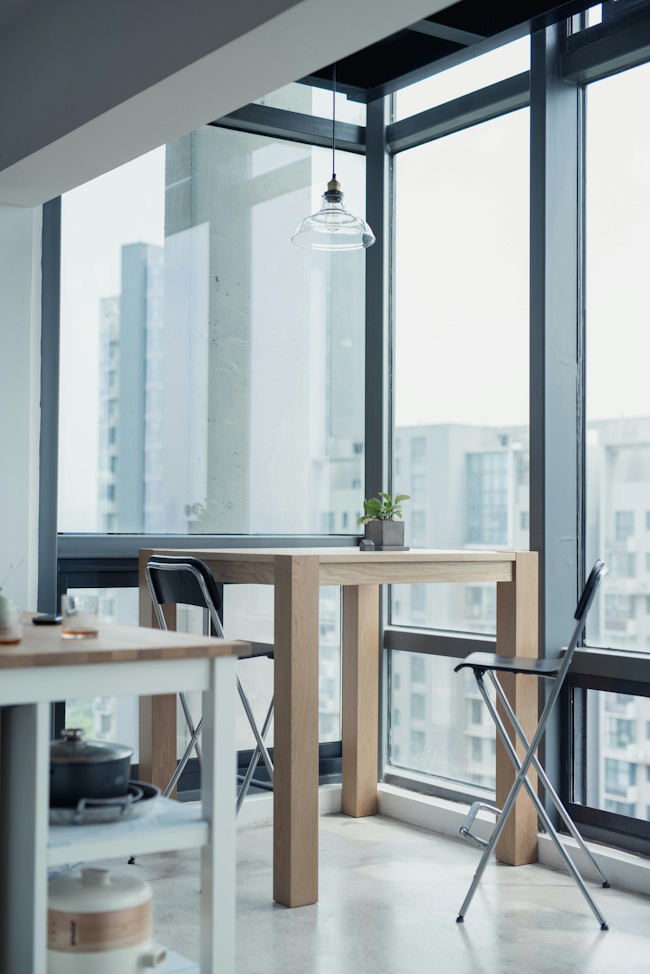
Unlike steel, aluminum allows you to create more space for light and gives the overall look a more modern feel. Image source: Pexels
If you want to add subtle details and highlights to your interiors while maintaining clean lines, aluminum profiles are an excellent choice. Their low weight (aluminum's density is approximately 2.7 g/cm³ according to NIST/ASM) allows for the use of very slim profiles. Unlike steel, which weighs almost three times as much, this allows you to create more space for light and achieve a more modern look. Aluminum doesn't rust, can be formed into a wide variety of shapes, and integrates seamlessly into almost any environment.
Do you value sustainability? According to the International Aluminium Institute, recycled aluminium saves an average of approximately 95% energy compared to producing it from scratch. Around 75% of the world'saluminium profilesare still used today as window frames, angle profiles, or structural profiles. Thus, aluminium is not only a highly practical material, but also a clear statement in favor of conscious, durable, and efficient architecture.
According to European Aluminium, EU aluminium production generates an average of approximately 6.8 kg of CO₂ per kilogram. If you want to demonstrate the sustainability of your project, it is important to consider the CO₂ emissions from aluminium production.
Types of aluminum profiles and their areas of application
Aluminum profiles come in many different shapes. Each one is designed for a specific application. Learn all about the most common types:
L-profiles
L-profiles, also known as angle profiles, are used as edge protection, finishing strips, or connecting profiles. In interior construction, they are used on stairs and tiles. Here you will find equal and unequal leg versions.
T-profiles
T-profiles are used as connecting and supporting profiles and are versatile. They can frame surfaces, support components, and provide a clean finish. Their vertical sides make them suitable for both interior construction and structural solutions in exterior applications.
H-profiles
The typical H-profile is designed to join two surfaces or panels together. They are frequently used in drywall construction, conservatories, or window elements. The double webs increase their strength.
U-profiles
U-profiles offer outstanding stability at a low weight due to their open design. They are used as covers, guide rails, or channels and are regularly employed in balcony and terrace construction.
Z-profiles
Z-profiles (double angles) are characterized by their diagonal shape, which enables a very stable connection with minimal material usage. They are particularly lightweight, offer enormous load-bearing capacity, and are used in furniture manufacturing and landscaping.
Flat bars
Flat bars are simple, flat strips made of aluminum that can be used in a variety of ways. For example, as decorative trim, transition strips, or connecting elements. Height differences can be discreetly compensated for by using flat bars.
Construction profiles
A structural profile (T-slot profile) is provided with grooves into which connecting elements can be inserted. Structures using such profiles can be easily extended and modified using T-nuts, eliminating the need for welding entirely.
Round tubes and square tubes
These closed, hollow aluminum profiles are both strong and lightweight. Square tubes are perfect for roofs and frames. Round tubes are used for railings, furniture making, or cable management.
Special profiles
If standard shapes don't fit, custom-made special profiles are used. These are mostly required for special requirements in the fields ofarchitecture, mechanical engineering, or automotive engineering.
An aluminum substructure creates clean lines for a patio or balcony. Image source: Pexels
Create clean lines for your terrace or balcony with an aluminum substructure
An aluminum substructure retains its shape over the long term, warps minimally, and is resistant to rot. Hollow chambers facilitate drainage, and concealed clips allow you to neatly fasten the decking boards made of your chosen material. This results in an attractive surface with clean, defined joint lines. For railings and balustrades, you can use hollow chamber profiles with anodized or powder-coated finishes.
Do you live near the coast? Then make sure you use the appropriate separating layers and fasteners to prevent contact corrosion. Aluminum has a natural oxide layer that protects the material. According to official information from Alumeco , corrosion protection is based on this dense, self-healing layer. Anodizing and powder coating are the standard in architecture when color and gloss level are part of the design.
Aluminum profiles create light and rhythm in interior design
Aluminum profiles are used in interior design wherever precision is required. For example, atmospheric LED light lines can be guided and simultaneously cooled using aluminum profiles. This extends the lifespan of the LEDs and results in uniform illumination. The use of angle profiles protects the edges without compromising the overall appearance.
T-slot construction profiles offer flexibility for modular furniture and exhibition stand construction. The individual components are screwed together using T-nuts, and frames are built in a clear grid system. If needed, the individual components can therefore be easily reconfigured without leaving any trace.
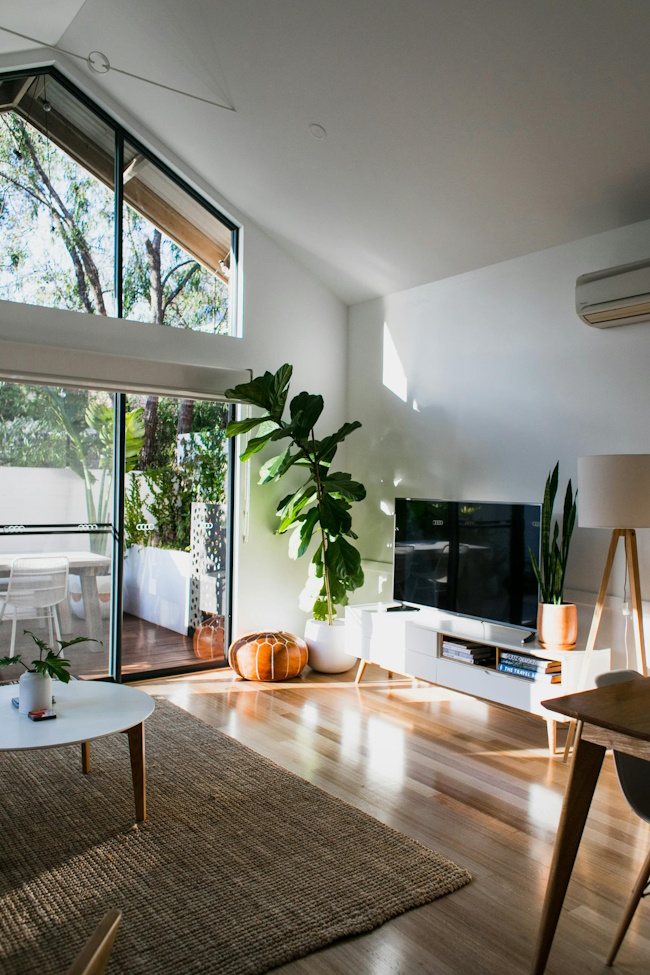
Aluminum frames provide optimal insulation while maintaining a slim appearance. Image source: Pexels
Ensure optimal insulation with a slim appearance by installing aluminum frames
Thermally broken aluminum frames allow you to combine energy efficiency, structural integrity, and design. A polyamide web (PA66 GF) between the inner and outer layers of this frame significantly reduces heat conduction. Even with large glass surfaces, it's possible to use narrow profiles with excellent U-values.The U-value(W/(mK)) is the key indicator of a building's energy efficiency. In the construction industry, it's used to evaluate thermal insulation measures.
According to Technoform,insulating strips made of polyamide significantly reduce heat conduction in aluminum frames. Product Environmental Product Declarations(EPDs) from the industry indicate a service life of approximately 50 years for aluminum windows under normal conditions.
Create visible precision through exact planning from cutting to assembly
The best results are achieved through clean assembly. Cutting, joining techniques, and corrosion protection should all be considered as part of the design
Cutting:Cut the elements to size using a fine-toothed aluminum saw blade and a guide. Don't forget to deburr after cutting. This way, the transitions can be closed almost seamlessly.
Connection technology:Utilize T-nuts, concealed corner and click connectors, bolts, and clamps. These enable detachable, service-friendly, and in most cases, invisible connections. For facades, tested system connectors with pressure strips and sealing profiles are used. They bear the loads and ensure a tight seal without affecting the appearance.
Protection and surface finish:In normal environments, anodizing or powder coatings are sufficient. If you live in a coastal area, add separating layers and fasteners. This will help prevent contact corrosion.
Aluminum profiles offer numerous advantages for your construction project
Aluminum profiles offer you a combination of design freedom, durability, light weight, and sustainability. Choose the appropriate shape and alloy, carefully plan the cutting and the suitable joining technology, and check EPDs, U-values, and surface finishes early on. This way, you can create interiors and facades that appear serene, are technically sound, and will last for years to come.
Owner and Managing Director of Kunstplaza . Publicist, editor, and passionate blogger in the fields of art, design, and creativity since 2011. Graduated with a degree in web design from university (2008). Further developed creative techniques through courses in freehand drawing, expressive painting, and theatre/acting. Profound knowledge of the art market gained through years of journalistic research and numerous collaborations with key players and institutions in the arts and culture sector.
Category for interior architecture, interior design, room design, home design, commercial furnishing, product and material innovation.
Here you'll find everything an interior designer's heart desires. We present the latest trends and developments in the world of home design, as well as innovative products and materials for creating unique spaces.
Our goal is to provide our readers with inspiration and help them creatively redesign or completely transform their living spaces.
We place great importance on ensuring that our articles are not only esthetically pleasing but also include practical tips.
We also introduce you to successful interior designers – from newcomers to the most well-known names in the industry – so you can be inspired by their projects and get to know their working methods.
Whether it's about making the most of a small space or furnishing your home with new furniture in the trendy industrial style: With us, you will find all the information you need on the topic of interior design!
We use technologies such as cookies to store and/or access device information. We do this to improve your browsing experience and to display (non-)personalized advertising. If you consent to these technologies, we can process data such as browsing behavior or unique IDs on this website. Refusal or withdrawal of consent may adversely affect certain features and functions.
Functional
Always Active
Technical storage or access is strictly necessary for the legitimate purpose of enabling the use of a specific service expressly requested by the subscriber or user, or for the sole purpose of carrying out the transmission of a message over an electronic communications network.
Preferences
The technical storage or access is necessary for the legitimate purpose of storing preferences that were not requested by the subscriber or user.
statistics
Technical storage or access that is solely for statistical purposes.Technical storage or access that is used solely for anonymous statistical purposes. Without a subpoena, the voluntary consent of your internet service provider, or additional recording by third parties, the information stored or retrieved for this purpose cannot generally be used to identify you.
marketing
Technical storage or access is required to create user profiles, to send advertising, or to track the user on one or more websites for similar marketing purposes.




 Small pop art dog figurine "Bulldog with hat"
35,00 €
Small pop art dog figurine "Bulldog with hat"
35,00 €


